A broad pulse of warm Pacific Ocean water linked to El Niño is expected to raise sea levels along the West Coast this month, and scientists warn it could add to beach erosion and coastal flooding from California to Washington state through the winter.
The phenomenon, known as a Kelvin wave, could lift water levels by about 6 to 12 inches as it travels north along the coast at about 6 mph, or roughly 150 miles a day, experts told The Associated Press. Higher-than-normal water could linger into February, they said. KQED, the San Francisco public broadcaster, reported the same speed and an increase of up to a foot.
A Kelvin wave bears no resemblance to the breakers that surfers ride, and it cannot be seen from the beach or felt on a boat. Scientists describe it as a wide, low hump of seawater that slowly raises the ocean surface as it passes. Dillon Amaya, an assistant professor at North Carolina State University, told the AP the hump stretches 12 to 20 miles out from shore and reaches about 200 meters, or roughly 650 feet, deep.
How the wave forms
Kelvin waves are a regular feature of El Niño, a naturally recurring climate pattern marked by unusually warm water in the central and eastern tropical Pacific. Trade winds along the equator normally push surface water west toward Asia. When those winds weaken or reverse, the piled-up water sloshes back east along the equator until it reaches South America, then splits and runs north and south along the coasts of the Americas, said Michael Jacox, a research oceanographer with NOAA Fisheries.
Experts have described this year’s event as a “super” El Niño. A September outlook from NOAA’s Climate Prediction Center gave it a 75% chance of becoming historically strong, KQED reported, and The Guardian reported that Pacific surface temperatures are now higher than they were before the destructive winter of 1997-98.
The wave alone is unlikely to flood anything, Jacox told the AP. The concern is that it raises the starting point, so high tides, storm surges and big swells reach higher than they otherwise would. “But when there are very high tides or storm surges, their effects can be amplified,” he told The Guardian.
The warm surge also pushes colder, nutrient-rich water deeper, which can affect marine life, the AP reported. Jacox told The Guardian that Kelvin waves can also slow the growth of phytoplankton, the tiny organisms at the base of the ocean food web.
Coastal communities brace
Sean Vitousek, a U.S. Geological Survey research oceanographer, told the AP that the higher water, the larger swells expected during El Niño and strong seasonal tides could together cause extreme erosion. The strongest past El Niños, in the winters of 1982-83, 1997-98 and 2015-16, produced the worst beach erosion on record along the West Coast, he said.
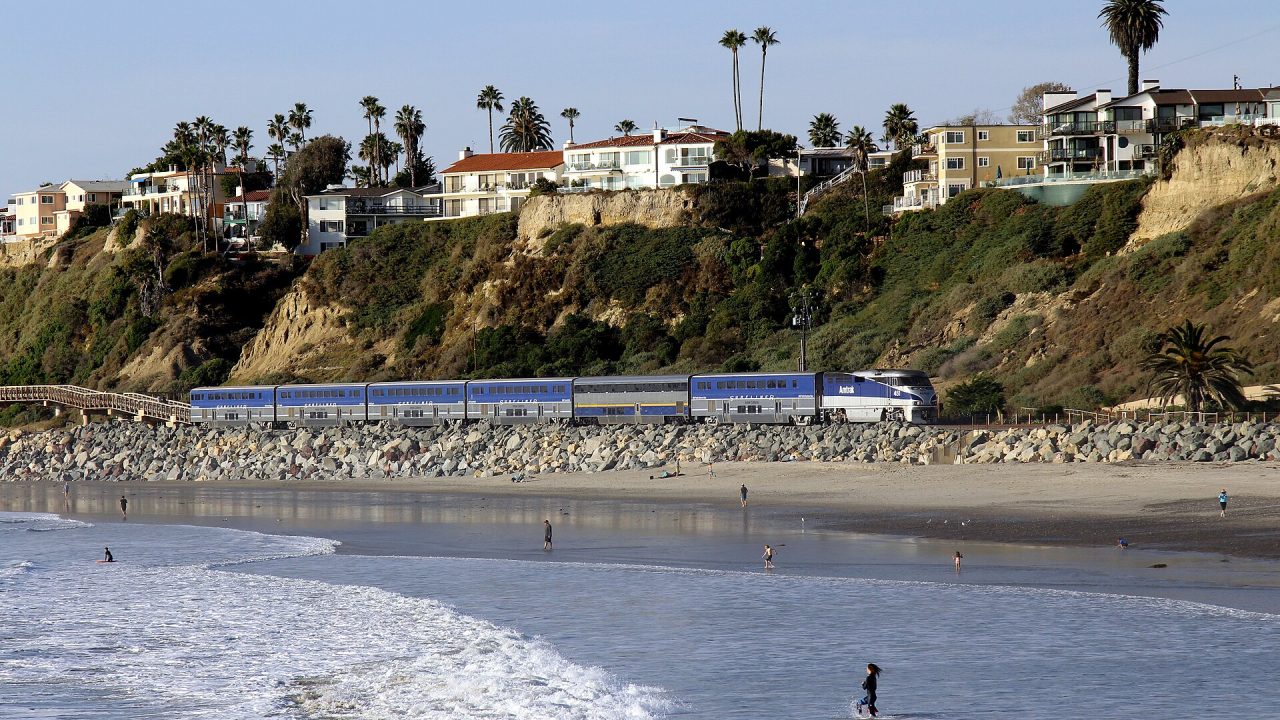
In Orange County, where waves are already nearing a coastal rail line, crews are moving sand onto beaches as quickly as they can, an aide to county Supervisor Katrina Foley told the AP. Around the San Francisco Bay Area, officials are handing out sandbags, clearing drains and culverts and lining up temporary flood barriers, The Guardian reported.
In late September, Gov. Gavin Newsom declared a state of emergency so California could get ready for a strong El Niño.
What to watch
Scientists say the biggest risk is likely to come later in the season. Jonathan Warrick, a USGS research geologist, told The Guardian that January, February and March typically bring the strongest storms, the largest waves and very high tides, and that the damage can compound when those line up with elevated seas.
The highest tides of the year in parts of California are expected in November and December, The Guardian reported. In San Francisco, Vitousek told KQED, tides could top 6 feet around Oct. 11 and peak at 6.68 feet on Oct. 27, with king tides in late November possibly exceeding 7 feet on top of the Kelvin wave.
More waves are likely. An El Niño usually produces five or six Kelvin waves, Amaya told the AP. The first of this cycle moved up the coast in May and June, according to KQED, and there are signs that a third is forming.