A joint European and Japanese space mission has reached Mercury after an eight-year, six-billion-mile journey and is preparing to enter orbit around the solar system’s smallest planet. Flight controllers plan to fire the spacecraft’s chemical thrusters on Saturday to maneuver into orbit, marking only the second time in history a spacecraft has circled the innermost world, according to reports from The Guardian and KeepTrack.
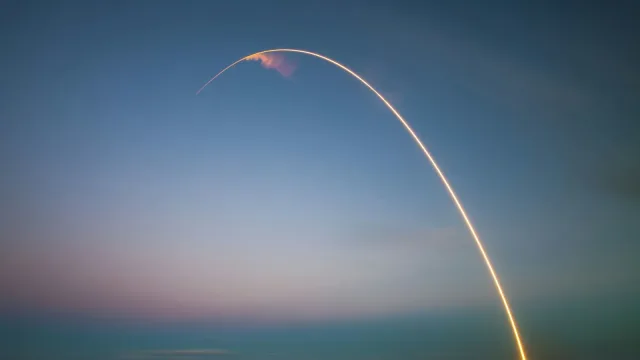
The 1.6-billion-euro mission, named BepiColombo, launched from Kourou, French Guiana, in October 2018. To reach Mercury without being pulled uncontrollably into the sun’s powerful gravity well, the probe had to execute a complex series of gravity-assist flybys, making one loop past Earth, two past Venus, and six past Mercury. The long journey included a trajectory redesign announced in September 2024 after engineers resolved an electrical power issue with the ion engines, shifting the original December 2025 arrival date to November 2026.
Two Probes in One Mission
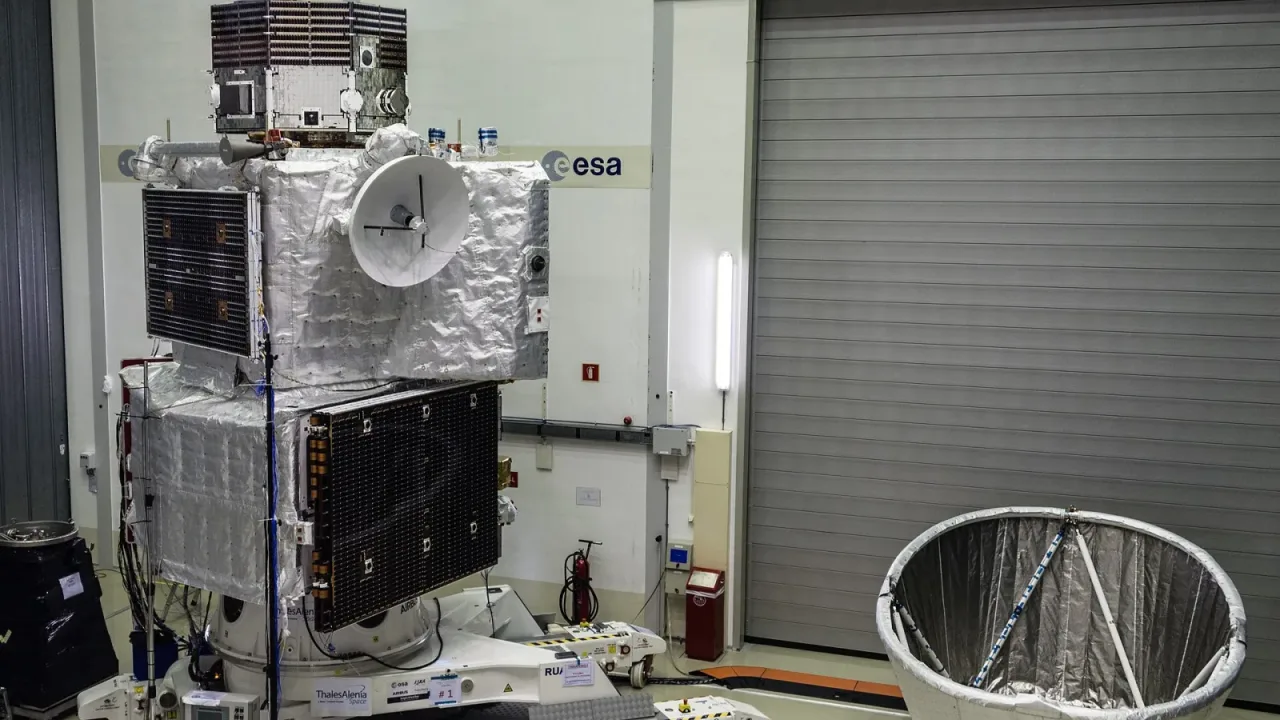
BepiColombo traveled through deep space as a combined stack carrying two separate orbiters. The European Space Agency’s Mercury Planetary Orbiter is designed to map the planet’s surface composition and investigate its interior structure. Riding alongside is Japan’s Mercury Magnetospheric Orbiter, named Mio, which will measure the planet’s magnetic field and thin atmosphere of gases.
Flight controllers plan to separate the two orbiters in early December. Mio is scheduled to release into its own extended polar orbit on Dec. 9 and Dec. 10, followed by the separation of its protective sunshield structure on Dec. 16. The European orbiter will then adjust its path to reach its targeted low polar orbit by March 2027. Full scientific operations are expected to begin in April 2027.
Unraveling the Secrets of Mercury
Scientists hope the data collected will solve long-standing mysteries regarding how Mercury formed near the sun. The world is only about 50 percent larger than Earth’s moon but possesses four times its mass, pointing to an unusually dense core. Surface conditions are extreme, with temperatures rising to 450 degrees Celsius during the day and plunging to minus 180 degrees Celsius at night.
“We’re very excited, it’s been a long wait,” Emma Bunce, a professor at the University of Leicester and principal investigator for the spacecraft’s X-ray spectrometer, told The Guardian. Bunce noted that researchers hope to analyze frozen ice buried in permanently shadowed craters at the planet’s poles. Geraint Jones, lead project scientist at the European Space Agency, told The Guardian that instruments will map the planet’s surface with a laser and measure surrounding magnetic fields.
A Historic Outer Space Venture
Only one previous spacecraft has orbited Mercury. NASA’s MESSENGER probe spent four years in orbit around the planet before ending its mission with a planned surface impact in April 2015. NASA’s Mariner 10 conducted three flybys of Mercury in 1974 and 1975, but did not enter orbit.
The two BepiColombo spacecraft are scheduled to spend at least three years collecting data from orbit. Once their remaining fuel is spent, the probes will gradually lose altitude and ultimately crash into Mercury’s surface.