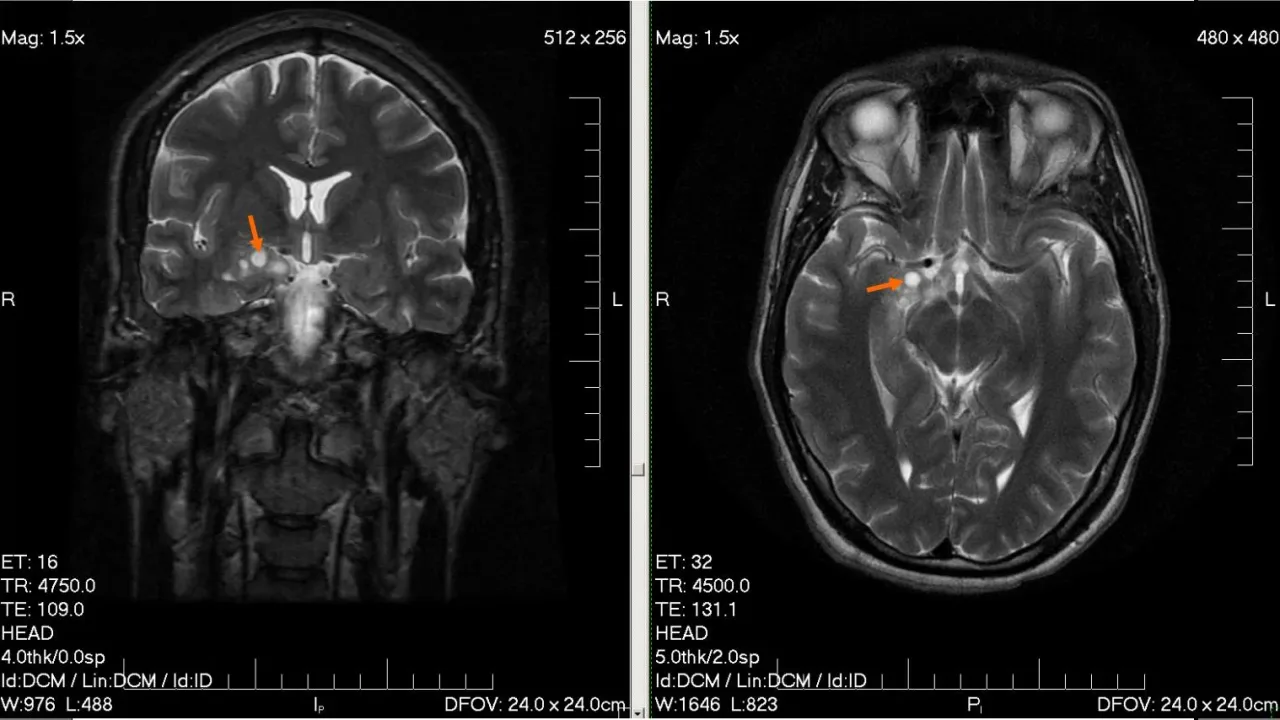
Two common types of brain cancer develop along fundamentally different genetic paths as they return after initial treatment, according to an international study published Wednesday in the journal Nature.
Led by scientists from Yale School of Medicine and The Jackson Laboratory, researchers tracked the evolution of IDH-mutant gliomas by comparing tumor tissues taken at diagnosis with recurrent tumors sampled from 183 patients across 10 countries. The cancers, which primarily strike adults in their 30s and 40s, almost always return despite surgery, radiation and chemotherapy, frequently developing lethal resistance to therapy.
Distinct genetic mechanisms behind recurrence
Although both astrocytomas and oligodendrogliomas share mutations in the isocitrate dehydrogenase gene, the new genetic analyses show that their post-treatment evolution diverges sharply. Oligodendrogliomas tended to accumulate new single-point mutations across cancer-promoting genes, effectively adding damage one alteration at a time, Bioengineer.org reported.
In contrast, astrocytomas were much more prone to broad, large-scale chromosomal abnormalities. These included losing or multiplying broad sections of DNA, duplicating entire sets of chromosomes, and undergoing chromosome fragmentation and reassembly, according to findings cited by UA.NEWS and Newswise.
“Differences that exist when the tumor is first detected can set the stage for what happens after they are treated,” study co-lead Frederick Varn, an assistant professor at The Jackson Laboratory, told Bioengineer.org. He noted that the initial biology appears to dictate which evolutionary avenues remain open to the tumor.
Impact of standard chemotherapy and patient survival
The research, conducted through the Glioma Longitudinal Analysis Consortium, examined tissue gathered during more than 500 surgeries across North America, Europe, Asia, Australia and South America. Whole-genome and whole-exome sequencing were performed across 21 contributing institutions, with Jackson Laboratory processing numerous samples.
The scientists also detected distinct genetic scars directly linked to temozolomide, a standard chemotherapy drug used in glioma care. The finding demonstrates that standard therapies actively shape the genetic resistance strategies tumors develop as they fight back, according to the researchers.
These diverging adaptations carried direct clinical consequences for patient survival. In astrocytomas, large-scale chromosomal disruption, such as whole-genome duplication and fragmentation, correlated with significantly shorter survival after recurrence. In oligodendrogliomas, specific newly acquired mutations linked to uncontrolled cell reproduction similarly produced worse outcomes, UA.NEWS reported.
Moving toward personalized treatment
Brain and spinal cord cancers make up about 1 percent of all newly diagnosed cancers in the United States, yet gliomas account for roughly 33 percent of all brain tumors and cause high rates of years of life lost, Newswise reported.
Senior study author Dr. Roel Verhaak, a professor of neurosurgery at Yale School of Medicine, explained to Newswise that while glioma cells may behave similarly across forms, they “respond quite differently to treatment on the genetic level.” He suggested that therapies could eventually be tailored to each subtype’s specific alterations, citing ribociclib, a breast cancer drug that targets abnormal copy-number alterations, as a potential candidate for testing against astrocytomas.
Investigators emphasized that translating these insights into the clinic will still require overcoming longstanding obstacles, including getting drugs across the blood-brain barrier without damaging healthy brain tissue. Researchers hope the new genomic framework will help doctors predict and steer tumor evolution rather than merely tracking it after cancer returns.