VERSAILLES, France — International timekeeping authorities gathered near Paris are scheduled to vote Thursday on a proposal to eliminate the leap second, a move that would sever an ancient connection between civil time and the astronomical rotation of Earth.
Delegates representing the International Bureau of Weights and Measures, or BIPM, are meeting in Versailles from Oct. 12 to Oct. 15 to decide whether to fast-track the phaseout of the periodic adjustment, according to reports from ABC News and StratNews Global. The governing body had agreed in 2022 to retire leap seconds by 2035, but recent changes in the speed of the planet’s spin prompted organizers to accelerate the timeline.
Digital Risks and the Negative Leap Second
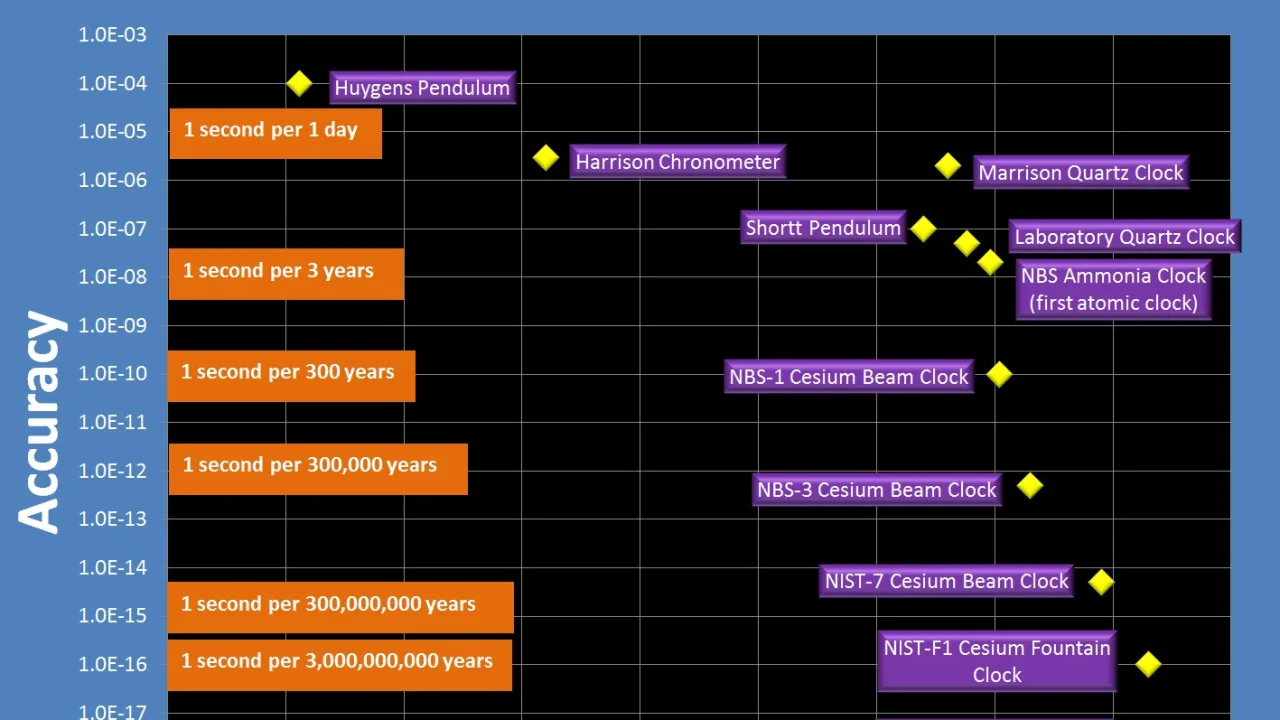
Since its creation in 1972, the leap second has been introduced 27 times to reconcile two different measures of time: astronomical time, determined by the planetary rotation, and Coordinated Universal Time, or UTC, which relies on the precise vibrations of cesium atoms inside atomic clocks. The most recent leap second occurred at the end of 2016.
While traditional timekeeping historically assumed a day was exactly 86,400 seconds, Earth is not a perfectly steady clock. Gravitational forces from the moon, shifting ocean currents, winds, volcanic eruptions, and core movements cause the planet’s spin to fluctuate. To measure those tiny variations, scientists track distant cosmic anchor points, including black holes, using specialized radio telescopes, ABC News reported.
In the digital age, however, these manual adjustments have caused recurring technical headaches. Operating software often assumes time runs exclusively forward and that every minute spans 60 seconds. Previous leap seconds contributed to service disruptions and crashes on prominent web platforms such as Reddit and Cloudflare, according to ABC News.
The push to drop the adjustment gained urgency after Earth began rotating faster around 2020. That acceleration raised the unprecedented prospect of a negative leap second, which would require clocks to drop a second rather than add one. Scientists warned that software across telecommunications, power networks, and satellite navigation systems has never been tested for a subtracted second.
“Many computer programmes assume all leap seconds are positive,” Setnam Shemar, the United Kingdom’s principal timekeeping scientist, told the Financial Times, as cited by The Week.
Transitioning Toward a Leap Hour
Under the leading proposal before the BIPM, UTC will be permitted to gradually drift away from astronomical time. Rather than making frequent single-second corrections, authorities would allow the gap to accumulate until it reaches an hour, triggering a single “leap hour” far in the future.
Because the current rotational lag accumulates by less than a second per year, scientists project that reaching a full hour of discrepancy could take more than a millennium. By then, researchers note, digital systems and navigation technology will likely manage time measurements quite differently.
Although the change offers relief to software developers and network engineers, some experts acknowledge a philosophical shift. Allowing UTC to drift untethered from Earth’s solar cycle formally ends centuries of civil time relying directly on the sun’s passage overhead at the Royal Observatory Greenwich in London.
If Thursday’s vote passes, the change will formally retire the practice of manual second corrections, removing an unpredictable hurdle for global network operators while leaving long-term alignment questions to future generations.