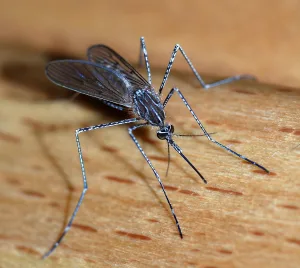
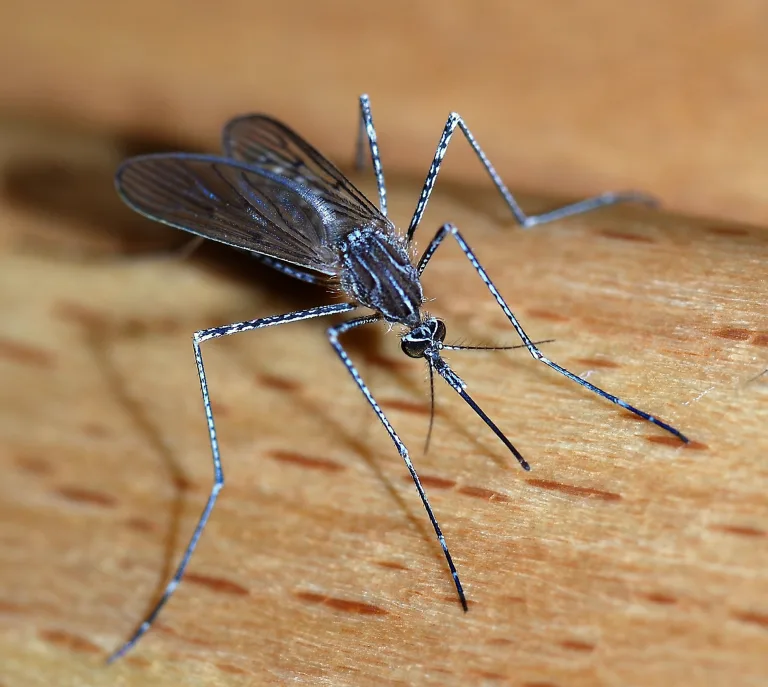
A punishing combination of record heat, humidity and mild winter temperatures has fueled an unprecedented mosquito surge across Southern California, pushing West Nile virus cases to their highest level in nearly a decade, local health and vector control officials reported.
Los Angeles County has recorded more than 180 human infections of West Nile virus this year, according to the county public health department. The USC Office of Environmental Health and Safety similarly noted that West Nile cases in 2026 have surpassed the region’s five-year average for this point in the year, with infected mosquito pools and dead birds detected across wide swaths of the county.
Weather fuels rapid reproduction
Officials attribute the dramatic increase in insect activity to shifting climate patterns, including an exceptionally mild winter and sustained heat waves. Temperatures that typically drop below 50 degrees Fahrenheit at night halt mosquito activity, but warm conditions in February and March allowed local populations to stay active nearly year-round, The Guardian reported.
Extreme heat can also compress reproduction schedules significantly. According to ABC7 Los Angeles, intense heat has cut normal mosquito breeding cycles in half, allowing subsequent generations of biting adults to hatch much faster than usual. Anais Medina Diaz, communications director for the San Gabriel Valley Mosquito and Vector Control District, said warm winter temperatures and high humidity created ideal environmental conditions for insect and disease activity.
“Mosquitoes love being in warm environments, and we are experiencing an unusually warm and moist summer and fall season,” Richard Dang, an associate professor of clinical pharmacy at USC, told the Daily Trojan. Dang noted that while most West Nile infections remain mild or asymptomatic, the virus can produce severe complications like meningitis or death in older adults and individuals with chronic medical issues.
Invasive species complicate the threat
Southern California is battling two distinct mosquito populations. The endemic Culex quinquefasciatus feeds primarily on birds, picking up West Nile virus before passing it to humans. In neighboring Orange County, vector control crews have logged roughly 850 traps testing positive for West Nile virus this season, according to district public information officer Brian Brannon.
Meanwhile, invasive Aedes mosquitoes, commonly called “ankle biters,” have spread widely since their local arrival in 2014. These insects aggressively target people during daylight hours and can reproduce in pools of stagnant water as tiny as a bottle cap or a tablespoon. While not carriers of West Nile, Aedes mosquitoes can transmit other serious viral diseases such as dengue, yellow fever and Zika.
Control operations and resident precautions
Vector management agencies have responded with emergency ground and aerial treatments. In Altadena and Monterey Park, crews deployed adulticides and larvicides to attack the insects across various life stages, ABC7 reported. Officials have also tested innovative biological controls, such as releasing X-ray-sterilized male mosquitoes to suppress wild populations by over 80 percent in test areas, though vector control specialists told The Guardian that widespread expansion remains expensive.
Health agencies emphasize that private property maintenance remains the primary line of defense. Authorities recommend that residents take several key precautions:
- Inspect yards and indoor spaces weekly to empty or discard water in plant saucers, pet bowls, tires and birdbaths.
- Inspect and repair window and door screens to keep insects from slipping inside homes.
- Wear loose-fitting long sleeves and pants during outdoor activities.
- Apply insect repellents containing EPA-registered active ingredients such as DEET, picaridin, IR3535, or oil of lemon and eucalyptus.
With overnight temperatures expected to remain warm and seasonal rains approaching the forecast, vector control officials warn that Southern California’s mosquito season is far from over, leaving residents to adjust to the insects as an ongoing reality.