President Donald Trump warned Iran against attempting to challenge the U.S. naval blockade of its maritime ports, cautioning that any vessels trying to force their way through American forces in the region would be destroyed.
Trump addressed reports that Iranian authorities are preparing a fleet of oil tankers to break out from export hubs in the Persian Gulf. “I hope they do, they’ll all be at the bottom of the sea like the rest of the navy,” Trump told Fox News when asked whether Iran would attempt to breach the sea barrier, which was first established in April.
Convoy reports and military warnings
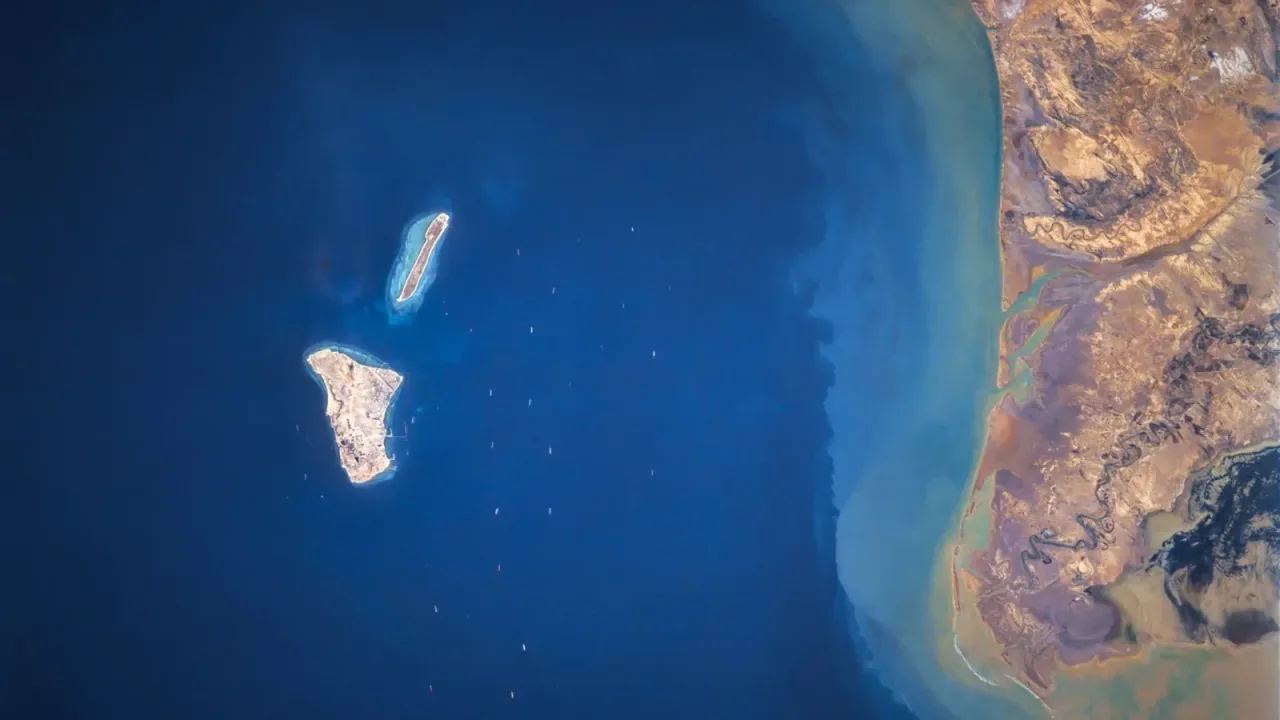
Reports from Tehran municipality-linked media and ship-tracking data indicated that Iran had assembled 14 oil tankers near Kharg Island. The island serves as Iran’s primary crude terminal, handling roughly 85 percent to 90 percent of its oil exports. The facility features storage capacity for roughly 30 million barrels and deep-water berths capable of servicing supertankers. Euronews reported that crews were assigned to the vessels and Iranian flags were raised ahead of a planned movement toward the Sea of Oman exit.
However, maritime security experts cast doubt on whether Tehran would execute the plan. Charlie Brown, a senior adviser to United Against Nuclear Iran and an expert on maritime sanctions enforcement, described the reported convoy operation as “farcical” and likely “propaganda” while speaking to Fox News Digital on Sunday. Brown stated that recent satellite imagery showed no major oil loading taking place at Kharg Island and noted that attempting to coordinate a 14-vessel breakout against global U.S. naval commands would present overwhelming logistical challenges.
U.S. naval forces operating across the 5th Fleet and 7th Fleet maintain oversight extending across the Indian Ocean to intercept targeted ships. In addition, a U.S. Central Command advisory issued on Nov. 18 warned that commercial vessels receiving Iranian oil through ship-to-ship transfers outside ports would also face potential interception or seizure, according to Reuters.
Economic pressure and escalation risks
The Institute for the Study of War warned that severe economic hardship could compel Iranian leaders to risk a maritime confrontation within days. Iranian officials noted that over 80 percent of the country’s imports and exports pass through the Strait of Hormuz or southern ports, leaving state finances under intense strain as loading operations remain stalled. The institute noted that running the blockade could trigger a wider war or lead to the fleet’s destruction, but stressed that Tehran views the economic situation as unsustainable.
Iranian Foreign Ministry spokesman Esmail Baghaei cited Articles 4 and 51 of the United Nations Charter, maintaining that the U.S. blockade is an illegal act of aggression and asserting Iran’s inherent right to self-defense to break the naval barrier, Al Jazeera reported. Meanwhile, Mohammad Enayati Najafabadi, a journalist affiliated with Iran’s Islamic Revolutionary Guard Corps, warned on social media that any disruption of Iranian tankers would lead to retaliatory strikes against oil facilities in neighboring nations, including Saudi Arabia, the United Arab Emirates, Qatar, Kuwait, Oman, and Bahrain.
On Truth Social on Sunday, Trump acknowledged that Iran had launched increased numbers of drones and missiles over the past week, though he stated that American defensive systems knocked them all down without damage, CBS News reported. Meanwhile, U.S. Energy Secretary Chris Wright told Fox News on Thursday that energy flows through the Strait of Hormuz had actually risen in recent weeks as the U.S. increased oil shipments through the waterway.
Tensions remained high across regional waters on Sunday as the United Kingdom Maritime Trade Operations reported an incident involving military forces and a commercial tanker in the Gulf of Oman, advising merchant vessels in the area to maintain close awareness of the evolving security situation.