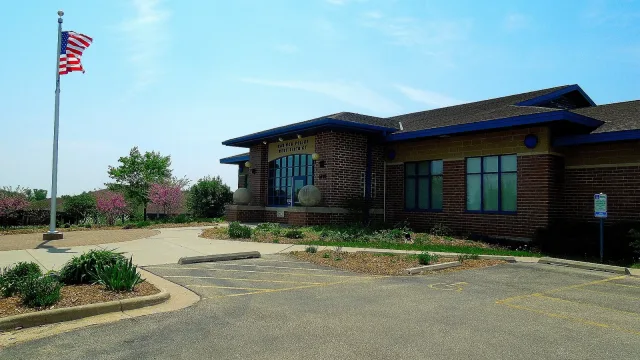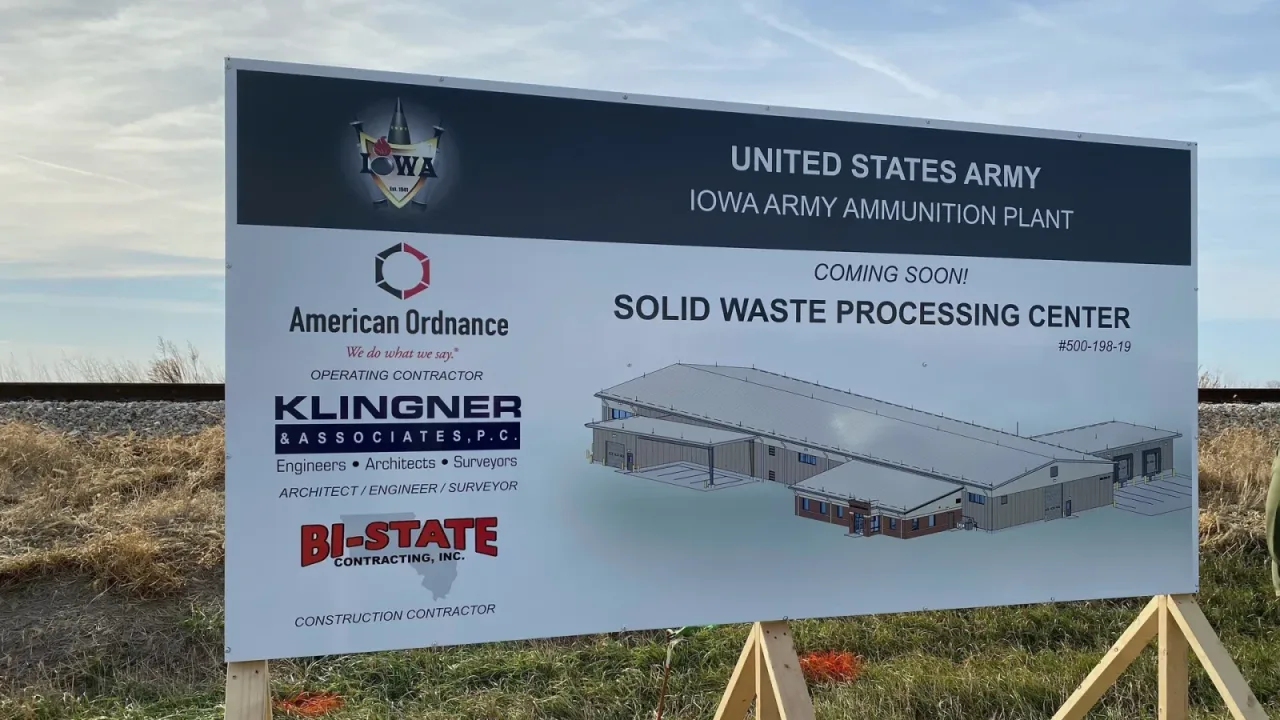
MIDDLETOWN, Iowa — The U.S. Army is preparing to detonate approximately five tons of degraded bomb-making chemicals at an ammunition facility in southeast Iowa on Friday, prompting local evacuation advisories and widespread concerns over potential toxic lead contamination.
The controlled explosion at the Iowa Army Ammunition Plant involves 68 drums of lead azide, a compound used to manufacture detonators and blasting caps. Officials determined the material had become highly unstable after stored water evaporated, causing the chemical to crystallize and creating a severe risk of spontaneous explosion from friction or shock.
Evacuation Advisories and Health Warnings
Officials recommended that residents of nearby Middletown, a town of nearly 400 people, temporarily vacate the area between 8 a.m. and 2 p.m. Friday. Those remaining at home were advised to keep doors and windows closed and set heating and cooling systems to recirculate air.
The military warned that the two rapid blasts will produce short-lived ground vibrations, loud noise, and an air plume carrying lead-containing particles. While the dust cloud is expected to linger for no more than an hour depending on wind speeds, public advisories were issued to communities as far as 100 miles away as weather maps projected where the dust might drift.
Public health experts warned that lead exposure poses serious risks, particularly to young children. Patrick O’Shaughnessy, a professor of occupational and environmental health at the University of Iowa, noted that lead acts as a neurological toxicant that can impair brain development. Purdue University professor Ellen Wells also warned that low-level lead exposure can impact cardiovascular health in adults and cause long-term soil contamination if particles settle outdoors.
Containment Efforts and School Closures
To reduce off-site drift, the Army planned to detonate the barrels inside earth-covered concrete magazines surrounded by two-story sand barriers. Crews will saturate the soil with water and operate air misters during the blasts to trap lead particles on plant property, according to Army sustainment command officials.
Despite these containment measures, local organizations are taking precautionary steps:
- The Danville Community School District canceled all classes for Friday due to uncertainty regarding air quality.
- Schools and the public library in Mediapolis scheduled closures for Friday, with the local fire department planning to hose down outdoor playgrounds following the event.
- Environmental officials in neighboring Illinois asked the U.S. military to conduct air and soil sampling in their state following the detonation.
Background and Regulatory Approval
The degraded chemical had been stored at the plant for more than 20 years in earthen containers filled with ethanol and water. Routine inspections earlier this year revealed the evaporation, leading officials to conclude that moving the material presented an unacceptable risk of a fatal accident.
The U.S. Environmental Protection Agency issued an emergency permit on Nov. 13 authorizing the on-site disposal. The permit requires the military to track air dispersion rates and perform environmental testing and cleanup on public high-touch surfaces where lead residue is detected. Officials continue to update plume projection maps based on local weather conditions leading up to the Friday detonations.