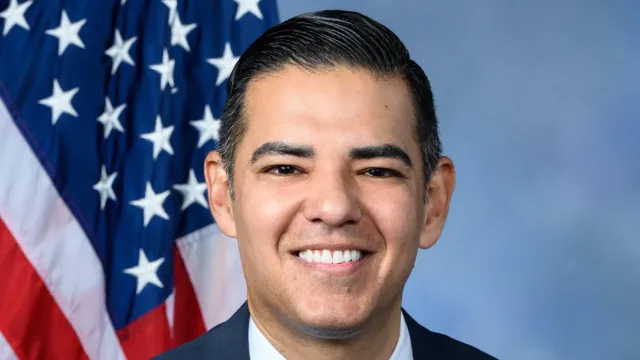
WASHINGTON — House Democrats voted overwhelmingly on Wednesday to nominate Representative Hakeem Jeffries of New York for speaker of the House, clearing the way for him to become the first Black speaker in U.S. history when the new Congress convenes in January.
Jeffries won the party’s nomination in a closed-door, secret-ballot vote of 251 to 11, NBC News and CBS News reported. Running unopposed, Jeffries requested a recorded tally rather than a vote by acclamation to allow caucus members to formally record their positions, echoing the procedure House Democrats used in 2018.
“It certainly seems to me to be appropriate that we take exactly the same approach,” Jeffries told reporters on Tuesday, noting that the vote gives every member the chance to weigh in on caucus leadership based on track record, experience, and vision.
Progressive Pushback and Broad Caucus Support
Although Jeffries faced no direct challenger, seven incoming progressive members voted against his nomination. Representatives-elect Darializa Avila Chevalier and Claire Valdez of New York, Adam Hamawy of New Jersey, Frederick Haynes of Texas, Melat Kiros of Colorado, Donavan McKinney of Michigan, and Chris Rabb of Pennsylvania issued a joint statement explaining their votes.
The group stated that their constituents provided a mandate on issues such as Medicare for All, immigration policy reforms, campaign finance changes, and the conflict in Gaza, according to reports from NBC News and CBS News.
“We have worked to secure commitments from Leader Jeffries in good-faith conversations,” the seven members-elect wrote in their statement. “While we have seen meaningful progress, there is still work to be done to ensure that the direction our party takes this coming Congress reflects what our constituents are demanding of leadership.”
Despite the dissenting votes, Jeffries received broad backing across the Democratic Caucus. Five lawmakers formally nominated Jeffries before the vote, including veteran Representative James Clyburn of South Carolina, a former majority whip and civil rights figure who described the moment to reporters as very surreal for him.
Following the secret ballot, lawmakers inside the meeting room erupted in applause and cheering, Fox News reported. Representative Bennie Thompson of Mississippi characterized the vote tally as a blowout number.
Historic Leadership Slate Established
The Democratic Caucus also filled several other top leadership positions for the upcoming 120th Congress, establishing a historic roster of party leaders:
- Representative Katherine Clark of Massachusetts was chosen as majority leader, making her the first woman in either chamber of Congress to hold that role.
- Representative Pete Aguilar of California was elected majority whip, becoming the highest-ranking Hispanic American lawmaker in House history.
- Representative Ted Lieu of California won the vote for caucus chair, becoming the first Asian American to hold that post.
- Representative Joe Neguse of Colorado is expected to serve as assistant speaker.
The only contested leadership race in the caucus was for vice chair, where Representative Sara Jacobs of California faced Representative Lauren Underwood of Illinois, NBC News reported.
Path to the Speakership in January
To assume the speaker’s gavel, Jeffries must win a majority of votes from the full House chamber during a formal roll call vote on Jan. 3. With NBC News projecting Democrats to hold 259 seats, Jeffries has a wide margin above the 218 votes required on the House floor.
The smooth Democratic internal election stood in contrast to recent Republican leadership contests. In 2023, former Republican Speaker Kevin McCarthy required 15 ballots to secure the gavel with a narrow majority, CBS News reported. Meanwhile, House Republicans recently elected Judiciary Committee Chairman Jim Jordan of Ohio as minority leader over Majority Leader Steve Scalise of Louisiana for the next Congress, according to NBC News.
House Democrats are preparing to use their new majority to launch investigations, challenge White House policies through oversight, and hold congressional hearings once Jeffries and the rest of the leadership team take office in January.