WASHINGTON — U.S. airlines worked to restore regular flight schedules Monday following an unprecedented weekend of travel disruptions triggered by a nationwide Federal Aviation Administration ground stop, officials and tracking data reported.
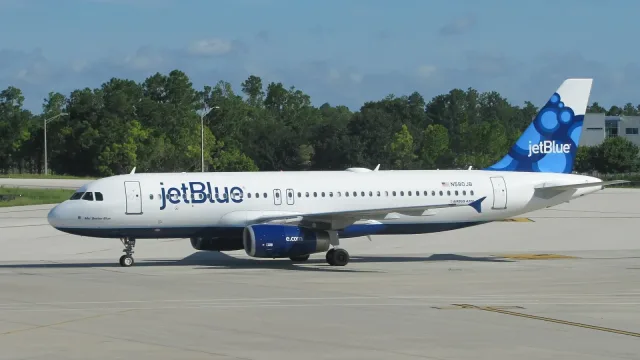
As of 7 a.m. Eastern time Monday, airlines had canceled 284 flights entering, leaving, or traveling within the United States and delayed another 954, according to flight-tracking service FlightAware. American Airlines recorded 157 cancellations, while SkyWest logged 41 and JetBlue reported 30. The figures marked a significant reduction in disruptions following a weekend in which more than 28,300 flights were delayed and 18,520 were canceled starting Friday, Fox Business reported.
The systemwide pause occurred Friday when the FAA issued a nationwide ground stop that halted almost all departing commercial flights for nearly five hours. The interruption represented the longest nationwide stoppage of American air traffic since the terrorist attacks of Sept. 11, 2001, according to Fox Business and CNN.
Transportation Secretary Sean Duffy told ABC’s “This Week” on Sunday that flight schedules would likely return to normal by Monday morning. FAA Administrator Bryan Bedford also expressed optimism over the weekend, telling reporters that operations were expected to achieve full schedule integrity by Sunday evening.
Router failures trace to Texas and Arkansas facilities
Federal investigators focused their inquiry on equipment failures at FAA facilities in El Dorado, Arkansas, and Amarillo, Texas. According to Duffy, workers replacing a network router at the Arkansas installation triggered an issue with a recently replaced router in Texas. The Texas router began broadcasting an overwhelming volume of data, which flooded traffic control systems nationwide, Fox Business reported.
Rebecca Guy, the FAA’s acting chief technology officer, told reporters that two locations were pinging the network at a rate of 1,000 connections every four to five seconds. Network instability ultimately affected 17 of the agency’s 22 Air Route Traffic Control Centers, according to officials.
In response, technicians disabled the broadcasting capabilities of the affected routers and took similar protective measures with roughly 60 other routers across the air traffic control network, CNN reported. Guy stated that the FAA did not previously know a single faulty router had the capability to disrupt the broader network so severely.
The equipment upgrades were being conducted by contractor L3Harris as part of an ongoing project to transition system communication lines from legacy copper wiring to modern fiber optics. Duffy questioned whether contractor errors contributed to the failure and suggested removing L3Harris from future system upgrades. Two sources familiar with the matter told Reuters that the router installation itself proceeded smoothly and that malfunctions began only after replacement work had finished under FAA oversight.
Modernization funding debate reignited
Duffy emphasized that investigators found no evidence of a cyberattack or deliberate sabotage. However, the breakdown renewed political debate over funding for the nation’s air traffic infrastructure.
The Transportation Department previously announced modernization plans in 2025 to replace aging copper wire networks. Following Friday’s breakdown, Duffy increased his request for congressional infrastructure funding from $30 billion to $50 billion. The requested funds build on $12.5 billion approved by Congress last year under President Donald Trump’s spending legislation, CNN reported.
Duffy reported that the agency has used the initial funding to replace 69 percent of copper lines with fiber optics and deploy updated tracking and radio systems across hundreds of control towers. A September report from the Government Accountability Office noted, however, that the FAA lacked an integrated schedule for its 11,389 individual project schedules, creating potential operational conflicts.
The outage occurred two weeks before the busy Thanksgiving travel period, when the Transportation Security Administration anticipates screening upwards of 3 million passengers per day. Officials assured travelers that the airspace remains safe and that normal operations should continue leading into the holiday week.