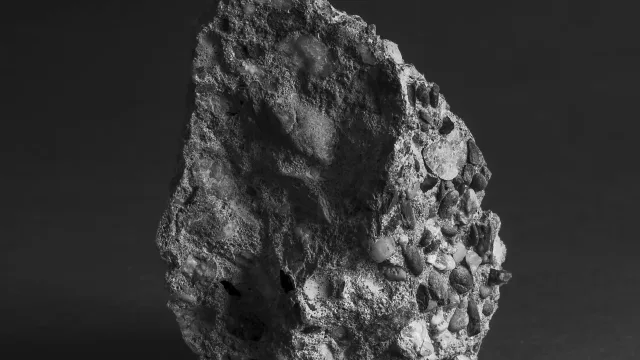
Scientists have discovered diverse communities of microscopic animals living inside the crevices of metal-rich rocks on the Pacific Ocean floor, raising ecological warnings as commercial mining plans advance. The study, published in the journal Scientific Reports, revealed that polymetallic nodules targeted by deep-sea mining companies serve as unique habitats for creatures smaller than a millimeter, distinct from life in the surrounding seafloor sediment.
Researchers examined 244 nodules retrieved from depths between 4,000 and 6,000 meters (2.5 to 3.7 miles) in the Clarion-Clipperton Zone of the central Pacific Ocean. Inside the rocks’ cracks and pores, the international team identified 4,139 individual animals, averaging roughly 17 organisms per nodule, with one lump hosting 245 creatures, Oceanographic Magazine reported.
A Distinct Ecosystem in Deep-Sea Crevices
The findings show that internal cavities offer a three-dimensional shelter for specialized species. The most frequent residents included roundworms and small crustaceans, along with an armored single-celled protist identified as Thurammina sp. 1, according to ScienceAlert. Scientists also identified bristleworms, mud dragons, and tardigrades inside the samples, alongside ancient fossils of sea sponges and diatoms.
Genetic testing demonstrated that nodule-dwelling communities separated by up to 1,000 kilometers (about 621 miles) shared more similarities with each other than with organisms inhabiting the nearby soft mud, Nature Today reported. “The crevices in the polymetallic nodules function as small shelters and provide a home to animals that we do not encounter in the soft sediment of the seafloor,” said Dr. Coral Diaz-Recio Lorenzo, a study author based at Sorbonne University, in remarks cited by Oceanographic Magazine.
Because polymetallic nodules expand by only a few millimeters every million years, scientists caution that extracting them would permanently wipe out these environments. “Our findings point out that commercial mining may result in an irreversible loss of undescribed and unique biodiversity associated to nodules,” said Professor Sabine Gollner of the Royal Netherlands Institute for Sea Research, according to Scientific American.
Commercial Mining Plans and U.S. Regulations
The discovery comes as global interest in deep-sea mining accelerates. Polymetallic nodules harbor high concentrations of critical metals such as nickel, cobalt, copper, and manganese, which are key components for electronics, solar panels, and batteries.
A U.S. subsidiary of The Metals Company has submitted applications to the National Oceanic and Atmospheric Administration for an exploration license and a commercial recovery permit. NOAA determined that the filing met initial information requirements, though the agency must complete an environmental impact statement before any authorization is granted, Oceanographic Magazine reported. The company projects potential permit approval prior to the end of the first quarter of 2027. U.S. support aligns with executive action under President Donald Trump intended to reduce dependence on foreign metal imports and counter China’s influence in mineral markets.
The domestic permitting effort operates outside the International Seabed Authority, the United Nations-backed body regulating international seabed activities, which postponed finalizing commercial mining regulations in July. Globally, national positions remain divided: France has urged a complete ban, while nations including Germany and Chile have supported a pause, according to Scientific American.
What Lies Ahead
Significant questions remain regarding how the destruction of nodule habitats might alter broader oceanic nutrient and carbon cycles. Lead author Dr. Tanja Stratmann of the University of Bremen’s MARUM center has embarked on a new research expedition to the Clarion-Clipperton Zone to investigate whether losing localized nodule populations could trigger broader species extinctions, Oceanographic Magazine reported.