WASHINGTON — President Donald Trump signaled on Sunday that renewed military strikes against Iran are improbable as long as negotiations over the country’s nuclear program and the reopening of the Strait of Hormuz advance toward an agreement, according to a televised interview with CNN.
Trump told the network that a resumption of active hostilities is not anticipated if Tehran accedes to strict curbs. “It depends on whether or not they sign a very strong agreement,” Trump said in the interview. “The answer is highly unlikely it’s going to be necessary. They’re a failing nation.”
Despite expressing optimism for a diplomatic pact, the president emphasized that the U.S. military maintains readiness to re-escalate operations if negotiations stall. Trump noted that three U.S. aircraft carriers are operating in the region, adding that military plans encompass targets across Iranian infrastructure, including 38 bridges.
Naval Pressure and Diplomatic Wrangling
The White House has tied any resolution to Iran reopening the Strait of Hormuz and committing permanently to forgo developing a nuclear weapon, CNBC reported. Finding an accord remains a critical priority for Washington, as resolving the conflict and reopening the strait could help curb elevated global oil prices.
On Saturday, U.S. Central Command announced the rollout of Task Force Iron Gate. Officials described the deployment as an initiative to prevent the movement of advanced weapons, dual-use technology, and sanctioned funds across Iran’s land borders and the Caspian Sea, complementing a maritime blockade maintained by U.S. naval forces for months.
Speaking to reporters in Florida on Sunday, Secretary of State Marco Rubio defended the military campaign, calling the war an effort to prevent Tehran from acquiring nuclear arms. Rubio acknowledged the political fallout but maintained the intervention was essential, according to Al Jazeera English.
“I wouldn’t say we’re at the verge of a breakthrough,” Rubio said regarding peace talks, arguing that several Iranian demands remained unrealistic. Rubio also pushed back on rumors that he intended to step down from the State Department to pursue higher office.
Midterm Fallout and Regional Fallout
The diplomatic push coincides with rising domestic pressure following the U.S. midterm elections, in which Democrats captured majorities in both the House and the Senate. Economic frustrations driven by high gas prices played a significant role in Republican losses, an assessment publicly raised by Vice President JD Vance.
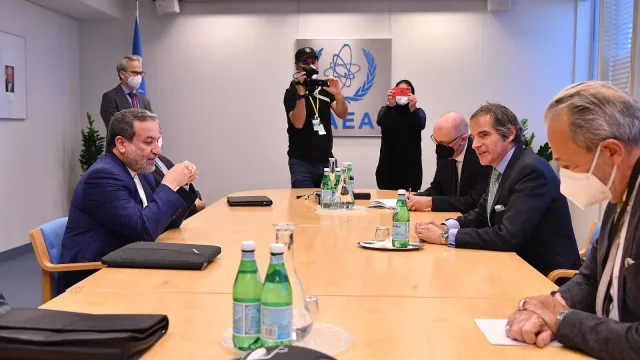
Iran’s Foreign Minister Abbas Araghchi pointed directly to the election results on Sunday, writing on social media that voters had made their priorities clear. Araghchi stated that Tehran maintains a proposal to reopen the Strait of Hormuz within two days if the U.S. meets its conditions, including an end to combat operations, while warning that failure to negotiate would lead to fierce resistance.
Meanwhile, the broader conflict continues to reverberate across the Persian Gulf:
- In Saudi Arabia, Yemen’s Iran-backed Houthi rebels launched an air attack Sunday that struck the Aramco Tower in Riyadh’s King Abdullah Financial District, according to statements from Saudi authorities and Houthi media.
- The Saudi energy ministry reported that intercepted missile fragments caused minor damage, though verified video footage showed shattered windows and structural impact spanning several floors, BBC News reported.
- The regional strikes followed a weekend bombing in Yemen that local officials said killed at least 33 people, prompting Houthi threats of retaliation against Saudi energy infrastructure.
What happens next centers on high-level diplomacy at the White House on Monday, where Trump is scheduled to host Qatari Prime Minister and Foreign Minister Sheikh Mohammed bin Abdulrahman bin Jassim Al Thani. Iranian officials are currently assessing Qatari proposals aimed at bridging the gap between Washington and Tehran, according to the Associated Press.