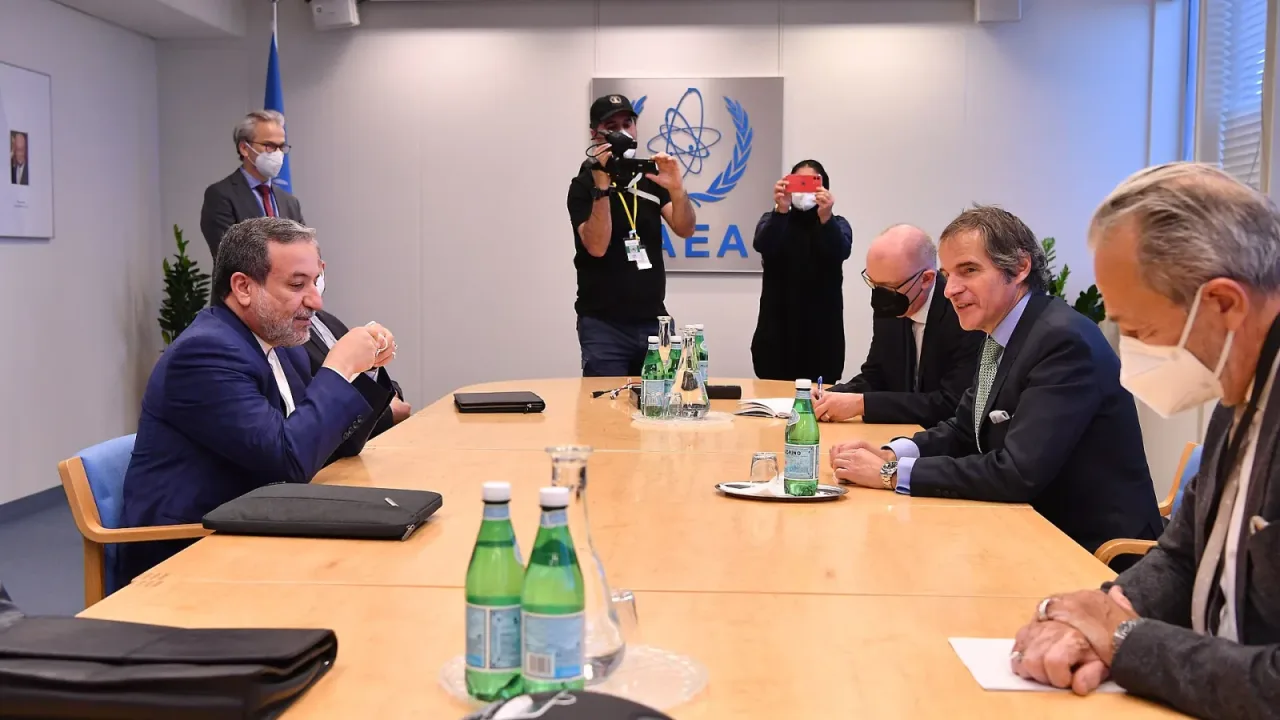
Iranian Foreign Minister Abbas Araghchi on Sunday pressed the United States to agree to a mediated two-day proposal to halt hostilities or face expanded military conflict, pointing to the outcome of last week’s midterm elections as evidence that Americans oppose the war.
Writing on social media platform X, Araghchi stated that Tehran’s two-day offer requires Washington to meet certain demands, including halting military operations on all fronts, or prepare for Iranian forces to “rain down hell,” Yahoo News reported.
Midterm Fallout and Diplomatic Pressure
The ultimatum comes immediately after Tuesday’s elections, in which opposition Democrats captured majorities in both the House and the Senate. According to NBC exit polling reported by Yahoo News, 74 percent of voters viewed the conflict with Iran as a major or crucial element in their voting decisions, and 63 percent stated that military action against Iran was the wrong choice.
Vice President JD Vance has previously identified the military campaign as the central factor behind the Republican defeat, Yahoo News reported. Vance has sought to advance a negotiated resolution, having earlier dispatched a letter to Iranian officials presenting potential terms for peace.
President Donald Trump is still weighing whether to carry out additional strikes against Iranian nuclear installations, The Guardian reported, even as the administration faces internal and political pressure to resolve the crisis. On Fox News, commentator Joel Pollak defended the administration’s military strategy, arguing that confronting Iran was necessary despite the heavy political fallout.
Terms of the Qatari-Mediated Proposal
The diplomatic framework, brokered primarily through Qatar, envisions reopening the Strait of Hormuz to commercial maritime shipping within two days if Washington meets a series of core prerequisites. Those terms include lifting the U.S. naval blockade on Iranian ports, declaring an immediate ceasefire across all fronts, and unfreezing a portion of approximately $8 billion in held Iranian funds, according to reports from Yahoo News and The Guardian.
In return, international negotiators are pressing Iran to permit International Atomic Energy Agency inspectors to examine damaged nuclear facilities containing stockpiles of highly enriched uranium, The Guardian reported. Under that plan, Iran would not be forced to transfer the material abroad, leaving open possibilities such as down-blending the uranium.
Negotiations have nonetheless faced significant hurdles:
- Iranian leaders have voiced strong skepticism toward IAEA Director General Rafael Grossi, alleging that the agency failed to condemn earlier strikes and expressing concern that site data could aid future military targeting, The Guardian reported.
- Tehran has sought broader commitments, such as ending hostilities in Lebanon, withdrawing U.S. military forces near Iran’s coast, easing economic sanctions, and creating a $300 billion post-war reconstruction fund.
- Diplomats from Oman have worked in tandem to establish a formal maritime route through the strait to submit to the International Maritime Organization, seeking a long-term administrative structure compliant with international maritime law.
Escalation in the Strait of Hormuz
The strategic waterway remains severely disrupted following the escalation of the conflict in February. Amir Hayat Moqaddam, an Iranian parliamentary national security official, told state media that only commercial vessels from China, India, Qatar, and Iraq are currently authorized by Tehran to transit the channel, with fee exemptions granted to Qatar and tolls charged to Chinese and Indian tankers.
Risks in the corridor remain high. The Islamic Revolutionary Guard Corps naval wing recently stated that two tankers navigating an unapproved route sustained mine damage and caught fire, claiming the ships had disabled their tracking equipment while operating under U.S. protection, The Guardian reported.
Oil markets have reacted sharply to the prospect of congressional leadership changes and diplomatic breakthroughs, with Brent crude dropping to roughly $94 per gallon midweek before finishing Friday at approximately $98 per gallon, Yahoo News reported. The White House has not yet announced whether it will accept the parameters of the Qatari proposal.