GAZA CITY — Torrential rain from the season’s first major winter storm submerged an estimated 70,000 tents across the Gaza Strip on Saturday, displacing thousands of families and triggering the collapse of multiple weakened structures, local officials reported.
The downpours, which began late Friday, rapidly inundated makeshift camps in Gaza City, northern areas, and central and southern districts such as Deir el-Balah and Khan Younis. Water levels rose by 30 to 40 centimeters in several camps, soaking bedding and forcing residents to wade through mud and overflowing sewage, according to reports from Al Jazeera and local rescue agencies.
Camps Inundated and Rescuers Overwhelmed
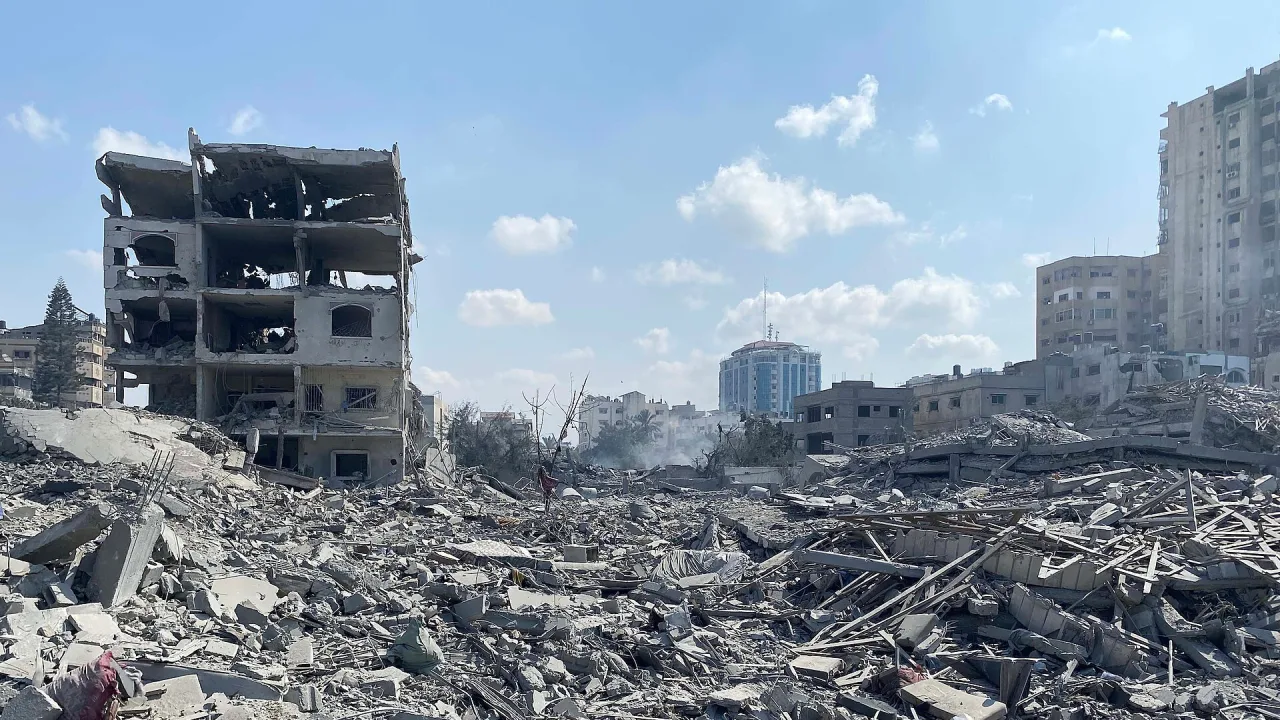
Gaza’s Government Media Office estimated initial storm damages at $3 million, stating that the deluge caused dozens of cracked walls and roofs to collapse, injuring several people. In northern Gaza, a falling building wall injured two people, the Palestinian news agency Wafa reported. Rescuers also evacuated a building in central Nuseirat after it partially collapsed, while three abandoned houses collapsed elsewhere without causing casualties. No fatalities were immediately confirmed.
Gaza’s civil defense agency reported receiving roughly 1,500 emergency distress calls within the storm’s first 10 hours. Civil defense spokesman Mahmoud Basal told Agence France-Presse that crews were forced to respond without adequate resources, explaining that the agency “is operating without any equipment or capabilities.”
Raed al-Dahshan, director of civil defense in Gaza, told Al Jazeera that relief crews could offer little physical protection to flooded residents. “Civil defence does not have a single tarpaulin or a single tent,” al-Dahshan said, adding that teams were limited strictly to life-saving operations.
The extreme weather also disrupted critical medical services. Al-Shifa Medical Complex in Gaza City was forced to shut down its emergency department for approximately four hours after stormwater flooded the facility, hospital director Mohammed Abu Salmiya told Al Jazeera. Abu Salmiya warned that the mixture of sewage and rainwater inside displacement camps creates severe risks of gastrointestinal and respiratory infections, noting extreme danger for newborns and the sick exposed to cold conditions.
Aid Restrictions and Supply Shortages
Local authorities and humanitarian groups cited severe shortages of winter supplies, attributing the crisis to strict border controls maintained by Israel. The Government Media Office held Israeli authorities responsible for the disaster, pointing to long-standing restrictions on shelter and reconstruction imports.
Israel’s military coordinator COGAT has defended cargo limitations by arguing that certain dual-use materials could be converted into weapons and alleging that Hamas loots incoming aid. Before the storm, COGAT stated it facilitated the entry of four vacuum trucks through the International Committee of the Red Cross, bringing the monthly total to 12.
However, aid officials emphasize that the flow of supplies remains severely inadequate. Mohammed Salha, director of the Palestinian NGO Network, told Al Jazeera that only 180 to 200 trucks enter Gaza daily, with only about 40 carrying humanitarian aid, compared to the 600 trucks daily stipulated under earlier humanitarian agreements. Salha noted that approximately 50,000 tents remain stalled on the Egyptian side of the border.
United Nations representatives also highlighted mounting constraints. Jonathan Veitch, UNICEF representative for Palestine, told the BBC that budget cuts have depleted stocks of tarpaulins and plastic sheeting, leaving relief teams unable to meet the overwhelming demand. “We saw last year what winter does, and we had deaths from hypothermia last year,” Veitch said. “We can expect the same again unless we have very, very urgent action now.”
Gaza’s emergency committee estimates that more than one million displaced individuals require urgent assistance, including 200,000 replacement tents and heating supplies, with further stormy weather anticipated in the coming weeks.