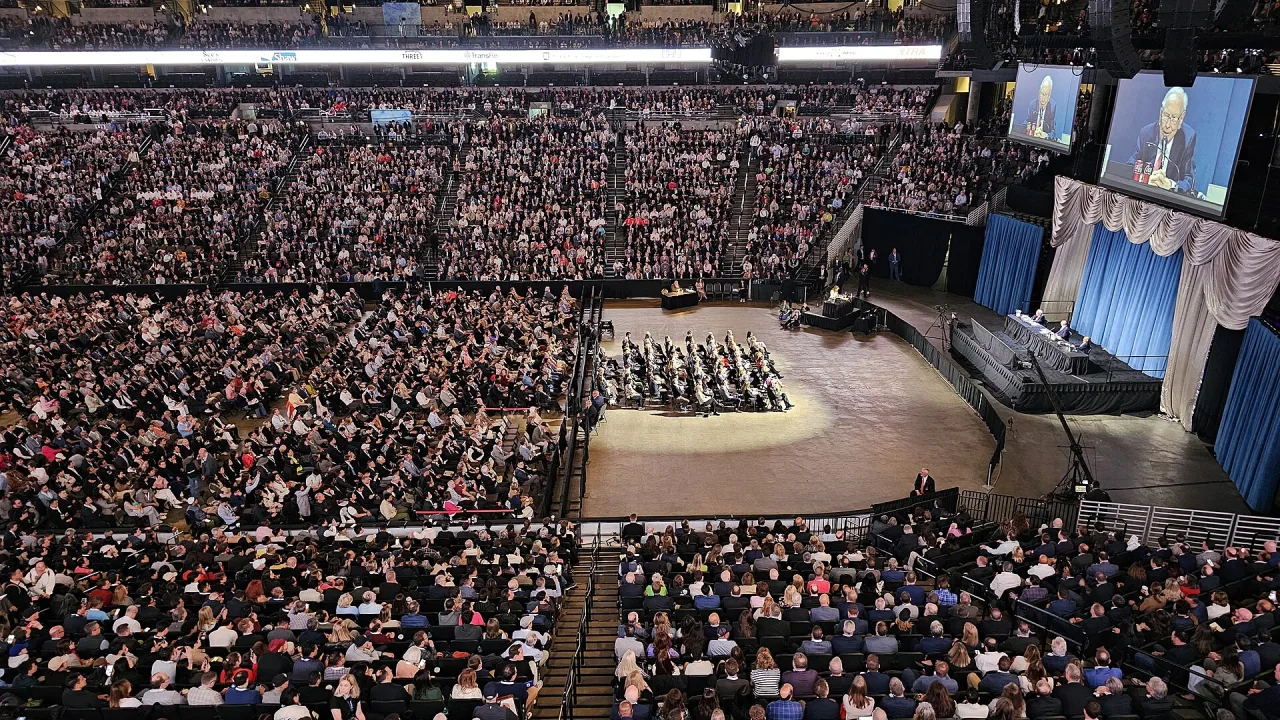
Berkshire Hathaway reported on Saturday that its quarterly share repurchases more than doubled to $9.6 billion, even as lower insurance underwriting profits caused operating earnings to slide during the third quarter.
The financial results capped a week in which the conglomerate’s stock defied a steep Wall Street sell-off. Investors rotated away from artificial intelligence and technology equities, seeking refuge in traditional, cash-rich conglomerates. Berkshire’s Class B shares gained more than 5 percent over the week, setting record closing highs, while the S&P 500 index tumbled 2.7 percent and the tech-heavy Nasdaq Composite dropped 3.4 percent.
Buybacks accelerate under Abel
The $9.6 billion spent on stock repurchases during the third quarter marked a sharp acceleration from the $4.5 billion repurchased in the second quarter, CNBC reported. That brings the company’s total buybacks for 2026 to approximately $14.4 billion. Class B shares have climbed from below $500 at the end of September to surpass $570 this week, according to Business Insider.
The buyback push came during the first year of Chief Executive Officer Greg Abel’s tenure leading the Omaha-based giant. Warren Buffett stepped down as chief executive at the end of 2025. Berkshire’s operating profit fell 5.8 percent year over year to $12.705 billion, compared to $13.485 billion during the third quarter of 2025. That contraction was driven largely by insurance underwriting earnings, which tumbled 43 percent to $1.352 billion, alongside a 14 percent drop in insurance investment income.
Higher profits from other major subsidiaries helped cushion the drop. Operating income rose at BNSF Railway, Berkshire Hathaway Energy, and across the conglomerate’s manufacturing, service, and retail operations. Total net earnings dropped 28 percent to $22.112 billion, as overall investment gains slid to $9.407 billion, according to CNBC.
Slowing stock purchases and a vast cash cushion
Berkshire stepped back from major equity purchases last quarter. The company became a net seller of stocks, purchasing $2.4 billion in shares while selling $2.8 billion, Business Insider reported. That reflected a sharp pivot from the second quarter of 2026, when the firm poured a net $20 billion into equities.
Berkshire’s total cash reserve stood at approximately $365 billion after subtracting $20.5 billion in Treasury payables. The company keeps the vast majority of that reserve invested in short-term U.S. Treasury bills yielding around 4.2 percent, providing substantial recurring interest while preserving liquidity, 24/7 Wall St. reported.
The firm has not escaped all market turbulence. Its position in Google parent Alphabet, built aggressively earlier in the year, faced headwinds as the tech sector retreated. Berkshire held nearly 106 million Alphabet shares as of June 30, but recent declines trimmed the value of the holding by roughly 20 percent to about $30.2 billion, CNBC reported. Berkshire’s other top equity holdings—Apple, American Express, Bank of America, and Coca-Cola—remained steady through the third quarter.
Looking ahead
Berkshire shareholders will learn the specific details of any portfolio adjustments next week, when the conglomerate files its mandatory third-quarter Form 13F with the Securities and Exchange Commission. Investors also continue to watch legal and regulatory developments at unit PacifiCorp, which is seeking a 57 percent rate hike in California while facing wildfire damage liabilities in Oregon.