A coordinated series of hoax bomb threats swept across Europe on Friday, forcing the evacuation of media newsrooms in multiple countries and triggering security alerts on commercial flights, according to news reports.
Broadcasters in Ireland, Bulgaria and the United Kingdom reported receiving threatening emails. In Dublin, Irish public broadcaster RTE evacuated its offices and temporarily halted broadcasting after receiving an email warning an explosive device would detonate within 45 minutes, presenter David McCullagh said on air after programming resumed. The Irish government confirmed that threats were also delivered to Virgin Media, Newstalk radio and The Irish Independent newspaper.
Threats Claim Widening Transport Campaign
In Bulgaria, Nova TV received an identical email under the subject line “Message to the West,” sent under the name “Mikhail Andropov,” Reuters reported. The sender claimed credit for previous flight disruptions across the continent and described the warnings as the opening stage of broader strikes on European transit networks.
British network Sky confirmed that it also detected a security threat and notified police, though authorities have not verified the sender's identity or confirmed whether the dispatch came from whoever caused the aviation alarms earlier in the week.
No explosive devices were detected anywhere, and all targeted passenger planes touched down without injury, according to officials.
Fighter Jets Escort Civilian Flights
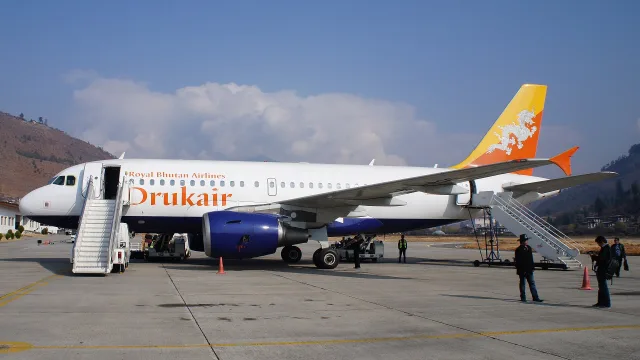
The warnings to media outlets coincided with fresh turmoil in European airspace. At least 18 flights were disrupted across several nations on Friday, including routes connected to Bulgaria, Cyprus, the Czech Republic, France, Hungary, Italy, Portugal and the United Kingdom, The Guardian reported. A Wizz Air flight headed from Prague to Rome diverted to Venice after receiving an alert, an Italian airport official told Reuters.
Hungarian air force fighters scrambled three times to escort airliners flying through national airspace toward Sofia, Bucharest and Cyprus, Hungarian Defense Minister Romulusz Ruszin-Szendi announced on social media. Ruszin-Szendi added that NATO directed air patrol missions near the Hungarian-Romanian boundary, marking the first known involvement of the alliance in the week's security response.
European air navigation agency Eurocontrol noted that the affected aircraft represented a fraction of the roughly 26,700 flights operating across Europe on Friday, and Danish police confirmed Copenhagen airport remained open despite receiving an alert.
Concerns Mount Over Hybrid Aggression
The latest incidents follow disruptions to more than two dozen flights on Thursday and about six on Tuesday. While investigators have identified no definitive proof linking the threats to a foreign government or established terror cell, top European leaders warned that the campaign fits a deliberate push to destabilize the continent.
Spanish Foreign Minister Jose Manuel Albares described the surge in hoaxes as an attempt at “hybrid aggression and a form of psychological warfare,” telling state broadcaster TVE that the identical operating patterns indicated a coordinated scheme. Italian Prime Minister Giorgia Meloni pointed out that whether linked or separate from recent internet attacks that disrupted grocery store refrigeration units, the actions demonstrate that civilian infrastructure has become a primary target.
Moscow has consistently denied any connection to the disruptions. Some earlier threats were attributed to a banned Russian group called Male State, though its founder, Vladislav Pozdnyakov, publicly stated on Telegram that the organization dissolved years ago and played no role.
European security services and police agencies are continuing investigations to identify the sources behind the email campaign, while aviation regulators maintain heightened coordination to handle future alerts.