WASHINGTON — President Donald Trump said he will soon determine whether to negotiate an agreement with Iran or order decisive military action, as American forces in the Middle East assemble plans for potential wide-scale strikes.
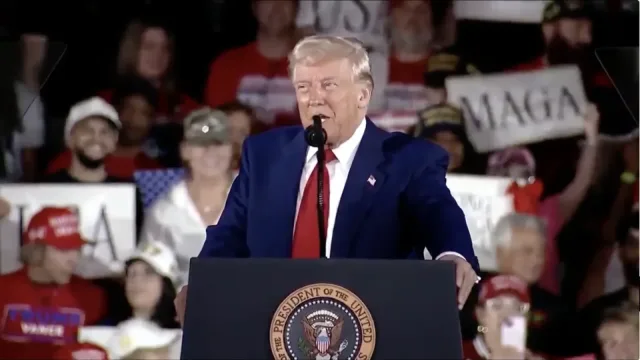
“Do I finish it off, which would be very easy to do, or do I make a deal? It's getting to be decision time,” Trump said during a Fox News interview broadcast Sunday.
The comments come as the American military has positioned sufficient assets in the region to begin operations within 96 hours of receiving a directive from the commander in chief, two U.S. officials told CNN. While Trump has signaled that any renewed offensive would wait until after the Nov. 3 midterm elections, officials familiar with internal deliberations noted that the president is weighing options that could unfold before the year ends.
Military preparations and potential targets
Any fresh round of attacks would likely expand significantly past prior limited efforts aimed at degrading quickly replaceable equipment, CNN reported. Central Command and the Pentagon have assembled an extensive list of prospective targets spanning Iranian military installations, energy infrastructure and nuclear facilities.
During his Sunday interview, Trump specifically cited Pickaxe Mountain, an underground facility tied to Iran's nuclear program, CNBC reported. Claiming that satellite surveillance provides precise tracking of the location, Trump asserted that “the other three [nuclear sites] are obliterated.”
The last confirmed American strikes against Iranian territory took place on Sept. 1. In response to potential escalation, Tehran has warned it is readying a military counterstrike. A recent intelligence assessment from Director of National Intelligence Jay Clayton warned Secretary of State Marco Rubio that Iran has accelerated planning to target American personnel across the region and elsewhere, CNN reported. The U.S. has already directed departures from its embassy in Riyadh, Saudi Arabia, and ordered drawdowns at other regional diplomatic posts.
Allies, diplomacy and waterway tensions
Diplomatic overtures and allied discussions are unfolding simultaneously across the region. Mediators from Qatar traveled to Tehran on Sunday to pursue talks between Washington and Iranian officials, according to Reuters. On Monday, delegates from Saudi Arabia, Turkey and Pakistan also gathered in the Iranian capital following an August mutual defense pact, despite ongoing missile and drone assaults conducted by Yemen's Iran-backed Houthi rebels against Saudi targets.
Meanwhile, Israeli Prime Minister Benjamin Netanyahu has advocated for coordinated strikes against Tehran, but Washington urged restraint to ensure any offensive would be conducted jointly after the upcoming U.S. vote, according to sources cited by CNN. An Israeli security source said Netanyahu wanted a joint strike before Israeli elections, a claim the prime minister's office rejected as false.
Maritime friction also persists in the Strait of Hormuz, where the U.S. maintains a naval blockade on Iranian ports while escorting commercial vessels. Adm. Brad Cooper, commander of U.S. Central Command, toured the waterway by helicopter on Sunday following mine-clearing operations. While Trump asserted that oil shipments have returned to prewar marks, global energy markets face persistent pressure and trade through the corridor remains depressed following incidents that included the sinking of a Singapore-flagged cargo vessel earlier this month.
Whether Trump will order an offensive or opt for a diplomatic compromise remains unresolved, with defense planners awaiting formal guidance once the midterm voting concludes.