Around 6,000 merchant seafarers are stranded near the Strait of Hormuz following a wave of attacks on commercial shipping in the Middle East, the top maritime official at the United Nations warned on Sunday.
Arsenio Dominguez, secretary-general of the International Maritime Organization, cautioned shipping companies against attempting to transit the vital passage until international guarantees can ensure vessel safety. The warning comes amid broader geopolitical hostilities that have disrupted maritime commerce and sparked renewed standoffs across the region.
“The situation continues to be severe and critical when it comes to international shipping,” Dominguez told Fox News Digital, highlighting what he characterized as a “double blockade” that has endangered civilian mariners.
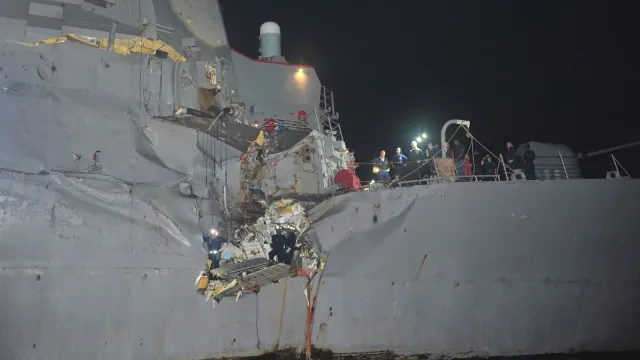
According to a report by the Financial Times cited by Fox News, at least 24 vessels sustained attacks along the strategic waterway over a period of roughly two weeks. Dominguez stated that mariners have continued to lose their lives in the assaults, leaving thousands trapped aboard ships since hostilities flared.
Dispute Over Emergency Frequencies
The maritime turmoil comes alongside formal diplomatic protests lodged by Tehran regarding military operations in adjacent waters. In a letter dated Oct. 9 addressed to the IMO, Iranian officials alleged that the U.S. military had repeatedly hijacked VHF Channel 16, a frequency internationally reserved for emergency distress calls and navigational safety.
According to the Iranian complaint reported by Fox News, U.S. forces operating in the Persian Gulf occupied the frequency for long periods. The letter alleged that American personnel addressed Iranian sailors in Persian using “threatening, abusive and provocative language,” and in several instances ordered crews to abandon their ships.
Security Standoff in Beirut
As maritime routes face severe disruption, regional security strains have also produced confrontations on land. In Lebanon, tensions between the national government and the Iran-backed militant group Hezbollah escalated over an enforcement operation targeting suspected illicit pharmaceuticals, The Jerusalem Post reported.
Armed men affiliated with Hezbollah surrounded a vehicle carrying judicial police on the outskirts of southern Beirut in the Galerie Semaan district. The standoff erupted after the Lebanese Internal Security Forces arrived to inspect warehouses suspected of stockpiling unregulated and unlicensed cancer medications, according to Lebanese media reports and authorities cited by The Jerusalem Post.
The confrontation ended without direct combat after the Lebanese army intervened and arrived at the location, leading the armed Hezbollah members to pull back.
According to MTV Lebanon, the raid had been authorized by Lebanese Attorney-General Ahmad Rami al-Hajj following a referral by Health Minister Rakan Nasr al-Din. The health minister requested the seizure over concerns that the medications failed to comply with medical standards and carried severe risks of spoiling. Hezbollah’s political leadership later condemned the security services, asserting the raid occurred outside its traditional Shia stronghold without following previously established coordination mechanisms between the group and Lebanese authorities.
The clash came as Lebanese security personnel also faced public protests from Hezbollah supporters over the confiscation of explosives allegedly smuggled into the southern sector of Beirut, The Jerusalem Post reported.
Maritime officials have not announced a timeline for establishing safe transit corridors in the Strait of Hormuz, leaving commercial operators and thousands of crew members waiting for diplomatic or military resolutions.