Federal health authorities are sending an investigator and nearly $4 million in emergency assistance to Pennsylvania to help curb the country’s largest measles outbreak, which has sickened more than 1,200 people statewide.
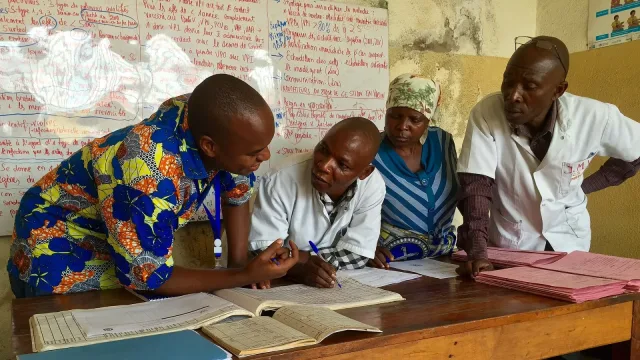
The Centers for Disease Control and Prevention is dispatching a specialist from its Epidemic Intelligence Service following a state request for epidemiological aid, Al Jazeera and The Guardian reported. A CDC spokesperson told NBC News that the agency’s director, Dr. Erica Schwartz, continues to advise the measles, mumps, and rubella vaccine as the most reliable way to prevent infection.
Surging Cases and Hospitalizations
Nationwide, the CDC has recorded 4,410 measles cases this year, including an increase of 330 infections over a single week, according to federal data. The virus has led to 451 hospital admissions across the country. Patients between five and 19 years old account for 42 percent of national infections, adults 20 and older make up 41 percent, and children under five represent 17 percent, Al Jazeera reported.
In Pennsylvania, the contagion has spread through 42 counties and resulted in 225 hospitalizations. News organizations reported varying death tallies: The Guardian and The Philadelphia Inquirer reported six confirmed fatalities in the state, while Al Jazeera noted five confirmed deaths and an active inquiry into a sixth. Among the deceased are two infants in Lancaster County and an 18-year-old woman in Mifflin County, who died from an acute neurological complication of the virus, The Inquirer reported.
Rural Epicenters and Healthcare Gaps
Lancaster County has served as the core of the outbreak, with more than 415 confirmed cases logged by early October, The Guardian reported. Lancaster is the largest county in Pennsylvania without an independent local health department, leaving it dependent on centralized state agencies.
Alice Yoder, a Lancaster County commissioner and former critical care nurse, told The Guardian that lacking a dedicated municipal health agency leaves the area at a distinct disadvantage. Without local staff, county leaders often learn about infections and deaths at the same time as the public, Yoder said.
Meanwhile, Mifflin County has recorded the state’s highest per-capita rate of infection, counting 193 cases since July, according to The Inquirer. The county’s Amish population, estimated at 5,500 people, has been hit disproportionately hard due to traditionally low immunization levels. Seventh-grade vaccination rates in the county stand at roughly 77 percent, compared to 97 percent in Philadelphia County, The Inquirer reported.
Immunization Efforts and Regional Response
Medical providers in Mifflin County have sought to counter vaccine hesitancy, administering nearly 800 MMR vaccine doses across August and September, up sharply from the typical 50 to 75 shots delivered monthly, state figures showed. Across the state, health workers have administered more than 5,900 vaccine doses through 202 pop-up clinics since late April, according to Al Jazeera.
The outbreak has prompted neighboring action. In New York, Gov. Kathy Hochul issued a statewide disaster declaration on Oct. 5 to expand vaccination and testing powers through Nov. 4. Nationally, MMR coverage among U.S. kindergarteners dropped from 95.2 percent in the 2019–2020 academic year to 92.4 percent in 2025–2026, leaving approximately 280,000 children vulnerable, according to CDC figures.
Federal and state health officials are continuing logistical coordination as the CDC investigator arrives on the ground. Healthcare workers in central Pennsylvania are pushing to expand local clinics, though community clinicians acknowledge that measuring the complete reach of the virus among isolated rural households remains an ongoing challenge.