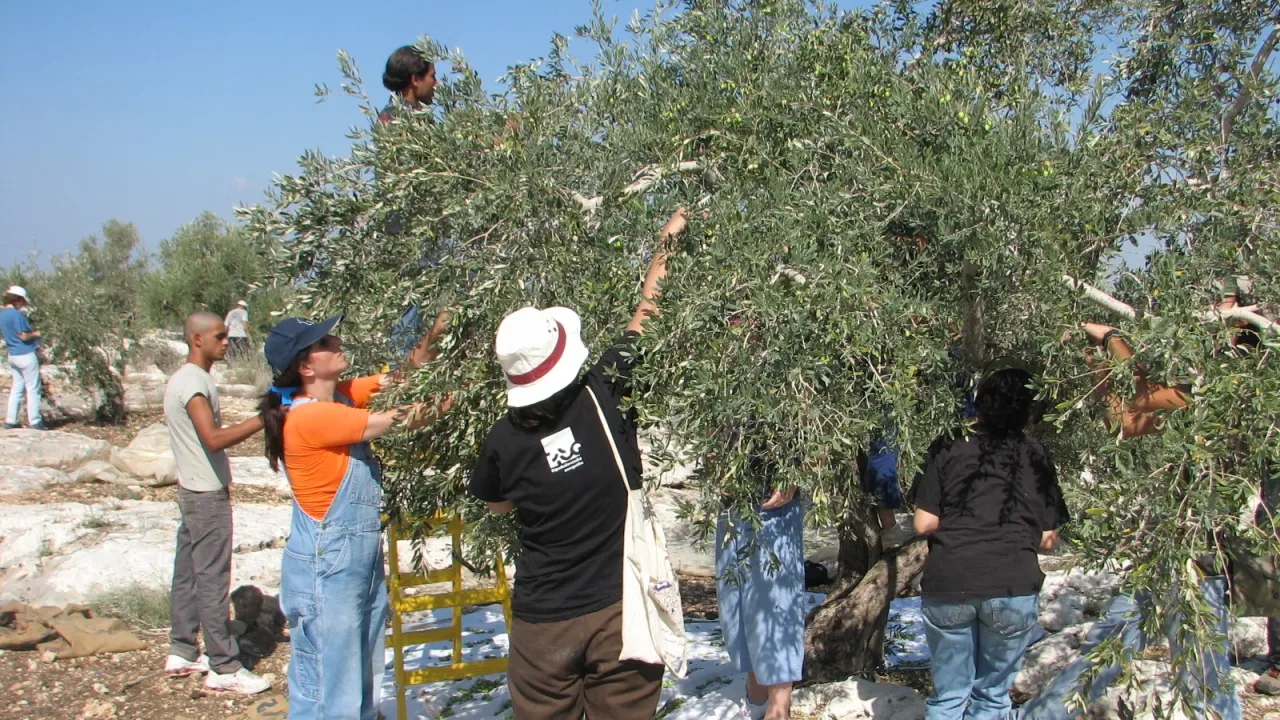
A surge of violent assaults by Israeli settlers targeted Palestinian farmers gathering their annual olive crop across the occupied West Bank on Friday and Saturday, leaving dozens of people hurt, including an American photojournalist, according to emergency responders and news organizations.
The Palestine Red Crescent Society reported that four women and a child were among six individuals wounded Saturday when settlers assaulted residents in the village of Ma’in, located in the Masafer Yatta region south of Hebron, Al Jazeera reported. Attacks were also documented across several other communities, including Kafr Malek, where Mayor Najeh Rustum told Al Jazeera that settlers killed roughly 20 sheep during a dawn raid, following an Israeli military operation that ignited a residential fire with tear gas canisters the previous night.
Assault on American photojournalist
The weekend violence followed an assault on Friday in the village of Abu Falah, where masked settlers attacked Palestinian farmers and beat photojournalist Heidi Levine, who was on assignment for The Washington Post, NPR reported. Levine, who wore a protective vest clearly marked as press, said dozens of masked men descended from a nearby hill wielding slingshots, knocked her down, and repeatedly kicked her before stealing her phone and cameras.
Levine was transported to a hospital in Ramallah for medical care. Washington Post Executive Editor Matt Murray condemned the beating as an “unwarranted attack on a journalist doing her job” and demanded a thorough investigation, NPR reported.
The office of Israeli Prime Minister Benjamin Netanyahu posted on social media that the facts of the incident “remain unclear and are under investigation,” drawing a public rebuke from Murray, who stressed that the photographer’s press identification and the assault itself were indisputable. Israeli police confirmed that an inquiry had been opened to bring those responsible to justice. Meanwhile, the U.S. Department of State condemned criminal violence in the West Bank and noted that it had reached out to The Washington Post to extend consular help, according to NPR.
Widespread damage during crucial harvest
The confrontations took place during a critical economic period for Palestinian agricultural communities. The United Nations humanitarian office reported that settler assaults during this olive harvest season have caused the death of one Palestinian and ruined more than 2,500 olive trees and saplings, according to NPR.
Emergency workers and monitoring groups cited heavy tolls over the two-day span. The Palestine Red Crescent Society recorded 20 injuries across two dozen attacks on Friday alone, NPR reported, while Al Jazeera noted that at least 19 people were injured in 34 incidents that day. Al Jazeera also reported that more than 300 settler assaults have been tracked since early October, with gunfire, stone-throwing and property damage preventing villagers from gathering their crops in areas such as Deir Ammar, Tuqu, Deir Jarir and Burqa.
Religious decree sparks dispute
Tensions further deepened after Rabbi Dov Lior, an influential figure among the hardline Hilltop Youth and the spiritual mentor for National Security Minister Itamar Ben-Gvir’s Jewish Power party, issued a religious edict permitting settlers to take olives from Palestinian groves, Al Jazeera reported. Lior argued that harvesting fruit across the territory fulfilled a divine decree to demonstrate Jewish ownership.
The decree prompted internal condemnation among Israeli religious and political figures. Rabbis from the Gush Etzion settlement council described unauthorized harvesting of Palestinian crops as theft and a moral failing, while the Tzohar rabbinical group stated that private property rights remain legally binding, Al Jazeera reported. Gilad Kariv, a member of the Israeli Knesset from the Democrats Party, denounced the ruling and warned against religious extremism.
Israeli police have stated that inquiries into Friday’s attacks remain ongoing, but human rights groups and press freedom monitors question whether suspects will face prosecution. With Israel’s general elections approaching on Oct. 27, it remains uncertain whether authorities will enforce measures to curb further clashes before the harvest concludes.