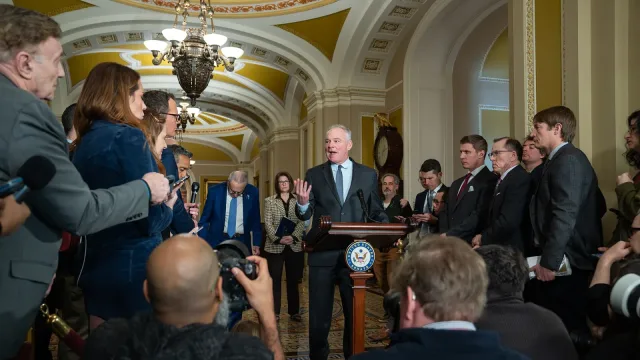
SHENZHEN, China — In an unprecedented trilateral meeting, President Donald Trump, Chinese President Xi Jinping and Russian President Vladimir Putin gathered Thursday in Shenzhen to discuss strategic security, nuclear weapons and energy supplies.
The talks took place during the 2026 Asia-Pacific Economic Cooperation summit and marked the first time the heads of state from the three global powers held a collective meeting, Fox News reported. Following the 80-minute session, the leaders issued a joint peace declaration pledging mutual cooperation on several international fronts, though observers noted the agreement remained broad and light on concrete enforcement details.
Pledges on nuclear weapons and energy
In their joint declaration, titled the “U.S.-Russia-China Heads of State Declaration toward Peace,” the three leaders agreed to pursue future dialogues aimed at curbing nuclear arms proliferation and reducing the threat of atomic conflict. All three governments incorporated language affirming that a nuclear confrontation cannot be won and should never occur, according to statements released by the White House, the Russian Foreign Ministry and Chinese state entities.
The summit also touched heavily on global commodity markets. The three nations agreed to raise output and supply of refined petroleum products to stabilize international energy flows, Fox News reported. Additionally, the joint statement included an admonishment directed toward the International Criminal Court, which has attempted to arrest Putin over alleged war crimes in Ukraine, according to PBS News.
Trump emphasized personal diplomacy during the encounter, calling his counterparts friends and asserting that direct communication is necessary to prevent global crises. “No peace was ever forged by declining opportunities for engagement,” Trump said, as reported by PBS News. He added that the three powers remain uniquely positioned to work together to lessen the risk of nuclear arms being deployed.
Historical echoes and allied concerns
The leaders invoked the wartime alliances of the past during their discussions. Putin characterized the trio as the victors of World War II who carry a shared responsibility for global security, PBS News reported. Xi also referenced the nations’ historical anti-fascist coalition from more than 80 years ago, calling the summit a groundbreaking milestone for world peace.
The show of camaraderie prompted swift unease among traditional American allies. European leaders raised alarms regarding the warm reception shown to the Russian leader amid the ongoing war in Ukraine. Polish Prime Minister Donald Tusk rejected the spirit of rapprochement, stating bluntly that Putin is not an ally and will never be one, PBS News reported.
Despite the outward displays of unity, deep friction continues to define relations between Washington and Beijing. The two nations remain deadlocked over semiconductor export curbs, with American restrictions and Taiwanese manufacturer TSMC cutting off Chinese access to advanced microchips. In return, Beijing has curbed exports of critical heavy earth magnets. Chinese state media reported that Xi cautioned Trump during the visit to handle policy regarding Taiwan carefully, referencing current delays in American arms shipments to the island.
Economic disputes also loom over the diplomatic breakthrough, as an existing trade truce between the United States and China is scheduled to lapse in two months. While Trump pressed Xi during their talks to boost Chinese purchases of American farm goods, negotiators reached no formal deal extending the trade pact before departing Shenzhen.