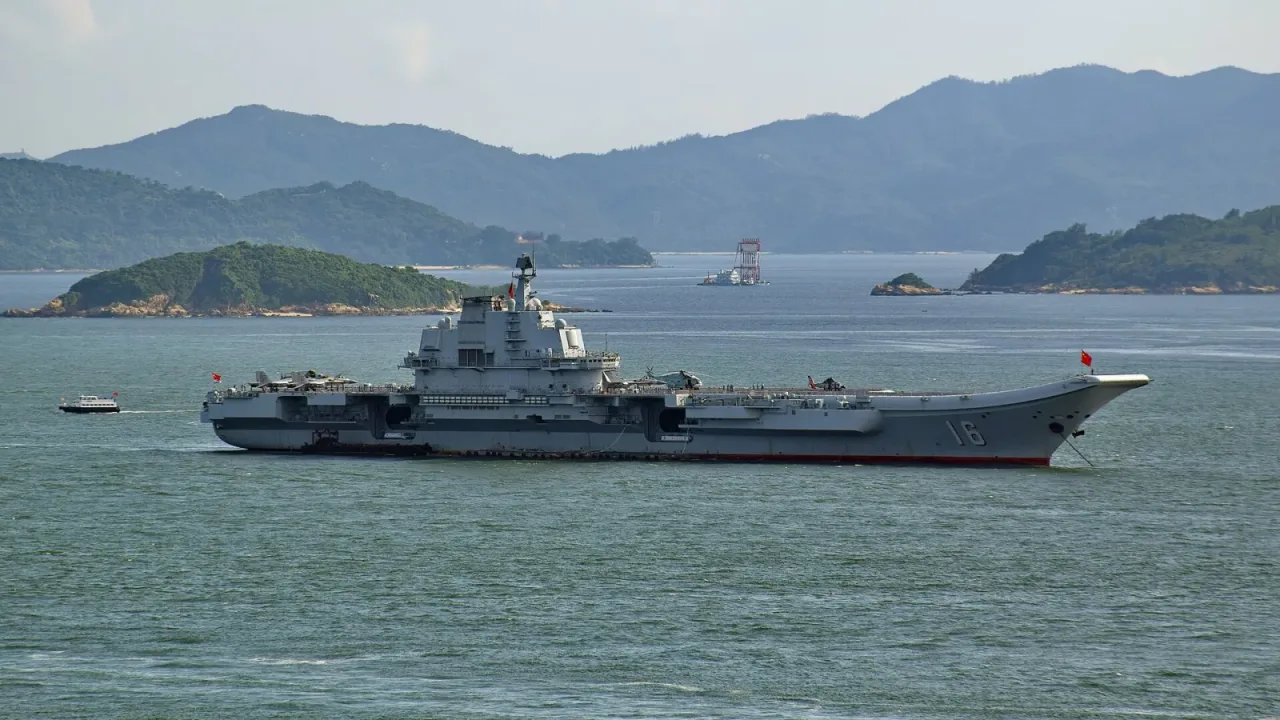
China has deployed more than 100 naval and coast guard vessels across a vast maritime arc in the Western Pacific for unannounced military exercises, according to security officials in Taiwan and regional defense analysts. The widespread operations, which include aircraft carriers and guided-missile destroyers operating east of Taiwan, have drawn sharp rebukes from Group of Seven foreign ministers.
Speaking on Tuesday, Taiwanese Defense Minister Wellington Koo said Beijing was carrying out “area denial” exercises in the Western Pacific featuring an aircraft carrier and multiple naval formations. The massive deployment included forces operating in critical maritime corridors where international resupply ships would need to navigate during a potential cross-strait crisis.
According to Joseph Wu, the secretary-general of Taiwan’s National Security Council, Chinese naval and coast guard forces had deployed more than 100 vessels by Nov. 3. The armada spanned an area bending from Hainan Island through the South China Sea, stretching out toward Guam, continuing past Okinawa, and back into the Yellow Sea.
Coordinated Fleet Operations
The Australian Strategic Policy Institute reported that the unannounced manoeuvres represented what appeared to be China’s largest naval exercise this year. The maneuvers brought together four surface task groups from the People’s Liberation Army’s Eastern, Northern, and Southern Theater Commands. Observers noted that Beijing’s coastal theater commands have historically rarely coordinated such large surface forces simultaneously beyond the first island chain.
The naval deployment featured two of China’s three aircraft carriers, including the Liaoning carrier strike group stationed east of Taiwan and the Fujian operating in the South China Sea. At least four of China’s 10 Type 055 destroyers were also spotted taking part in the maneuvers.
Unlike prior high-profile military demonstrations, such as last December’s named “Justice Mission” drills, Beijing published no official announcement regarding the recent Pacific exercises. Security analysts cited by the institute noted that the lack of public notice aligns with an ongoing effort to normalize a heavy Chinese military presence off Taiwan’s eastern coast, where the country has also conducted regular coast guard patrols since June.
International Response
The unannounced drills prompted a joint declaration from G7 foreign ministers meeting in Paris. The ministers from the U.S., the United Kingdom, France, Germany, and other member states warned that China’s increasingly assertive maritime behavior east of Taiwan threatens freedom of navigation, shipping safety, and regional stability.
In their statement, the G7 ministers reiterated firm opposition to any unilateral attempts to alter the status quo through force or coercion. The Chinese Ministry of Foreign Affairs did not immediately respond to requests for comment regarding the joint statement.
In Taipei, Presidential Office spokeswoman Karen Kuo welcomed the G7 position, stating that peace and stability across the Indo-Pacific remain essential to global security. Kuo added that Taiwan intends to strengthen its defense capabilities while deepening security cooperation with international partners. Officials in Taipei continue to monitor Chinese military movements, which operate around the island on a daily basis.