WASHINGTON — The United States appears to be positioning forces for a potential resumption of major strikes against Iran, following weeks of maritime skirmishes and mounting threats between Washington and Tehran.
While neither side has conducted major land-based attacks since early September, both militaries have remained locked in a conflict centered on commercial shipping lanes. American forces have sought to enforce a naval blockade of Iranian ports, while Tehran has attempted to assert dominance over the strategic Strait of Hormuz waterway, Yahoo News reported.
Military deployments and political calculations
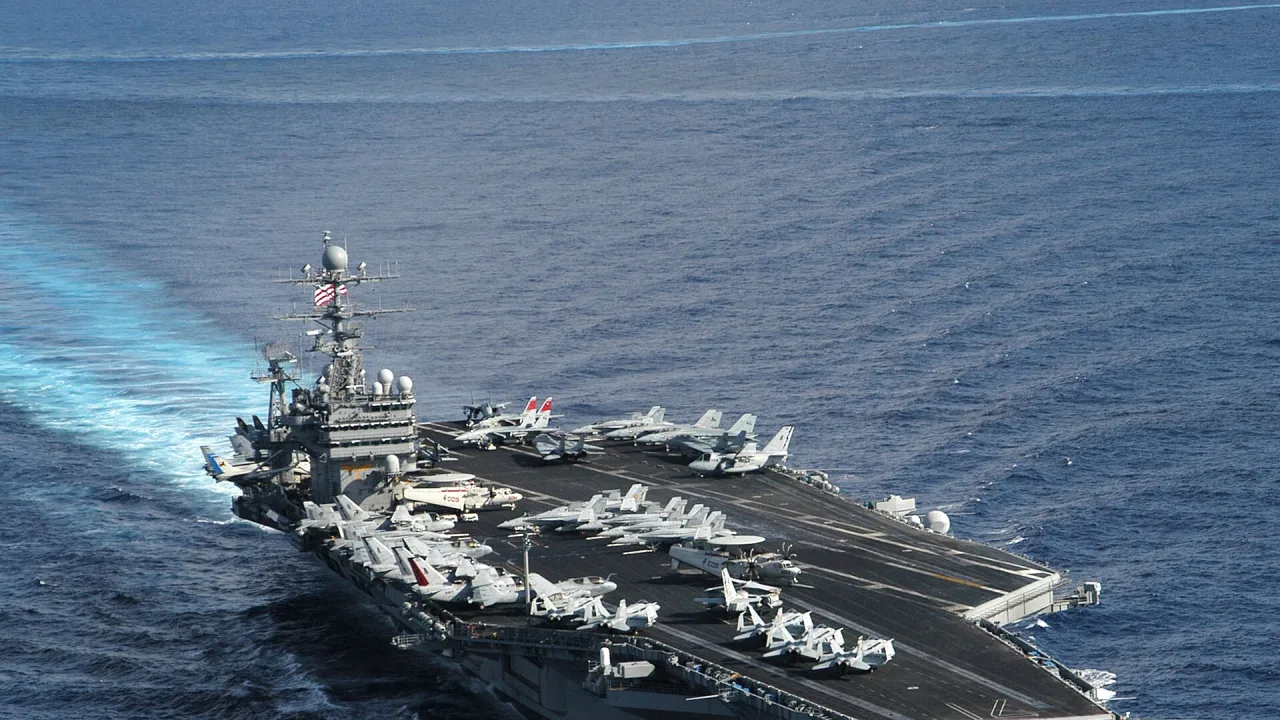
Signs of escalating preparations have grown in recent days. The Pentagon is preparing to send the aircraft carrier USS Theodore Roosevelt to the Middle East, a deployment that could temporarily increase the number of U.S. carrier strike groups in the region to three, according to Jason Campbell, a senior fellow at the Middle East Institute. An additional Marine Expeditionary Unit is also being dispatched to the theater.
Regional allies are also moving on high alert. Israeli warplanes recently staged flight exercises mimicking earlier air operations against Iranian targets, Campbell noted, while U.S. Defense Secretary Pete Hegseth held meetings in Israel with Prime Minister Benjamin Netanyahu.
President Donald Trump said Friday that the military “may do another little Epic Fury” — referencing the joint military operation begun in late February — unless Tehran agrees to negotiate terms, though he gave no specific timetable. He has also stated publicly that he would not authorize strikes prior to the Nov. 3 midterm elections.
The protracted confrontation has strained the American electorate, primarily by driving fuel prices sharply higher, which political analysts view as a potential vulnerability for Republicans at the polls. Suzanne Maloney, foreign policy program director at the Brookings Institution, told Yahoo News she anticipates the likelihood of American strikes taking place shortly after the midterm vote.
Expanded target lists and low margins for error
The conflict risks expanding well beyond maritime confrontations. Two Iranian officials, including a member of the Islamic Revolutionary Guard Corps, told The New York Times that Tehran has widened its own list of potential targets to encompass U.S. diplomats and personnel, defending those targets as “fair game” following strikes that killed Iranian leaders and family members.
Diplomats fear a catastrophic miscalculation could rapidly accelerate the fighting. A senior European official told The New York Times that an incident as isolated as a single gunshot aimed at an American official or an errant blast near a leadership bunker in Iran could immediately spark a broader war.
Senior American officials told The New York Times that Trump has privately shown an inclination toward launching another round of significant operations. Those contingency plans include an expanded target set directed at energy facilities and other assets vital to the Iranian economy, an official familiar with the planning told the newspaper.
Doubts over a military solution
Despite the build-up, defense specialists caution that expanded military operations are unlikely to break the stalemate or force Iranian capitulation.
Maloney noted that previous bombing runs have already degraded much of Iran’s conventional military infrastructure, suggesting any new wave of attacks would likely focus on civilian or dual-use infrastructure that directly impacts the Iranian population. However, she emphasized that further escalation is incapable of ending the war.
Ground options also remain severely constrained. Campbell told Yahoo News that extensive damage inflicted on U.S. regional facilities during earlier fighting has left commanders without a secure staging area to support the thousands of troops required for large-scale land maneuvers. Furthermore, he observed that Tehran has proven willing to endure substantial physical hardship without shifting its strategic posture.
For now, both nations remain on edge, awaiting either a diplomatic opening or the spark that triggers a fresh wave of violence across the region.