A federal appeals court on Monday opened a potential avenue for President Donald Trump to challenge his New York criminal conviction in federal court, ruling that a lower federal court judge erred in denying his request to transfer the case. A three-judge panel of the 2nd U.S. Circuit Court of Appeals instructed a district court to reconsider Trump’s motion to remove the state criminal case, where his legal team intends to seek dismissal based on presidential immunity.
In a brief two-page order, Circuit Judges Raymond Lohier, John Walker, and Jose Cabranes concluded that the district court had erred by determining that a post-conviction removal to federal court was categorically unavailable. The panel also found that the lower court erred in ruling that Trump had failed to demonstrate good cause to submit a second notice of removal.
To preserve the status quo while the federal venue question is evaluated, the appellate panel asked that state courts hold off on any further proceedings. The request effectively freezes Trump’s ongoing appeal of the conviction through New York state courts.
Origins of the Hush Money Conviction
A Manhattan jury convicted Trump in May 2024 on 34 felony counts of falsifying business records. Prosecutors alleged that he engaged in a scheme during the 2016 election cycle to cover up hush money payments made to adult film actress Stormy Daniels, and later managed the reimbursement process while serving in the White House. Trump has repeatedly denied all wrongdoing.
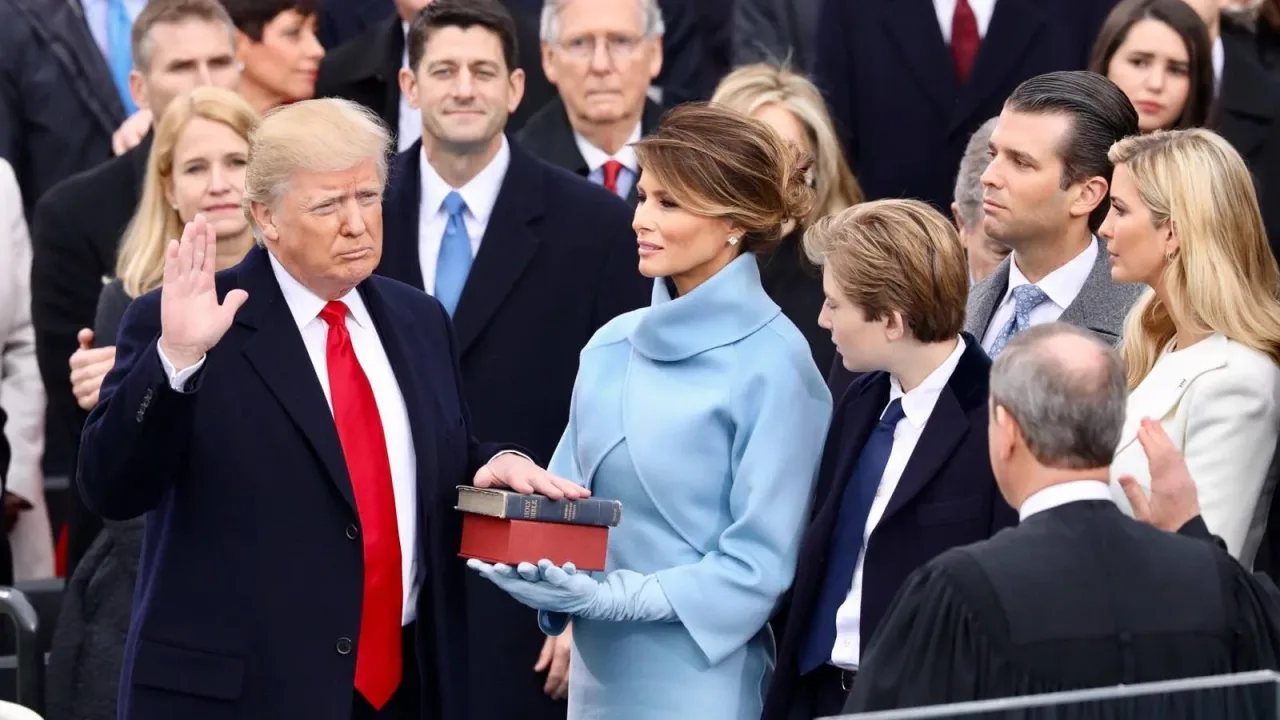
Following his presidential election victory later that year, Trump was sentenced to an unconditional discharge ten days prior to taking office for his second term. The sentence meant the felony conviction remained on his record without subjecting him to prison time or financial penalties. However, his defense attorneys have argued that a 2024 U.S. Supreme Court decision on presidential immunity requires the conviction to be thrown out.
Under the order issued Monday, if the federal district court concludes that the case should be moved to federal jurisdiction, it must adopt the state court judgment. That step would enable Trump to formally appeal the conviction before the 2nd Circuit on immunity grounds.
Arguments and Next Steps
A spokesperson for Trump’s legal team praised the appellate order on Monday, calling it a prompt and correct decision. The spokesperson declared that established legal rules and the Supreme Court’s ruling on presidential immunity mandate that the case be transferred to federal court and dismissed. A spokesperson for the Manhattan district attorney’s office declined to comment.
During oral arguments last week, prosecutor Steven Wu of the district attorney’s office urged the panel to leave the case in state court, arguing that Trump had been prosecuted for falsifying commercial records rather than official presidential acts. Defense attorney Robert Giuffra acknowledged that attempting to move a case to federal court after a conviction is unusual, but noted the unprecedented nature of the prosecution.
It remains unclear which judge will preside over the case at the district court level. U.S. District Judge Alvin Hellerstein, who previously rejected Trump’s transfer requests after finding that hush money payments were unrelated to official presidential duties, died last month at age 92. The district court case has not yet been reassigned.