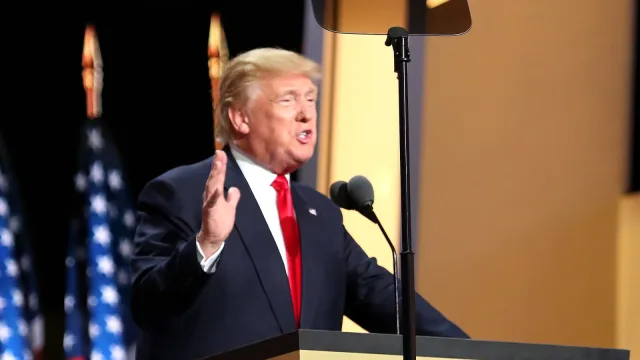
President Donald Trump is scheduled to hold a White House press conference at noon on Friday following his return to Washington from a four-day trip to Asia. The tour was highlighted by an unprecedented three-way summit in Shenzhen, China, alongside Chinese President Xi Jinping and Russian President Vladimir Putin on the sidelines of the Asia-Pacific Economic Cooperation summit.
Trump did not take questions from reporters in China before departing, making Friday’s event his first formal media interaction since the gathering. The U.S. leader indicated he will address the historic talks in China as well as trade deals discussed during an earlier leg of his trip in the Philippines, NPR reported.
Trilateral Discussions and Joint Commitments
On Thursday, Trump, Xi, and Putin met around a large wooden table at Kylin Villa in Shenzhen to discuss global issues including nuclear risk reduction, Iran, and international relations. In opening remarks, Trump described the gathering as history in the making, emphasizing that world leaders must maintain open dialogue despite past disagreements, according to NPR.
Following the session, the three nations issued a joint statement outlining shared goals. According to ABC News and Economies.com, the declaration addressed four principal areas: lowering nuclear risks, reforming the United Nations, bolstering global energy security by increasing refined petroleum product supplies, and preserving diplomatic immunity.
Despite taking no formal press questions in China, Trump expressed enthusiasm about the summit during an interview with NBC News, rating the meeting a “12” on a scale from zero to 10 and noting that “fantastic relationships” were established, ABC News reported. State-run Xinhua News Agency stated that Xi characterized the trilateral talks as “positive, constructive and fruitful.”
Bilateral Talks and Geopolitical Dynamics
Prior to the trilateral summit, Trump held his third one-on-one meeting of the year with Xi. During their bilateral session, Xi urged cooperation on artificial intelligence while warning against generating “turbulence” regarding Taiwan, ABC News reported. Trump told Fox News he also briefly brought up issues surrounding chipmaker Nvidia, following the recent resignation of its chief executive, Jensen Huang.
Trump also held separate talks with Putin. Discussing Russia’s ongoing conflict with Ukraine, which is entering its fifth year, Trump told reporters he believed progress was occurring and expressed hope that both sides desire an end to the fighting, according to ABC News.
Earlier in the week, Trump visited Manila for meetings with South Asian leaders, participating in a Quad session alongside the leaders of Australia, India, and Japan, and conferring with Thai Prime Minister Anutin Charnvirakul on trade matters.
Analyst Assessment and Market Reactions
Foreign policy experts noted that while the gathering provided significant visual impact, it yielded few immediate policy shifts. Suzanne Maloney, vice president and foreign policy director at the Brookings Institution, told NPR that the trip allowed Trump to highlight direct engagement with major international rivals, though neither Xi nor Putin appeared prepared to offer substantial concessions.
Similarly, Ian Bremmer, president of the Eurasia Group, noted on CNBC’s Squawk Box Asia that while the summit’s optics were striking, limited concrete progress occurred, adding that any resolution to the Ukraine war would require direct involvement from Ukrainian President Volodymyr Zelenskyy and European allies.
Financial analysts observed that the summit closed without concrete agreements on major economic friction points, such as tariffs, critical mineral exports, or relaxed U.S. controls on advanced semiconductor shipments to China, Economies.com reported. The White House press briefing is expected to provide further details on next steps following the Asia tour.