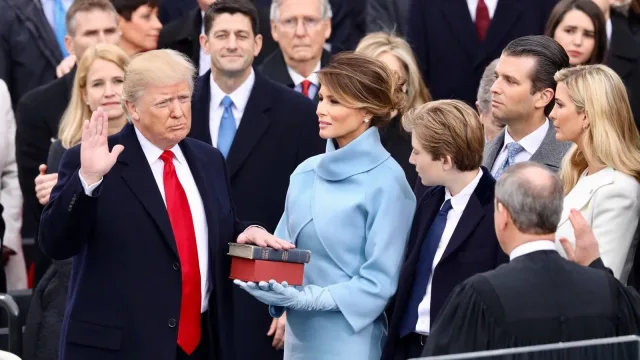
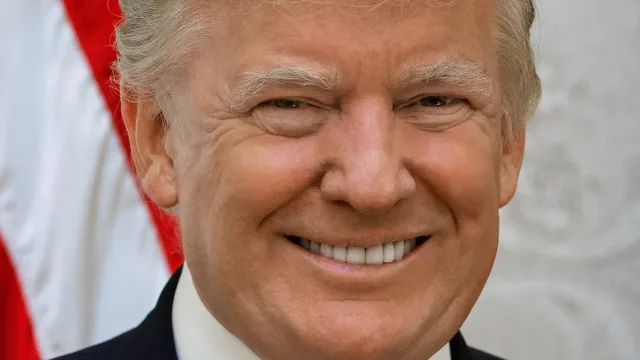
President Donald Trump said Saturday that he is ready to partner with incoming congressional Democrats to place a cap on credit card interest rates, reviving an economic proposal that languished under Republican control of Capitol Hill.
Speaking on Fox News Channel’s “Saturday in America,” Trump argued that lending firms impose excessive burdens on consumers. “I would do it. These credit card companies have made a lot,” Trump said, adding that “the fees are too high and the interests are too high.”
The comments signal an unusual area of potential cooperation between the White House and Democrats, who won majorities in both the House of Representatives and the Senate in the recent elections. Trump previously campaigned on capping borrowing costs at 10 percent during the 2024 presidential race and pushed the policy in January as part of a broader affordability agenda. However, the measure failed to gain traction among congressional Republicans or overcome fierce lobbying from financial institutions.
Unusual political alignment
The incoming transfer of congressional power could breathe new life into the proposal. Sen. Elizabeth Warren, a Massachusetts Democrat expected to lead the Senate Banking Committee next year, swiftly welcomed Trump’s remarks. “Let’s cap credit card interest rates and save Americans money,” Warren said, having previously noted that she prepared legislation to enact the 10 percent ceiling.
Other lawmakers have pushed similar legislation across party lines. Republican Sen. Josh Hawley of Missouri joined independent Sen. Bernie Sanders of Vermont to introduce a measure limiting credit card interest rates to 10 percent for five years. Rep. Maxine Waters of California, a prominent Democrat on the House Financial Services Committee, has also voiced support for limiting rates.
Household balance sheets are under mounting strain from borrowing costs. Commercial bank credit card accounts assessed interest averaged roughly 22 percent, according to Federal Reserve data, while total credit card debt hovered between $1.23 trillion and $1.28 trillion in the third quarter, Federal Reserve Bank of New York figures show.
Researchers who examined Trump’s initial proposal determined that capping rates at 10 percent would save American consumers about $100 billion each year in interest payments. A cardholder carrying a $5,000 balance at typical rates pays roughly $100 a month in interest alone, compared to about $42 per month under a 10 percent ceiling, CBS News reported.
Banking resistance and legislative obstacles
Despite populist support, any federal rate limit faces stiff resistance from the financial sector and key conservative lawmakers. Bank lobbying groups argue that government rate caps would severely harm consumer credit markets.
Spokespeople for the American Bankers Association and Consumer Bankers Association warned that an artificial ceiling would compel lenders to shutter accounts, lower borrowing limits, and eliminate popular reward programs. Industry representatives caution that such measures would disproportionately cut off lower-income individuals and borrowers with lower credit ratings from mainstream lending.
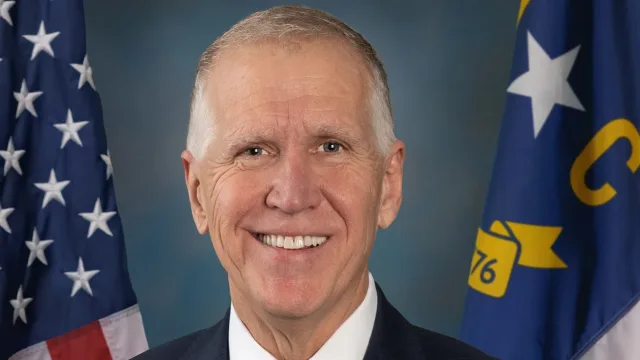
Several prominent Republicans have voiced similar skepticism. Outgoing Senate Majority Leader John Thune previously indicated that an interest cap was not something he supported, while Sen. Thom Tillis of North Carolina declared himself opposed to government price setting on credit.
When the new Congress convenes in January, Democratic leaders will decide whether to prioritize a credit cap bill on the floor. Even with presidential backing and Democratic majorities, any legislation will likely need to navigate procedural hurdles in the Senate, where a 60-vote threshold remains required to advance most bills.