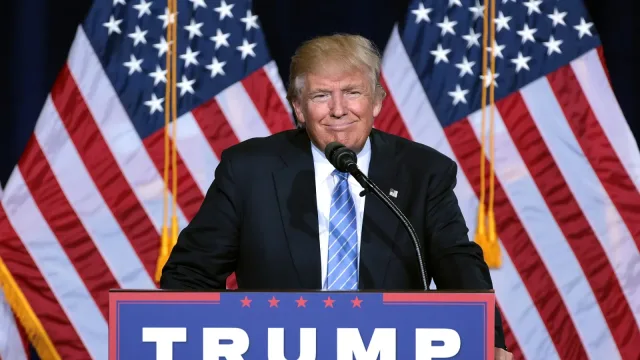
WEST PALM BEACH, Fla. — President Donald Trump demanded an immediate investigation on Thursday into federal economic data released before the midterm elections, calling the figures “fake” after official estimates for third-quarter growth were revised significantly upward.
Writing on Truth Social on Thanksgiving Day, Trump accused the Commerce Department of making a “massive, and purposeful, error” by initially reporting on Oct. 29 that gross domestic product grew at an annualized rate of 3.4 percent. The department’s Bureau of Economic Analysis revised that figure on Wednesday to 4.3 percent, reflecting stronger third-quarter economic growth than previously calculated.
“Why wasn’t the correct number issued before the Election? I am asking for an immediate investigation of this situation,” Trump posted on social media. The president linked the timing of the earlier estimate to the Nov. 3 midterm elections, in which Republicans lost control of both houses of Congress to Democrats.
Standard Data Revisions
The Commerce Department did not immediately respond to requests for comment on Thursday, when federal offices were closed for the holiday. The Bureau of Economic Analysis routinely updates economic figures on a pre-scheduled timetable as more complete survey data on business investment, trade and consumer spending become available.
According to the agency, the latest upward revision resulted from updated Producer Price Index data from the Bureau of Labor Statistics, which pointed to stronger consumer spending than initial models indicated. A study co-authored earlier this year by Bureau of Economic Analysis Director Vipin Arora, who has led the agency since 2022, noted that third-quarter GDP estimates released 90 days after initial figures typically adjust by about 0.52 percentage points as more complete information arrives.
There is no evidence that federal officials altered the pre-election data for political purposes, according to reporting from major news outlets. Federal statistical agencies operate under nonpartisan mandates, though low survey response rates in recent years have led to larger routine adjustments across various government economic releases.
Pattern of Questioning Data
Trump’s calls for an inquiry follow a pattern of questioning government economic statistics that conflict with his public statements. In August 2025, Trump fired Bureau of Labor Statistics Commissioner Erika McEntarfer after a weak monthly jobs report showed the economy added 73,000 jobs in July 2025 alongside downward revisions of 258,000 jobs for May and June of that year. Trump characterized that jobs report at the time as “phony” and “rigged.”
Economic concerns weighed heavily on voters during the Nov. 3 midterms. According to the AP Voter Poll, 76 percent of voters described national economic conditions as “not so good” or “poor,” with approximately two-thirds indicating that administration policies had contributed to inflation.
Along with the revised GDP figures, the Commerce Department reported Wednesday that the personal consumption expenditures price index — the key inflation metric tracked by the Federal Reserve — rose to an annual rate of 3.8 percent in October. Meanwhile, financial markets have experienced recent volatility, with the Dow Jones Industrial Average dropping more than 2,100 points over the past month.
It remains unclear which government body or inspector general might review Trump’s request for an investigation, or whether the Commerce Department will issue a formal response when federal offices reopen following the Thanksgiving holiday weekend.