WASHINGTON — President Donald Trump held a wide-ranging 90-minute news conference at the White House on Friday, defending his relationship with Russian President Vladimir Putin and proposing new taxes to prevent American artificial intelligence companies from building data centers overseas.
The briefing room appearance came less than a day after Trump returned from a trip to Asia, where he attended the Association of Southeast Asian Nations summit in Manila and the Asia-Pacific Economic Cooperation forum in Shenzhen, China. During the trip, Trump participated in meetings with Chinese President Xi Jinping and Putin, drawing scrutiny from critics after describing Putin as a friend.
Foreign Relations and Russia
Addressing reporters’ questions about his interactions with foreign leaders, Trump stood by his rapport with the Russian president while declining to assert whether Putin is a friend to the nation. “I don’t know if he’s a friend of the U.S.,” Trump said, adding that the two leaders maintain a strong relationship, PBS News reported.
Secretary of State Marco Rubio, who joined Trump at the podium alongside Vice President JD Vance, defended the diplomatic engagement between major global powers. Rubio noted that the United States, Russia and China hold the majority of the world’s nuclear arsenal, arguing that regular interaction among their leaders is essential for global stability and security.
While Trump reiterated during the briefing that Putin desires peace, PBS News noted that Russian forces launched strikes against Ukraine earlier Friday morning.
AI Policies and Data Centers
Shifting to domestic policy and technology, Trump announced plans to penalize U.S. companies that construct AI data centers outside the country. The president emphasized that the United States must maintain physical infrastructure at home to stay competitive with China in the growing AI sector.
“We’re not going to allow companies to build data centers in other countries,” Trump said, warning that companies expanding abroad would face heavy financial penalties. “If they do that, they can, but we’re going to put a tremendous tax on them if they do it. We want them to build it here.”
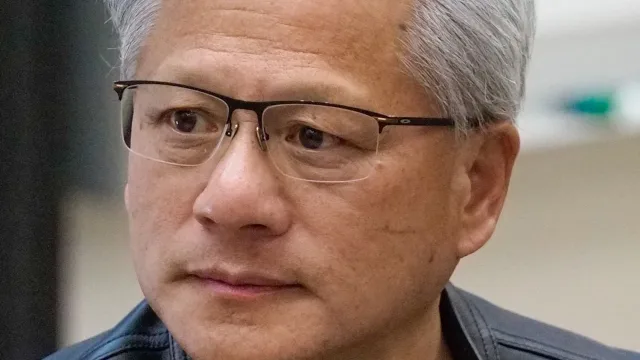
The proposal follows recent administrative actions regarding technology policy. Earlier in the week, Jensen Huang stepped down as chief executive of Nvidia, after which the White House introduced strict rules limiting global exports of specialized AI chips. Meanwhile, Trump praised the Senate for passing permitting reform legislation intended to streamline domestic infrastructure projects, including data center construction.
Domestic Politics and Energy
Looking ahead to a changing legislative landscape, Trump addressed how his administration plans to interact with incoming Democratic majorities in Congress. He noted that he considers incoming likely House Speaker Hakeem Jeffries to be smart and expressed willingness to work with Democrats on select issues, specifically identifying healthcare and immigration as potential areas for bipartisan cooperation.
During the press conference, Trump also touched on energy markets, discussing a recent 20 percent drop in domestic gasoline prices. He suggested that future fuel costs will depend heavily on upcoming diplomatic outcomes regarding Iran, stating that Iranian officials want to reach a deal but have not yet agreed to terms acceptable to his administration.
Several high-ranking officials observed the briefing from the side of the stage, including Defense Secretary Pete Hegseth, Treasury Secretary Scott Bessent and White House Chief of Staff Stephen Miller.