WASHINGTON — The U.S. Department of Education is implementing major regulatory changes to how American colleges and universities achieve accreditation, introducing new requirements for evaluating campus speech policies and graduate financial outcomes.
The finalized rules, set to take full effect during the 2027–28 academic year, will require accrediting bodies to assess whether higher education institutions foster intellectual diversity and open inquiry. Because accreditation grants access to more than $100 billion annually in federal student aid and Pell Grants, the policy gives the federal government substantial leverage over campus governance.
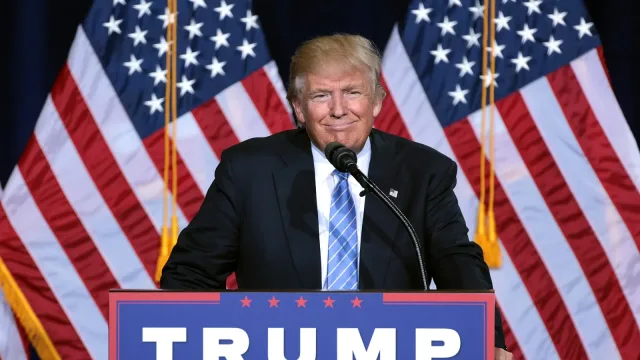
During his 2023 presidential campaign, President Donald Trump highlighted the accreditation system as a primary mechanism to reform higher education, describing it as a central strategy to reshape American universities. Beyond campus speech, the updated regulations lower barriers for new accrediting agencies to seek federal recognition and mandate that existing bodies measure quantitative student metrics, such as retention, graduation rates, and post-graduation earnings.
Intellectual Diversity and Federal Oversight
Education Department officials have defended the overhaul as a necessary step to protect open inquiry on college campuses. Department representatives cited student survey data indicating that a majority of undergraduates feel pressure to mask their personal political views to succeed academically, according to reports by The Hill and Alternet. Ellen Keast, communications director for the deputy education secretary, stated that the updated standards do not prescribe specific university policies or grant federal authority to control speech, but rather serve to support academic freedom and open discussion.
However, representatives from higher education organizations expressed concern that the broad criteria could allow federal officials to influence institutional decisions. Antoinette Flores, vice president for policy and research at the Council for Higher Education Accreditation, warned that the regulations open a new avenue for federal involvement in institutional policies traditionally managed by colleges themselves. Bob Shireman, a former Obama administration education official, told NPR that the policy grants unprecedented authority for federal interference in campus affairs.
Critics point to prior conflicts over campus accreditation. Last year, federal officials notified the Middle States Commission on Higher Education that Columbia University had violated federal anti-discrimination standards and urged the agency to revoke the institution’s accreditation, a request the accrediting body declined, CBS News reported. Civil rights advocates, including PEN America, warned that the new regulations could erode historical protections for academic research and instruction.
Separation of Accreditors and Trade Groups
The regulations also introduce strict standards requiring separation and independence between programmatic accrediting agencies and professional trade associations. Conservative policymakers have long argued that close ties between industry groups and accrediting boards create conflicts of interest that inflate costs and restrict entry into professional fields.
Under the new standards, programmatic accreditors must operate without relying on parent trade associations for staffing, technology, office space, or direct financial subsidies. Additionally, trade association members will no longer be permitted to vote on accreditation standards on decision-making committees. In response, several organizations, including the American Veterinary Medical Association Council on Education and the Association of Theological Schools, have announced plans to formally separate from their associated trade groups.
Jeremy Bauer-Wolf, an investigations manager at the New America think tank, noted that while industry overlap presents legitimate concerns, forcing agencies to adhere to strict rules or leave the federal system could prove problematic. At least seven accrediting organizations, such as the Council on Chiropractic Education, have already chosen to withdraw from federal recognition, citing overly burdensome standards.
Implementation and Challenges
Higher education associations have raised concerns regarding the compressed timeline for implementing the structural changes. Zach Waymer, executive director of the Association of Specialized and Professional Accreditors, emphasized that establishing independent operations requires significant financial and administrative resources that could ultimately increase costs for programs and students.
Policy experts note that the new accreditation rules may face legal challenges or congressional review before their scheduled implementation. Educational leaders continue to monitor how the Education Department will interpret and enforce the standards as accrediting bodies begin updating their evaluation procedures.