WASHINGTON — The Trump administration announced Thursday that it has suspended Microsoft and several other major technology companies from a federal program used to sponsor temporary visa holders for permanent residency green cards, accusing the firms of abusing foreign labor systems.
Vice President JD Vance made the announcement during a news conference, alleging that Microsoft laid off domestic personnel while replacing them with foreign workers on H-1B visas. Vance, who leads the administration’s Anti-Fraud Task Force, targeted the Permanent Labor Certification Program, known as PERM, which requires employers to verify that qualified U.S. workers are unavailable before sponsoring an immigrant employee for a green card.
“Our message to Microsoft is, you’re a great American company, but you’ve got to hire great American workers,” Vance said, as reported by The Guardian US. Vance claimed that corporations undercut local wages by bringing in foreign labor, adding, “If you do the math, for every worker that Microsoft laid off, they replaced that worker with one and a half foreign indentured servants.”
Tech Industry Pushback and Program Impact
Microsoft rejected the allegations, stating that most of its domestic workforce consists of Americans. In a statement reported by ABC News, the Redmond, Washington-based company said it files petitions only for candidates who satisfy rigorous criteria and compensates H-1B workers at the same rates as other staff performing similar roles. Microsoft added that 80 percent of its H-1B applications in the past year were submitted to extend or alter the status of current staff rather than hire new employees abroad, Fortune reported.
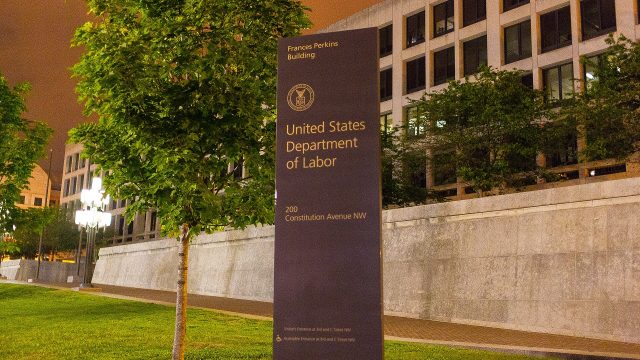
Labor Secretary Keith Sonderling confirmed that software maker Adobe was also suspended, stating that the department will refuse to process pending PERM applications or take new filings involving the designated companies, according to The Guardian US. According to Fortune, other firms affected by the suspension include Cognizant, Infosys, Tata, Wipro, HCL and Capgemini.
Critics of the administration’s action questioned the logic of halting green card processing. Former U.S. Citizenship and Immigration Services adviser Doug Rand told the Associated Press that barring green card sponsorships keeps workers tied to their employers rather than granting them permanent residency status, which allows individuals to seek other jobs and negotiate pay without fear of losing visa status.
Broader Immigration Scrutiny and White House Contrast
The suspension comes amid a broader administration effort targeting employment and academic visa pathways. U.S. Attorney General Todd Blanche announced that the Department of Justice is investigating corporate hiring practices that favor foreign staff over domestic citizens, ABC News reported. Inspector General of Labor Anthony D’Esposito also revealed an inquiry into alleged J-1 visa fraud across nine universities, including Harvard, Yale and Stanford.
The announcement created a stark contrast with events elsewhere in the administration on Thursday. Hours after Vance announced the sanctions, President Donald Trump presented Microsoft Chief Executive Satya Nadella — a former H-1B recipient — with the National Medal of Technology and Innovation during a ceremony at the U.S. Institute of Peace, according to ABC News.
Vance acknowledged the conflicting optics, stating that the administration values Microsoft but will maintain the freeze until the firm demonstrates compliance. Vance indicated the suspension would last as long as necessary, leaving uncertain when the Labor Department might resume processing permanent certifications for the affected firms or whether the directive will face legal challenges in federal court.