South Korean semiconductor shares plummeted Tuesday, pulling the nation’s benchmark stock index down more than 7 percent as growing competition from China and sharp warnings from industry leaders rattled confidence in the artificial intelligence boom.
The Kospi index fell 7.4 percent to 5,914.35, marking its lowest level since late July, NBC News reported. Yahoo Finance reported the benchmark tumbled 6 percent. Samsung Electronics dropped between 7.7 percent and 8 percent, while SK Hynix tumbled roughly 8 percent to 8.8 percent, according to reports from both outlets. The declines marked a fifth consecutive day of losses for both tech manufacturers, which together account for more than half of the South Korean stock market’s total valuation.
Competition from China
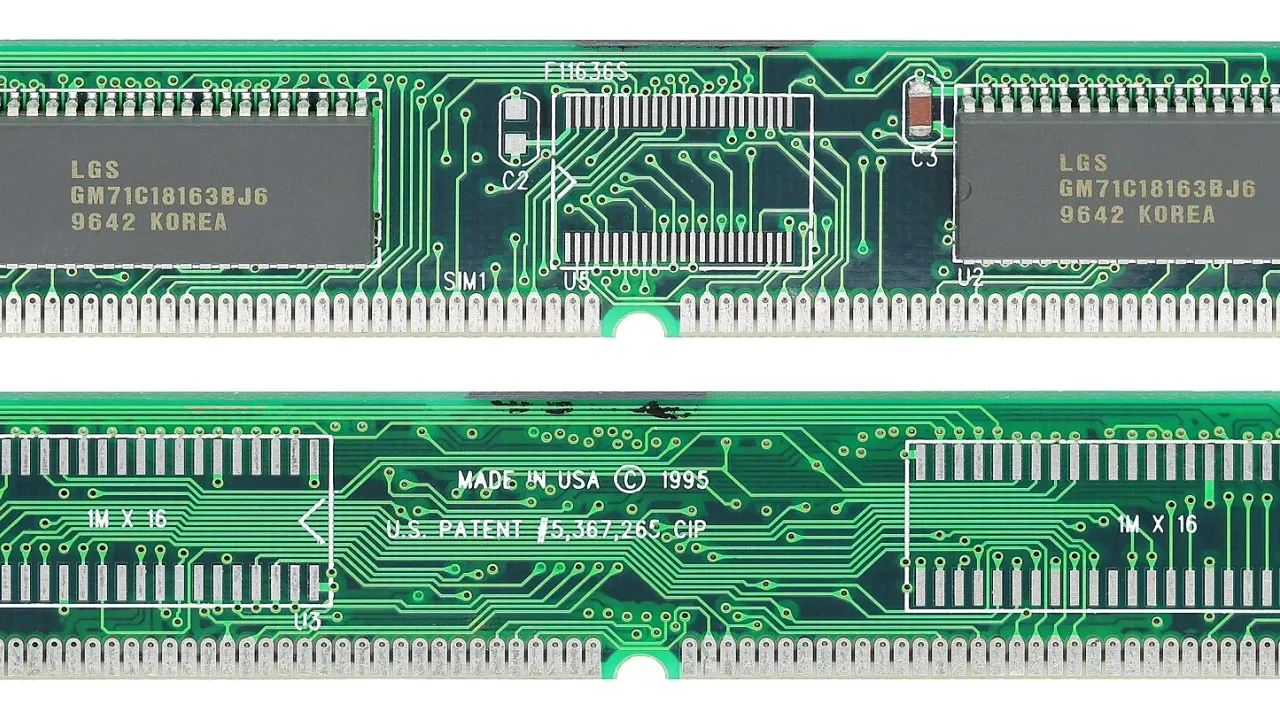
The steep sell-off was triggered in part by technical advances from Chinese memory manufacturer CXMT, Yahoo Finance reported. CXMT announced progress on a memory-cell architecture designed to fit higher storage capacity into smaller physical spaces, with plans to introduce a server memory product based on the format by the end of 2026.
The advance threatens to intensify competition for Samsung, SK Hynix and U.S.-based Micron Technology, which together control roughly 90 percent of the global dynamic random-access memory market, according to Yahoo Finance. All three memory producers had reached $1 trillion valuations over the summer amid surging demand for data center infrastructure supporting generative AI. However, investors showed unease despite strong recent corporate performances, including Samsung’s preliminary third-quarter profit report of $80 billion last week and Micron’s stock rise of approximately 240 percent this year.
Executive skepticism over AI spending
Market sentiment was further dampened by skeptical remarks from prominent semiconductor leaders. Speaking Monday at an event hosted by DBS Bank in Singapore, Broadcom Chief Executive Hock Tan likened AI investors to gamblers, Bloomberg reported via the New York Post.
“A lot of investors have no clue what they are investing in,” Tan said, adding that participants “set very extreme expectations only to find out that it’s almost like they are in a casino.”
Tan argued that generative AI remains unprofitable for many businesses and warned that a lack of capital could hinder future industry growth. Intel Chief Executive Lip-Bu Tan, who appeared on stage with Tan, echoed those concerns, stating that hardware limits will persist over the coming years and that memory chips could be the first segment of the AI ecosystem to decelerate, the Post reported.
The semiconductor rout weighed on exchanges across the Asia-Pacific region on Tuesday. Japan’s Nikkei 225 dropped 2.5 percent, pulled down by a 6.6 percent slide in Tokyo Electron and an 8 percent drop in SoftBank Group, NBC News reported. Taiwan’s Taiex declined 1.9 percent as Taiwan Semiconductor Manufacturing Co. shed 1.6 percent, while Hong Kong’s Hang Seng decreased 1 percent and the Shanghai Composite slipped 1.1 percent.
What comes next
Investors are now assessing whether massive capital investments in AI infrastructure will translate into corporate profits. Morgan Stanley researchers recently projected global capital spending on AI to reach $800 billion this year and expand to $1.1 trillion by 2027, the Post reported.
Market participants are also preparing for quarterly earnings reports scheduled this week from major U.S. banks, including JPMorgan Chase, Citigroup and Wells Fargo. At the same time, uncertainty remains over upcoming market listings, as startup Anthropic prepares for a potential $2 trillion initial public offering around Thanksgiving, followed by OpenAI, while several other tech companies have recently chosen to postpone their debuts.