WASHINGTON — Almost all Federal Reserve officials anticipate raising the central bank’s benchmark interest rate at their upcoming December meeting, according to minutes released Wednesday from their Oct. 27-28 policy gathering.
The document showed that a vast majority of the 19 policymakers on the Fed’s board worried that inflation could remain stubbornly high even if energy costs continue to fall and the economic impact from tariffs and artificial intelligence infrastructure moderates. The central bank opted to hold its key benchmark rate steady at 3.9 percent last month, following an initial increase in September that marked its first hike in three years.
While the central bank paused in October, minutes showed some officials advocated raising borrowing costs at that meeting. Federal Reserve Gov. Lisa Cook and Cleveland Fed President Beth Hammack formally dissented in favor of a rate increase. The dissent came amid an ongoing legal dispute regarding President Donald Trump’s efforts to remove Cook, whom the Supreme Court permitted in June to remain in office during litigation.
Debate builds over larger December rate increase
The minutes noted two officials floated the idea of a half-percentage-point rate hike in December, double the standard quarter-point move. Speaking Wednesday morning on CNBC, Fed Gov. Christopher Waller voiced support for a larger increase or explicit guidance promising another hike in January. Waller warned that core inflation, which excludes volatile food and energy prices, has reached an annualized rate of around 3.5 percent over the prior three months, well past the central bank’s 2 percent target.
“If you really want to get it down, you’ve got to start taking more aggressive actions,” Waller told CNBC, adding that several additional rate increases beyond current Wall Street forecasts may be necessary.
Waller argued that unless Fed Chairman Kevin Warsh offers clear signaling about future rate decisions, financial markets will not adjust interest rates effectively. Warsh, who assumed leadership of the central bank in May, has deliberately avoided providing forward guidance to prevent locking policymakers into a fixed trajectory.
Other top central bank figures pushed back against a jumbo rate hike. New York Fed President John Williams, who serves as vice chair of the rate-setting committee, told Axios on Tuesday, “I don’t think the situation calls for dramatic action.” Meanwhile, St. Louis Fed President Alberto Musalem told an audience in Buenos Aires on Tuesday that borrowing costs will likely need to climb several more times before spring 2027 to sufficiently cool borrowing and spending.
Economic impact and market expectations
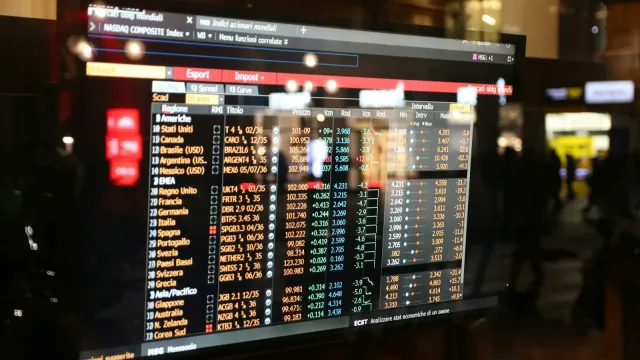
Investors widely anticipate higher rates ahead, with financial markets pricing in nearly a 95 percent probability of a December increase, according to the CME FedWatch tool. Higher central bank rates typically translate into increased borrowing costs across the economy, affecting credit cards, auto loans, and home mortgages. Recent mortgage rates surpassing 7 percent have already slowed activity across the housing market.
San Francisco Fed President Mary Daly indicated last week that she leans toward supporting further rate hikes, expressing concern over businesses passing elevated costs directly to consumers. The Federal Reserve’s rate-setting committee will next gather in December to vote on interest rates and issue updated economic projections for the coming year.