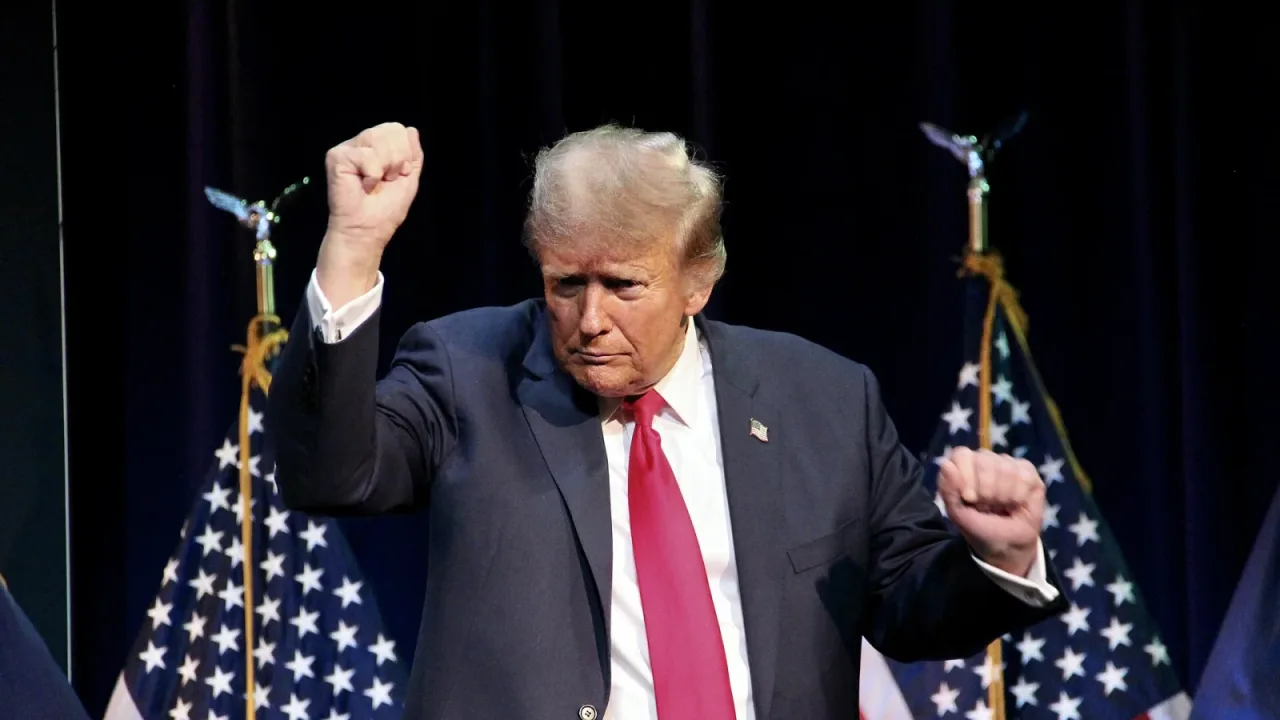
With two weeks remaining before the midterm elections, President Donald Trump is spending substantial campaign time in traditionally Republican strongholds, delivering wandering rally speeches that have drawn scrutiny for their personal tangents and erratic rhetoric.
Instead of focusing exclusively on competitive congressional districts, Trump has held events in conservative bastions including Alaska, Montana, Tennessee, Ohio and Oklahoma, alongside appearances in Arizona and New York, according to reports by NPR and The Guardian.
Defensive travel schedule
The travel pattern contrasts with a commitment Trump made early last month during a White House Rose Garden dinner, where he promised to visit roughly 30 contested races to help vulnerable Republicans, NPR reported. Instead, the president has appeared alongside fewer than one-third of those candidates.
Speaking on an airport tarmac between stops, Trump maintained that his visits to territory he carried comfortably in 2024 were designed as gestures of appreciation to voters and an effort to protect party incumbents. “So, I do it to thank them,” Trump said, according to NPR. “I also do it because we have some great people there that are running and I want to make sure they win.”
Party leaders argue that energizing loyal voters is essential to preventing midterm losses. Republican National Committee Chairman Joe Gruters told NPR that Trump remains the most potent weapon to drive participation. “It’s turnout, turnout, turnout,” Gruters said. “How do you get the base to show up? You put the president on the ballot. You put him out there.”
Yet the travel also signals growing Republican anxiety in places that rarely require presidential intervention. In Alaska, where Trump won by 13 percentage points two years ago, Republican Sen. Dan Sullivan faces an unexpectedly competitive challenge from Democratic candidate Mary Peltola, The Guardian reported.
Digressions and personal commentary
Trump’s appearances on the trail have often strayed far from traditional stump messaging. During a stop in Clarksville, Tennessee, Trump acknowledged the uninhibited nature of his speeches, telling the crowd that the audience would applaud even if he made foolish remarks before asserting that his platform represents “common sense,” The Guardian reported.
In Alaska, Trump issued on-stage pardons to two automotive repair business owners who had pleaded guilty to violating the Clean Air Act, using the occasion to dwell at length on a colloquial phrase comparing legal cleanness to a newborn infant’s backside. He also attacked Peltola, calling the Native American former tribal judge “a whack job,” according to The Guardian.
At an event in Ohio, Trump commented extensively on the physical attributes of Republican Sen. Jon Husted, praising his athletic build, hands and jawline before launching into insults aimed at Somali immigrants. Days earlier in Syracuse, New York, while endorsing Bruce Blakeman for governor, Trump spent roughly 15 minutes lamenting that he had never received the Nobel Peace Prize and falsely claimed that state rules prohibit residents from using the word “mother,” The Guardian reported.
During an appearance in Bullhead City, Arizona, Trump endorsed state Rep. Alex Kolodin for secretary of state, describing him as looking “a little bit nerdy.” In the same speech, Trump told listeners that White House medical personnel traveling with him would treat audience members suffering medical emergencies as “collateral damage” rather than abandon their duties protecting the president, according to The Guardian.
Throughout his stops, Trump has also pitched an economic proposal offering a $5,000 dividend to every American adult should Republicans retain control of Congress, an initiative that has met skepticism from congressional lawmakers, NPR reported.
What comes next
Trump is scheduled to travel to Kansas on Monday to boost Republicans in a Senate contest that analysts now view as a toss-up, according to the RNC. On Tuesday, he is scheduled to hold a rally in Greenville, North Carolina, where national Republican campaign committees have already begun withdrawing television advertising funds intended to aid Senate hopeful Michael Whatley, signaling concern about party prospects as Election Day nears.