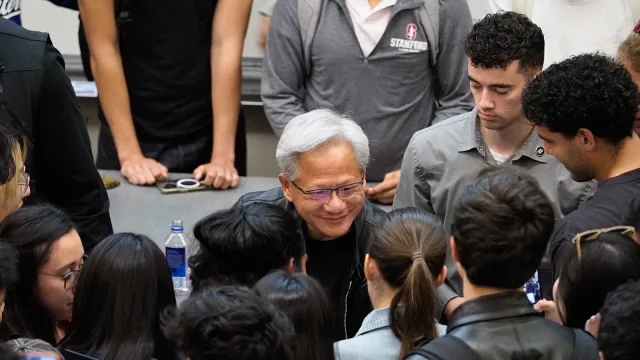
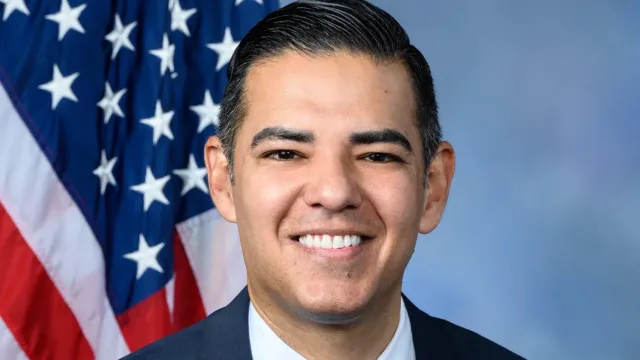
White House National Economic Council Director Kevin Hassett defended President Donald Trump’s involvement in reinstating Nvidia Chief Executive Officer Jensen Huang during an appearance Sunday on CBS’s “Face the Nation.” Speaking with guest anchor Nancy Cordes on Nov. 29, 2026, Hassett argued that the president’s intervention was intended to provide accurate intelligence to Nvidia’s board rather than dictate private sector operations.
Defense of Trump’s Nvidia Push
The White House adviser faced questioning regarding pushback from lawmakers, including Republican Rep. Michael McCaul, who accused the administration of prioritizing profits over national security. Cordes noted that Huang’s reinstatement occurred 11 days after he stepped down amid reports of conduct violations, including an alleged affair with a subordinate and allegations of misleading the board.
Hassett stated that Commerce Secretary Howard Lutnick had referred a matter to the Department of Justice roughly 18 months prior. He claimed that subsequent public reports contained inaccurate information. According to Hassett, Trump assembled administration officials to ensure Nvidia’s board received complete intelligence before making a decision.
“Well, President Trump wouldn’t have urged them to do anything at all if he didn’t know the facts,” Hassett told CBS News.
Addressing concerns that executive branch pressure on corporate leadership resembles state-run capitalism, Hassett emphasized Nvidia’s critical role in national security. He highlighted the semiconductor firm’s dominance in producing advanced chips required for artificial intelligence, noting that maintaining leadership in superintelligence is a top priority for the administration following recent diplomatic discussions with Chinese President Xi Jinping.
Economic Growth and Data Reviews
During the interview, Hassett also addressed third-quarter gross domestic product figures, which were revised upward to 4.3 percent growth, marking the fastest economic expansion in three years. Trump had publicly criticized the lower pre-election GDP estimates as a “record-setting error” and demanded an official inquiry.
Hassett defended examining potential partisan patterns in federal statistical revisions, referencing post-election downward revisions to employment data under the previous administration. When questioned whether civil servants were improperly altering data, Hassett insisted that reviewing historical revision patterns around elections remains a legitimate topic for investigation.
AI Sector and Tariff Policies
On broader economic conditions, Hassett dismissed comparisons between the current artificial intelligence boom and the dot-com bubble of the late 1990s. He argued that modern AI companies, such as Anthropic and OpenAI, generate substantial profits by improving productivity across other industries, unlike early internet firms that lacked profitable business models.
Cordes pressed Hassett on new tariffs ranging between 15 percent and 20 percent imposed on imports from more than a dozen nations, noting that CBS News exit polls indicated two-thirds of voters believe tariffs harm the economy. She also cited Personal Consumption Expenditures inflation data at 3.8 percent. Hassett replied that inflation has trended downward and asserted that real income growth outpaces rising prices, claiming that strong overall GDP performance demonstrates the effectiveness of administration policies.
It remains unclear whether the Department of Justice or federal statistical agencies will launch formal investigations into the GDP data revisions requested by the president.