Remnants of Hurricane Isaias tracked northward through the eastern United States on Sunday, raising concerns about flash flooding and tornadoes after the storm killed at least four people and caused extensive damage along the Gulf Coast.
Isaias made landfall near Destin, Florida, on Friday as a Category 2 hurricane packing sustained winds of 105 mph, Fox News reported. The tempest ended an unusually quiet period, becoming the first hurricane of the 2026 Atlantic season and the first to strike the U.S. mainland since Hurricane Milton in October 2024.
Storm pushes north toward mid-Atlantic
As the weakened storm moved inland through Alabama and toward the Appalachian Mountains, meteorologists cautioned that the system still posed widespread hazards. Philippe Papin, a hurricane specialist at the National Hurricane Center, told reporters that heavy rain remained the main threat as the system pushed north, according to the New York Post. Forecasters warned that isolated urban and flash flooding could hit communities stretching from the southern Appalachians into the mid-Atlantic region.
Tornado threats also emerged further east. According to the National Weather Service, areas in the Carolinas and Virginia, including Raleigh, Richmond and Washington, D.C., faced potential tornado activity on Sunday, The Guardian reported. In addition, forecasters warned that hazardous rip currents and rough surf would persist along both the Gulf Coast and the southeastern Atlantic coastline.
Fatalities and widespread damage
At least four storm-related deaths have been confirmed in Florida and Alabama. In Florida’s Escambia County, Sheriff Chip Simmons reported that one woman died when a falling tree hit her house, while a man died from carbon monoxide poisoning linked to a generator running inside a garage, the New York Post reported. Four other family members in the home received medical treatment and were expected to survive, according to the sheriff.
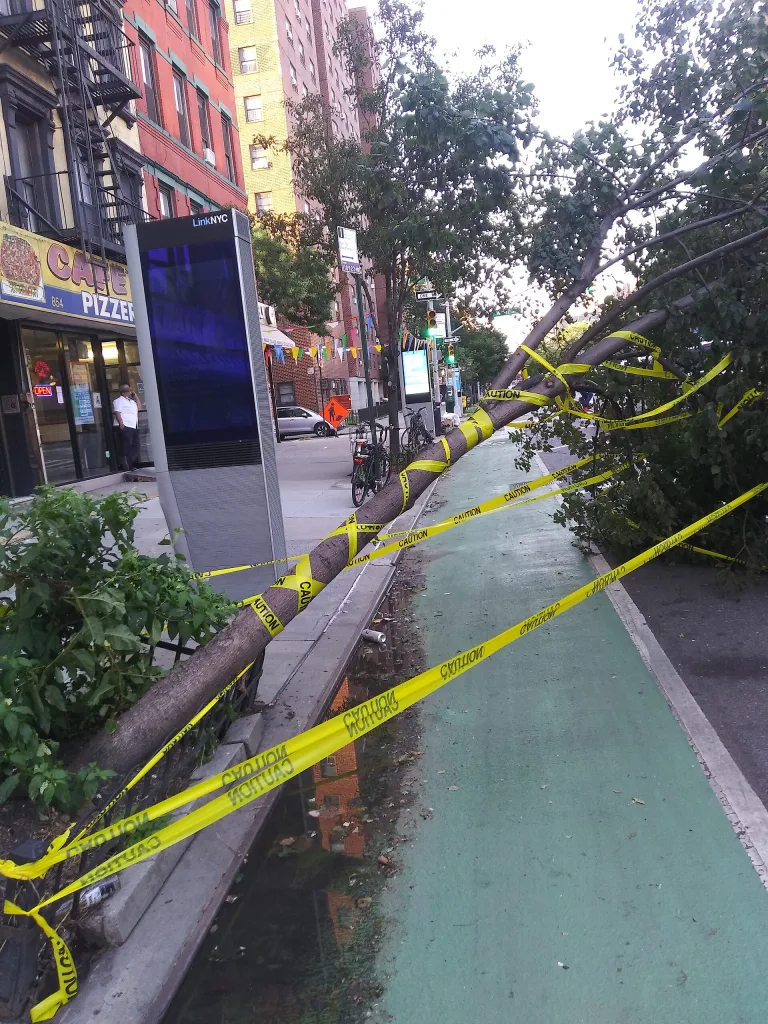
In Alabama, a falling tree crushed a home in Birmingham and killed a resident, city Fire Chief Cory Moon told reporters. A second Alabama death occurred in Barbour County during a traffic crash involving a fallen tree, according to state emergency management official Josh Johnson.
Wind and water inflicted severe property damage across coastal communities. In Pensacola, high winds peeled the roof off a hotel and inflicted heavy damage on Pensacola International Airport, prompting officials to close the facility indefinitely, Al Jazeera reported. Pensacola Mayor DC Reeves warned of serious drinking water shortages after damage to wells and infrastructure, leaving residents under a boil-water order. East of Pensacola, strong winds flattened a boathouse in Destin and damaged a high-rise building in Panama City Beach.
Recovery underway amid power outages
Restoration teams worked across the South on Sunday to restore essential services. Roughly 356,000 customers remained without power in southern Alabama and the Florida Panhandle by Sunday afternoon, according to tracking site PowerOutage.com, down from a peak of nearly 800,000 across the region, Al Jazeera reported. Florida Power and Light spokesperson Sarah Gatewood said utility crews mobilized from more than two dozen states to help restore electrical service.
Local travel remained dangerous in hard-hit inland counties. Emergency officials in Houston County, Alabama, kept all roads closed under an emergency flash flood warning, Al Jazeera reported.
President Donald Trump approved federal emergency declarations for Florida, Alabama and Georgia, releasing federal resources to support response and recovery operations, the New York Post reported. To mitigate potential fuel shortages caused by the storm, the U.S. Department of Energy also authorized emergency crude oil exchanges from the Strategic Petroleum Reserve.
Emergency crews continue assessing structural losses across the Gulf Coast while communities in the mid-Atlantic monitor rising rivers and persistent rainfall into the start of the week.