Researchers analyzing updated gravitational data have identified four locations beneath the surface of the Moon that could contain vast, hollow lava tunnels, according to a study published in the journal Icarus. The candidate underground structures, each estimated to be less than 2 kilometers wide and buried under approximately 100 meters of lunar rock, could offer prospective shelters for future human explorers while shedding light on ancient lunar volcanic activity.
The study was conducted by geoscientists Juan Losarcos and Andrew Dombard of the University of Illinois Chicago, ScienceAlert reported. Using a high-resolution model of the lunar gravitational field released by NASA in May 2025, the researchers searched for subtle drops in gravitational pull. Because a hollow cavity contains less mass than solid rock, areas directly above underground caverns exert slightly weaker gravity on orbiting spacecraft.
The underlying gravity data was originally gathered between 2011 and 2012 by NASA’s twin Gravity Recovery and Interior Laboratory, or GRAIL, spacecraft. By painstakingly adjusting for the topography of the lunar surface, Losarcos and Dombard compared measured gravitational anomalies with computer simulations of signals that hollow passages of various dimensions would generate.
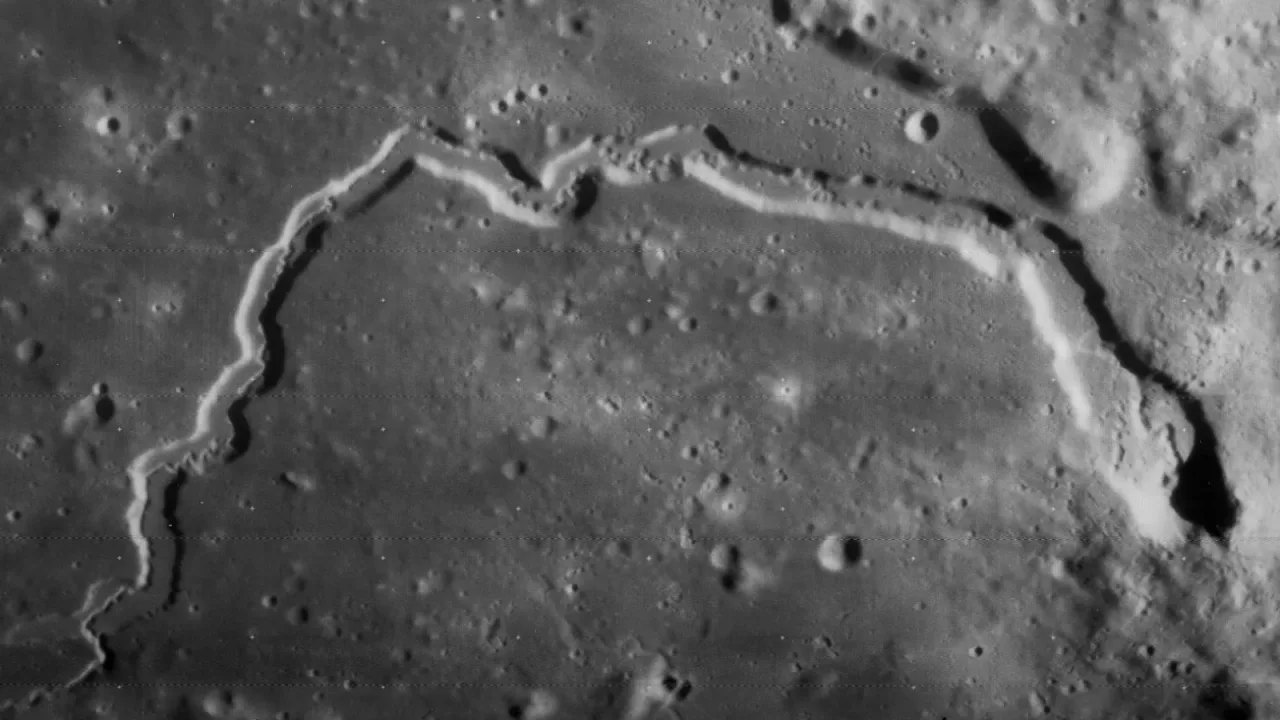
The team pinpointed four promising sites: one near Vallis Schröteri, which is the largest winding channel or sinuous rille on the Moon; another at Rima Mairan; and two additional candidate sites near the Wollaston crater. Surface geological features at these locations complemented the gravitational readings, supporting the possibility of hidden subterranean voids.
Rethinking Lunar Underground Structures
Scientists have long theorized that ancient rivers of molten rock left hollow tunnels beneath the lunar surface, similar to lava tubes found on Earth. Terrestrial lava tubes form when the outer crust of flowing molten rock cools and hardens while the interior continues to drain away. On the Moon, weaker gravity and higher volcanic eruption rates were thought capable of creating significantly larger subterranean passages.
Earlier analyses of GRAIL data published in 2017 and 2024 proposed that lunar lava tubes could span up to 9 kilometers in width. However, subsequent research raised doubts about those findings, concluding that tunnels of such immense width would likely collapse under the weight of their own rock roofs.
The dimensions modeled by Losarcos and Dombard—spanning less than 2 kilometers across—fit well within calculated structural limits for lunar basalt roofs, ScienceAlert reported. Furthermore, surface signatures near the four sites suggest the tunnels may not have formed by simply crusting over open lava rivers. Instead, they may have originated as small underground passages that gradually widened as hot lava melted and eroded surrounding stone.
Uncertainties and Future Mission Goals
Despite the compelling gravitational signatures, the authors emphasized that all four features remain candidates rather than confirmed caverns. Variations in rock density alone could create gravitational anomalies similar to those produced by hollow spaces, and orbital gravity measurements cannot definitively determine the exact dimensions of underground voids.
The researchers also noted that finding completely intact lava tubes poses a challenge because their method relies partly on identifying surface collapse features or related geological structures.
“Such pristine tubes,” the researchers wrote, “could preserve important evidence of lunar volcanic and thermal evolution, even if they are less accessible for exploration.”
Confirming whether the candidate tunnels actually exist will require additional data, such as future orbital radar surveys or high-resolution geological mapping. If verified, intact tunnels could serve as ideal habitats for long-term lunar missions, protecting astronauts and equipment from extreme radiation and severe temperature fluctuations on the lunar surface.