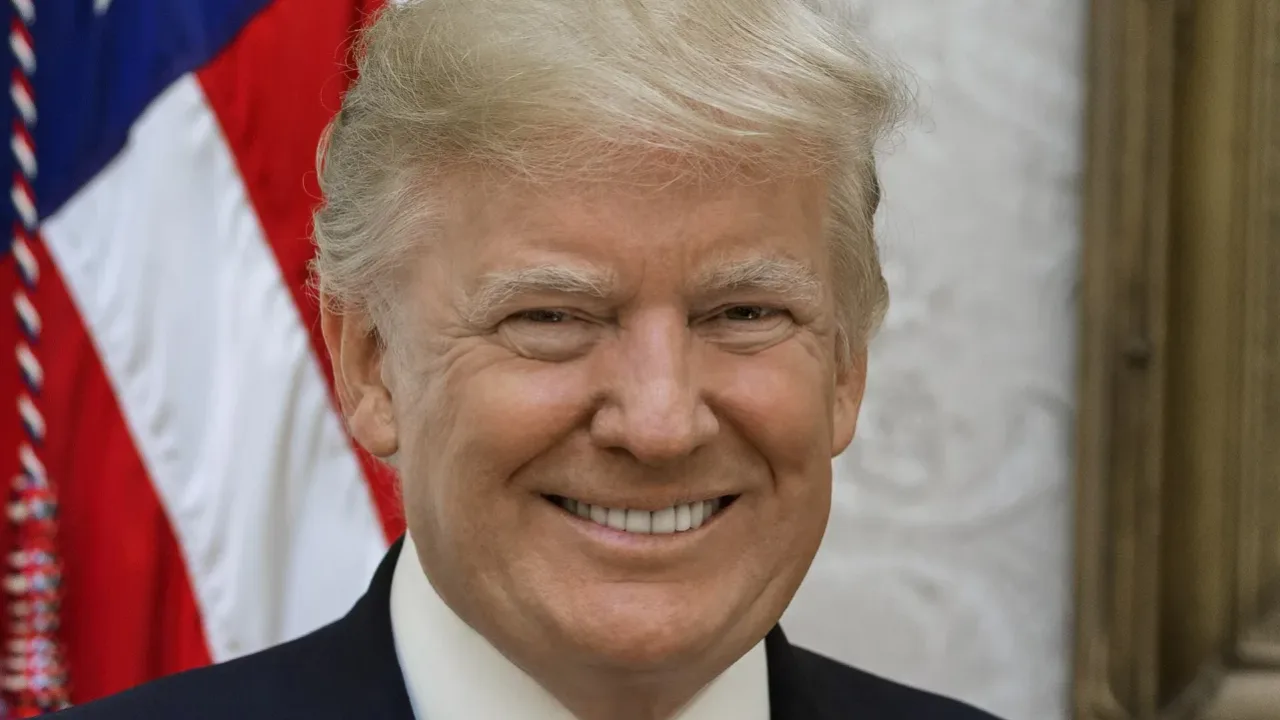
WASHINGTON — President Donald Trump said Thursday that he urged Russian President Vladimir Putin to cease military aggression across Europe during their recent talks in China, expressing hope that a peace deal between Moscow and Kyiv could be reached quickly.
Trump shared details of his discussion with Putin in a post on Truth Social on Thursday morning. The U.S. president said he spent significant time during their meeting requesting that the Russian leader step back military operations across European territories to facilitate an agreement ending the conflict in Ukraine, which Trump characterized as “A COMPLETE BLOODBATH.”
The announcement followed a meeting Wednesday evening at Mar-a-Lago between Trump and NATO Secretary-General Mark Rutte. Both leaders addressed concerns about the potential spread of the war beyond Ukrainian borders.
Discussions in China and NATO Concerns
Trump and Putin last spoke in person on Nov. 19 in Shenzhen, China, on the sidelines of the Asia-Pacific Economic Cooperation summit, in a meeting that also included Chinese President Xi Jinping.
Following his Wednesday sit-down with Rutte in Florida, Trump said the two discussed the necessity of preventing any intentional or unintentional expansion of the war. However, reports noted minor differences between statements released after the meeting; a statement highlighted by NATO focused on Russia avoiding actions that broaden the conflict, while a version posted by Trump urged both Russia and Ukraine to avoid widening the war.
Concerns among European nations have heightened in recent days following military incursions. Polish Prime Minister Donald Tusk described Russian missiles and drones entering Poland’s airspace on Nov. 23 and Nov. 24 as an intentional provocation by Moscow. German Chancellor Friedrich Merz also warned that the Kremlin was escalating threats to European security.
Addressing the NATO Parliamentary Assembly in Berlin earlier in the week, Rutte noted that recent Russian missile advancements significantly reduce reaction times for European capitals, warning of growing dangers from Russia’s military alignment with Iran, China, and North Korea.
Kremlin Response and Security Guarantees
Responding to the statements on Thursday, Kremlin spokesperson Dmitry Peskov rejected claims of Russian escalation, placing blame instead on Ukrainian leadership. Peskov alleged that Kyiv was responsible for trying to widen the geographical scope of the war.
Meanwhile, U.S. special envoy Jared Kushner indicated over the weekend that both Washington and Moscow may be open to providing Ukraine with security guarantees similar to NATO’s Article Five, which establishes that an attack on one alliance member is treated as an attack on all. Kushner noted that while Trump is open to such guarantees, any commitment would need to align with American interests.
Kushner and fellow envoy Steve Witkoff recently engaged in diplomatic talks in Abu Dhabi, Moscow, and Dublin. However, key disagreements remain over territorial control, with Russia demanding land it has not fully captured and Ukraine seeking firm Western security assurances to prevent future invasions.
As diplomatic efforts continue, Ukrainian President Volodymyr Zelensky warned Thursday that intelligence suggested Russia was preparing new large-scale aerial strikes against Ukraine’s energy infrastructure ahead of winter.