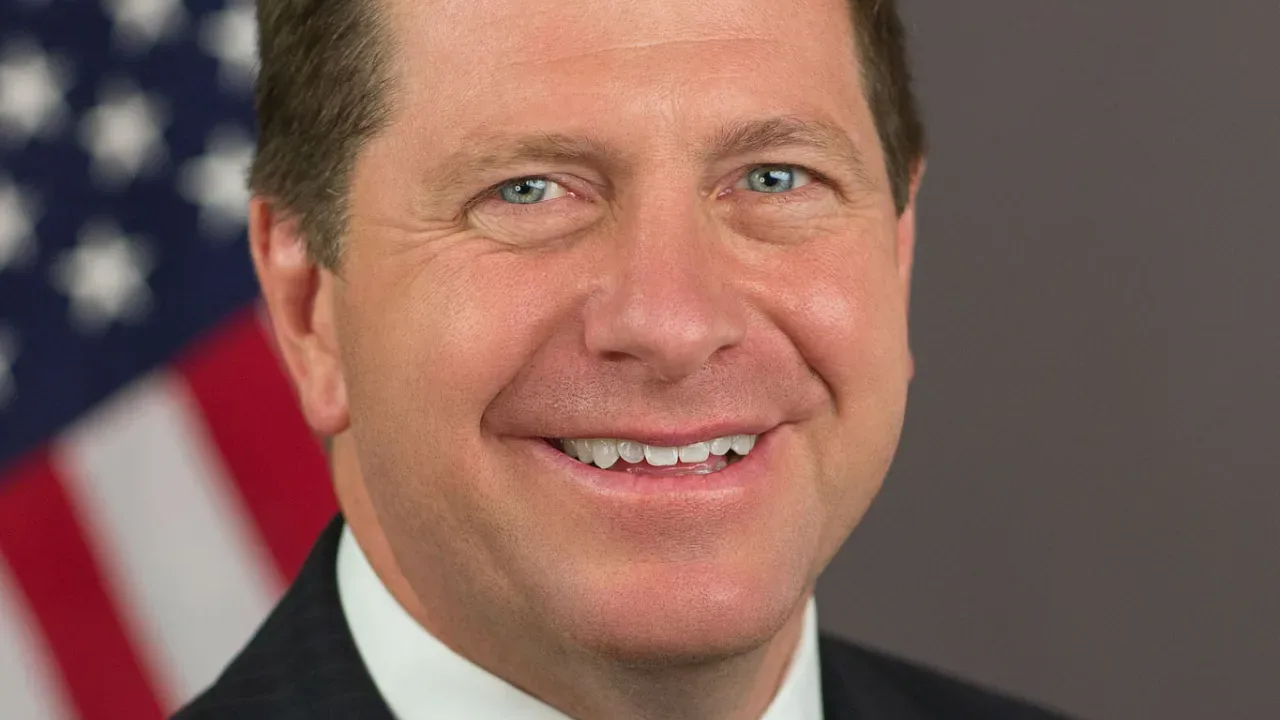
Director of National Intelligence Jay Clayton defended President Donald Trump on Sunday after the president publicly referred to Russian President Vladimir Putin as his friend, arguing that such terminology was fitting for high-stakes diplomacy between major nuclear powers.
Speaking on ABC’s “This Week,” Clayton addressed the fallout from a social media post Trump published Saturday on Truth Social. The post featured a photograph of Trump leaning in to converse with Putin during last week’s Asia-Pacific Economic Cooperation summit in Shenzhen, China, accompanied by the bolded caption “My Friend.” Trump had also used the term during the summit, where he met with both Putin and Chinese President Xi Jinping.
Diplomatic Context vs. Ukrainian Conflict
During the television interview, ABC anchor Jonathan Karl questioned Clayton on whether the Russian leader should be considered a friend to the United States, noting that Trump had declined to answer that specific question during a White House news conference on Friday, stating he could not speak for the nation.
Clayton described the gathering among the leaders of the three primary nuclear-armed nations as a historic encounter focused on preventing a nuclear incident. Within that specific circle of dialogue, Clayton said, using the word “friend” was entirely appropriate. However, when pressed on Russia’s ongoing military aggression in Eastern Europe, the intelligence chief drew a firm line.
“Is Vladimir Putin America’s friend? He is not America’s friend in Ukraine. Not at all. Not at all,” Clayton told ABC News.
The president’s friendly phrasing drew swift pushback from international allies. In Great Britain, political figures across the right-leaning spectrum moved to distance themselves from Trump’s comments, according to a report from The Guardian. Richard Tice, deputy leader of Reform UK, expressed “horror” over the post, calling it “a grave mistake” and describing Putin as a dictator. Conservative lawmaker Alex Burghart expressed sadness over the remarks, warning against a world where aggressive nations feel empowered to occupy neighboring territories.
Questions on Capitol Violence and Cyber Incidents
Karl also pressed Clayton on recent congressional testimony by Michael LoSapio, Trump’s nominee to head the Cybersecurity and Infrastructure Security Agency. LoSapio had drawn scrutiny earlier in the week for refusing to explicitly state whether the U.S. Capitol was attacked on Jan. 6, 2021.
Clayton declined to offer a political characterization of the event, telling ABC News he would not relitigate the matter. He noted that the American public saw what transpired, calling it a very unfortunate day for the nation while acknowledging that violence occurred.
Finally, Clayton addressed recent digital infrastructure disruptions affecting the FBI, the U.S. Department of Agriculture, the National Security Agency, and Microsoft. While declining to discuss specific ongoing investigations, Clayton confirmed that intelligence assessments indicate the outages were neither state-sponsored nor coordinated. He attributed many of the recent technical issues to ongoing upgrades on aging digital infrastructure amid rapid advancements in computing power.