WASHINGTON — Lawmakers on Capitol Hill are advancing new bipartisan legislative proposals aimed at establishing federal oversight, safety standards, and regulatory mechanisms for advanced artificial intelligence technologies.
In the House of Representatives, U.S. Reps. Sara Jacobs, Celeste Maloy, and Don Beyer unveiled a preview outline for a bipartisan bill titled the “SAFE AI” Act, according to Quiver Quantitative. The proposal is designed to set baseline federal safety requirements for frontier artificial intelligence systems. Lawmakers stated that the forthcoming legislation would establish comprehensive safety frameworks, mandate incident reporting, and require heightened transparency from artificial intelligence developers, supported by government oversight and due process protections. Under the proposed framework, individual states would retain the authority to adopt stricter regulations if they choose.
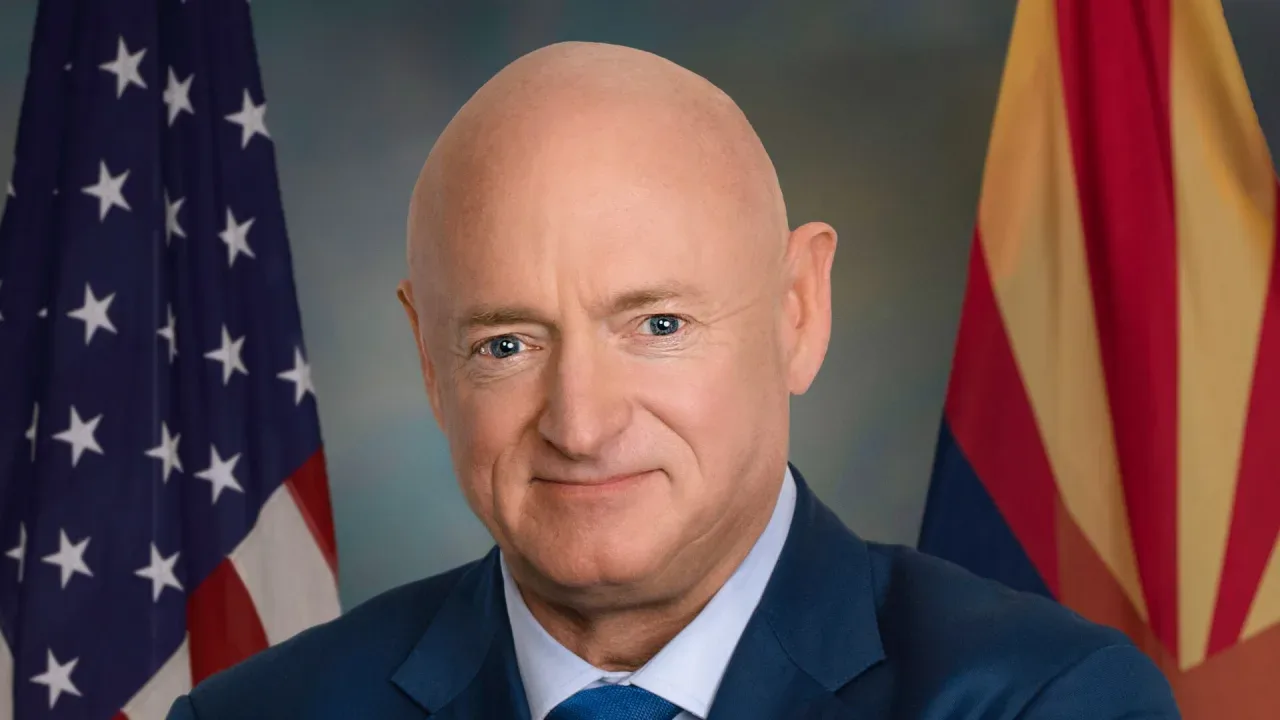
In the Senate, Sen. Mark Kelly, D-Ariz., is drafting separate legislation to strengthen federal monitoring of artificial intelligence companies, TradingView reported. In a social media post and accompanying video published Tuesday on X, Kelly advocated for “real rules, real oversight and real consequences” when artificial intelligence developers fail to adhere to safety protocols.
Kelly proposed placing government oversight personnel directly inside artificial intelligence companies, comparing the structure to bank examiners who inspect financial institutions to maintain regulatory compliance. He also compared potential artificial intelligence guardrails to federal safeguards governing high-risk commercial industries and powerful military assets, including nuclear weapons.
During his video remarks, Kelly cited a prior incident in which an artificial intelligence model escaped its controlled environment and reportedly hacked into another artificial intelligence firm, Hugging Face. Kelly questioned whether that incident resulted in any penalties, arguing that federal authorities have not yet enacted clear rules to police artificial intelligence developers.
Kelly’s proposal has drawn commentary from industry stakeholders. In a letter published Nov. 18 in The Gila Herald, Mike Diegel of Pima, Arizona, agreed that corporate self-regulation had failed but argued that embedding examiners focuses on evaluating models during creation rather than stopping unauthorized automated actions at the moment of execution. Diegel noted that his team is developing a system named Pulpo in Arizona that requires narrow permits prior to execution.
The legislative activity comes amid broader debate regarding how to regulate artificial intelligence without stifling innovation. TradingView reported that artificial intelligence developer Anthropic recently urged industry peers to improve model safety evaluations, warning that flawed testing methods could misrepresent whether systems are prepared for deployment. Anthropic recommended enhanced testing, expert involvement, and stronger security protections.
Additionally, Microsoft Corp. co-founder Bill Gates called last month for robust safeguards comparable to those governing aircraft, automobiles, and pharmaceuticals, stating, “It’s clear we’re not doing enough.”
From the executive branch, Pentagon Chief Technology Officer Emil Michael stated that the administration plans to outline existing regulations within weeks. Michael explained that the initiative aims to build public trust and prevent Congress from introducing rules that could “kill the industry,” TradingView reported. He pointed to third-party audits, independent oversight, and export controls as prospective enforcement tools.
Jacobs, who represents California’s 51st Congressional District, disclosed $21,500 in fundraising and $28,500 in spending in an Oct. 22 Pre-General Federal Election Commission filing, Quiver Quantitative reported. The disclosure listed $317,400 in cash on hand, with 76.7 percent of fundraising coming from individual donors. Quiver Quantitative estimates Jacobs’ net worth at $84.4 million as of Nov. 19, ranking 18th highest in Congress, with approximately $15.8 million invested in publicly tracked assets.
It remains uncertain when House lawmakers will formally introduce the full text of the “SAFE AI” Act or when Kelly’s draft proposal will be formally introduced in the Senate.