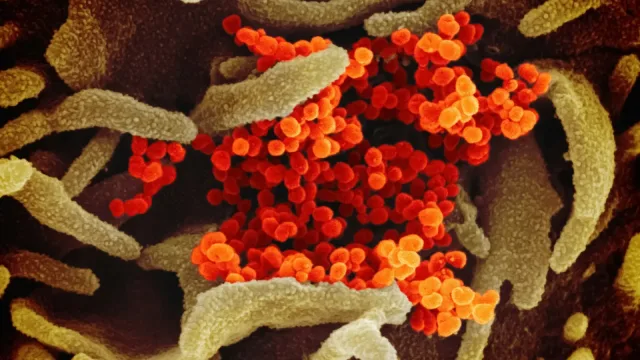
The United States officially lost its status as a country free of endemic measles on Tuesday, according to an announcement by the Pan American Health Organization. The decision marks a major health setback 26 years after the country first declared the infectious disease eliminated in 2000.
PAHO, an agency of the United Nations and World Health Organization, revoked the designation after determining that a single strain of the measles virus had circulated continuously in the U.S. for more than 12 months. PAHO Director Dr. Jarbas Barbosa da Silva Jr. noted that Mexico and Bolivia also lost their elimination status as the virus spreads across the region.
The shift comes amid the worst American outbreak in decades. The Centers for Disease Control and Prevention recorded 5,412 cases across nearly every state in 2026, including up to 10 deaths, ABC News reported. State health officials cited by The New York Times reported more than 7,700 total cases since the current surge began in a Texas Mennonite community in January 2025. CDC data indicates 48 distinct outbreaks have occurred in 2026, with major clusters in Pennsylvania, Wisconsin, Minnesota and Indiana.
Falling Vaccination Rates and Expert Reaction
Medical experts attribute the resurgence directly to falling immunization levels. CDC figures show that childhood coverage with the measles, mumps and rubella vaccine dropped from 95 percent among kindergarteners in the 2019-2020 school year down to 92 percent in the 2025-2026 school year. Public health agencies consider 95 percent coverage necessary to achieve herd immunity and stop widespread transmission of the airborne virus.
The American Medical Association characterized the status loss as a “deeply troubling and entirely preventable setback for our nation,” according to The Guardian. Dr. Jennifer Nuzzo, director of the Pandemic Center at the Brown University School of Public Health, described the development to The New York Times as “a giant stain on our reputation.” Dr. John Brownstein, an epidemiologist and ABC News contributor, warned that losing elimination status implies “more outbreaks, more hospitalizations, more preventable deaths and greater strain on already stretched public health departments.”
In response, CDC Director Dr. Erica Schwartz stated that the agency remains committed to regaining elimination status. Schwartz noted that the CDC has distributed $100 million to state and local health agencies to expand vaccination efforts in impacted communities. The Department of Health and Human Services stated that HHS Secretary Robert F. Kennedy Jr. and Schwartz continue to recommend two doses of the MMR vaccine, which CDC data shows is 97 percent effective against infection.
Political Debates and Regional Impact
The regression has intensified political scrutiny surrounding health policy in Washington. Democratic Senator-elect Dr. Annie Andrews criticized decisions made by federal leaders, while public health figures raised concerns over vaccine misinformation. Critics noted that federal officials previously suggested splitting the MMR vaccine into individual shots, a proposal that health organizations warned lacked scientific backing.
The impact of the virus extends across North America. Noel Brewer, a behavioral scientist at the University of North Carolina at Chapel Hill, explained that infected travelers have carried the virus across borders between the U.S., Canada and Mexico. While Canada lost its status in 2025, it recently halted transmission for 60 days, PAHO reported. Within the U.S., endemic status means residents exposed to measles may face 21-day quarantine periods or requests to present proof of immunization, health officials noted.
To regain measles-free status, public health leaders say the U.S. must execute a coordinated national strategy to halt uninterrupted transmission for at least a full year. The CDC emphasized that state health departments are continuing outbreak containment strategies, but experts caution that restoring community-wide protection will require reversing years of declining vaccination rates.