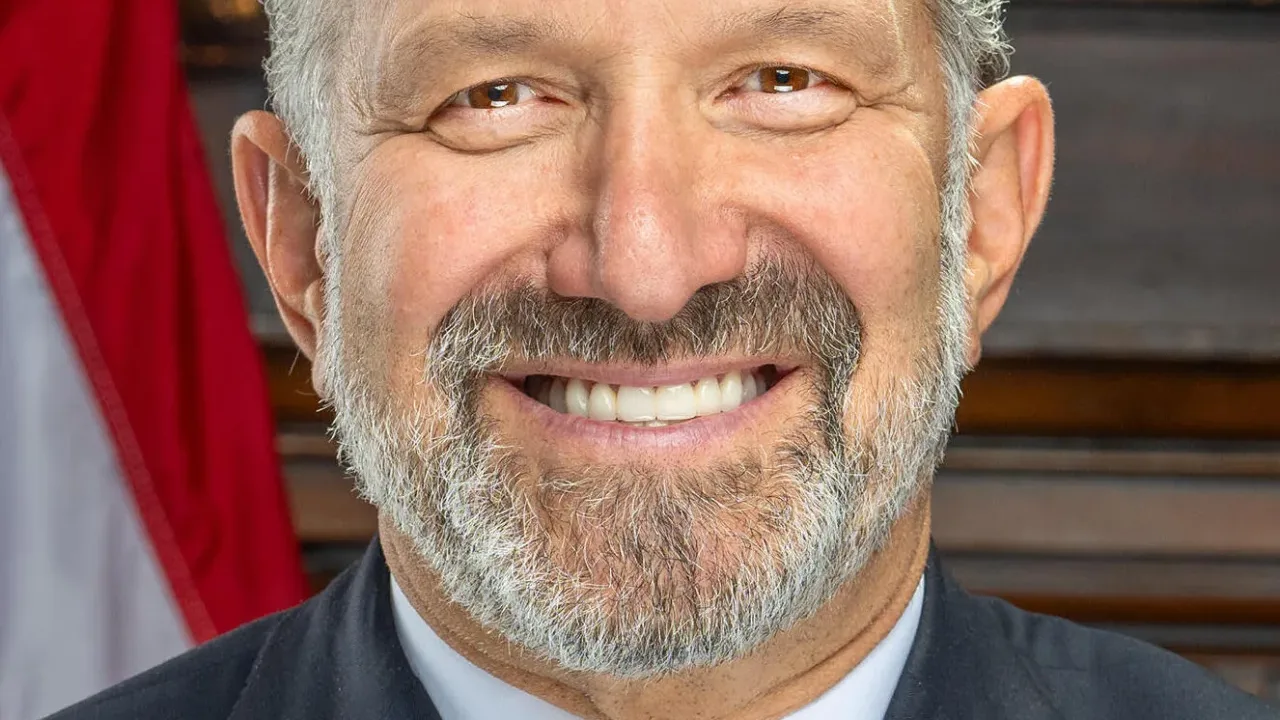
WASHINGTON — Commerce Secretary Howard Lutnick is drawing intense scrutiny from lawmakers and administration officials over his role in shaping U.S. artificial intelligence chip export rules while his family’s financial firm maintains deep ties to the industry, according to reporting by The New York Times and CNBC.
Lutnick, who previously led Wall Street firm Cantor Fitzgerald before handing management to his sons, has been viewed inside government as slowing proposed restrictions on sending advanced Nvidia processors to third-country data centers that serve Chinese technology companies, The New York Times reported on Sunday.
Data Center Rules and Family Business Ties
One such facility, the A201 data center in Malaysia, is scheduled to open next year using hundreds of millions of dollars in advanced Nvidia servers to provide computing power to a Chinese tech firm, according to The New York Times. The operator of the facility is a client of Cantor Fitzgerald. While the computing arrangement is legal, critics note that Lutnick is writing federal regulations that directly govern whether such third-party facilities can continue receiving high-end American AI hardware.
Public disclosures show Cantor Fitzgerald’s involvement in the sector extends across Nvidia’s business network. According to a CNBC analysis of securities filings, Cantor reduced its reported Nvidia stock holdings by nearly 50 percent between September 2025 and March 2026, while continuing to arrange billions of dollars in financing for Nvidia business partners. The firm served as a bookrunner for a $3 billion bond offering for cloud provider IREN in May 2025 and advised AI infrastructure developer Lancium on a $600 million financing deal in October 2025, CNBC reported.
Ethics experts told CNBC that while there is no evidence Lutnick shared nonpublic information with his family, the overlap between his official actions and Cantor Fitzgerald’s corporate clients creates significant ethical questions. Richard Painter, a former chief White House ethics lawyer under President George W. Bush, stated that “the appearance doesn’t look great,” adding that communications between Lutnick and his sons must rely strictly on publicly available information.
Administration Friction and Congressional Demands
Internal friction over export enforcement has also surfaced within President Donald Trump’s administration. Treasury Secretary Scott Bessent criticized the Commerce Department during a CNBC interview on Friday, stating that multiple national security agencies favored placing Singapore-based Megaspeed on an export blacklist over concerns it served as a pass-through to supply restricted chips to China. Bessent noted that Commerce holds primary authority over export controls and questioned the department’s internal delays.
Lawmakers from both parties are now demanding answers. Democratic senators have requested that Lutnick preserve all records relating to chip exports and intelligence warnings, while Sen. Chris Van Hollen, D-Md., urged Trump to dismiss the commerce chief during an ABC News interview on Sunday, saying, “I think he should be fired.”
Meanwhile, members of the Senate Banking Committee have asked Lutnick to testify regarding export enforcement. A Commerce Department spokesperson confirmed Friday that Lutnick has voluntarily agreed to appear before the panel next month.
What Comes Next
Despite the escalating criticism, the White House affirmed Thursday that Trump retains complete confidence in Lutnick. Questions surrounding U.S. export controls and chip smuggling are expected to persist as Trump prepares to meet with Chinese President Xi Jinping in Shenzhen next week.