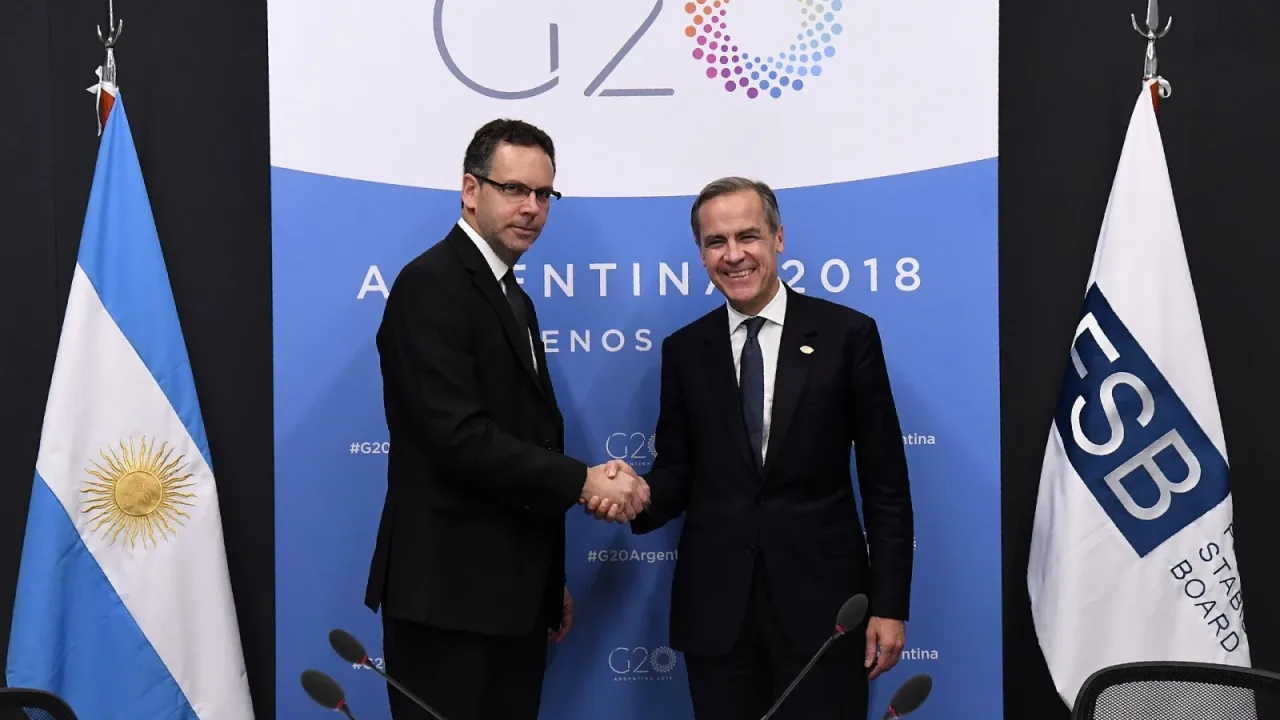
MANILA — Canadian Prime Minister Mark Carney said Saturday that Canada and the United States are making progress toward a possible bilateral trade deal, though he warned Ottawa will not accept any agreement that harms the Canadian automotive sector.
Speaking to reporters in Manila ahead of the Association of Southeast Asian Nations summit, Carney revealed he spoke at length by telephone with U.S. President Donald Trump and key administration officials prior to traveling to Asia, ABC News reported. The call included U.S. Trade Representative Jamieson Greer and White House Chief of Staff Stephen Miller, according to Newsweek.
“We are making progress,” Carney said in Manila. “There is the possibility of a deal, a bilateral deal. But we’re not yet there.”
Formal negotiations between the neighboring nations collapsed in August after Ottawa rejected last-minute U.S. demands. Washington subsequently placed 50 percent tariffs covering an estimated $20 billion in Canadian exports, prompting Ottawa to enact retaliatory duties in September, ABC News reported. However, informal discussions have resumed in recent weeks, with U.S. Commerce Secretary Howard Lutnick leading the American negotiation team, according to The Globe and Mail.
Automotive Red Lines and Domestic Friction
Carney insisted that protecting Canadian manufacturing remains a central requirement for any resolution. He explicitly declared that his administration will not sign an agreement that undermines the domestic auto sector, which has faced severe pressure from U.S. tariffs, Newsweek reported.
“This government will not settle for a deal with the United States that is not consistent with a viable Canadian auto sector,” Carney told reporters.
The trade tensions have exacerbated domestic strain in Canada’s auto manufacturing heartland. Automaker Stellantis reached an agreement to sell its Brampton assembly facility in Ontario to Roshel, an armored-vehicle manufacturer, after shifting planned production of the Jeep Compass to Illinois, Newsweek reported. The decision left more than 2,000 workers laid off, according to Newsweek.
In response, Canadian Industry Minister Mélanie Joly stated the company must not close the plant, noting Ottawa had committed up to C$529 million ($370.6 million) in 2022 to assist in retooling Stellantis facilities, Newsweek reported. Carney said Ottawa and the province of Ontario are preparing an aggressive strategy to address the situation, while opposition leader Pierre Poilievre criticized the government’s economic stewardship, according to Newsweek.
Meanwhile, the Canadian auto sector itself remains divided over how Ottawa should proceed in trade negotiations with Washington, The Globe and Mail reported. The Detroit Three automakers—Ford, General Motors, and Stellantis—favor securing a swift tariff deal to stem losses. In contrast, Japanese automakers Honda and Toyota have urged Canadian negotiators to avoid locking into uncompetitive tariff levels that could damage long-term competitiveness, according to The Globe and Mail.
Expanding Asian Trade Links
Alongside updates on U.S. talks, Carney announced major steps in Canada’s efforts to diversify its trade ties beyond North America. Ottawa has substantially concluded free-trade negotiations with the Association of Southeast Asian Nations, representing a market of nearly 700 million people, ABC News reported.
Canada also finalized separate free-trade negotiations with the Philippines, which Canadian officials estimate could triple Canadian exports to that country by 2035, according to Newsweek. Canadian government projections indicate the regional ASEAN pact could add nearly C$2 billion ($1.4 billion) to Canada’s economy and create roughly 14,000 jobs, ABC News reported.
“Two agreements in one year: that is the speed and ambition this moment demands,” Carney said in a statement cited by Newsweek.
Carney is scheduled to continue his overseas tour with visits to the Francophonie summit in Cambodia and the Asia-Pacific Economic Cooperation summit in China, where he is set to meet with Chinese President Xi Jinping, ABC News reported. Both Canada and the U.S. continue informal trade discussions, though Carney noted he does not anticipate a trilateral summit with Trump and Mexican President Claudia Sheinbaum in the immediate future.