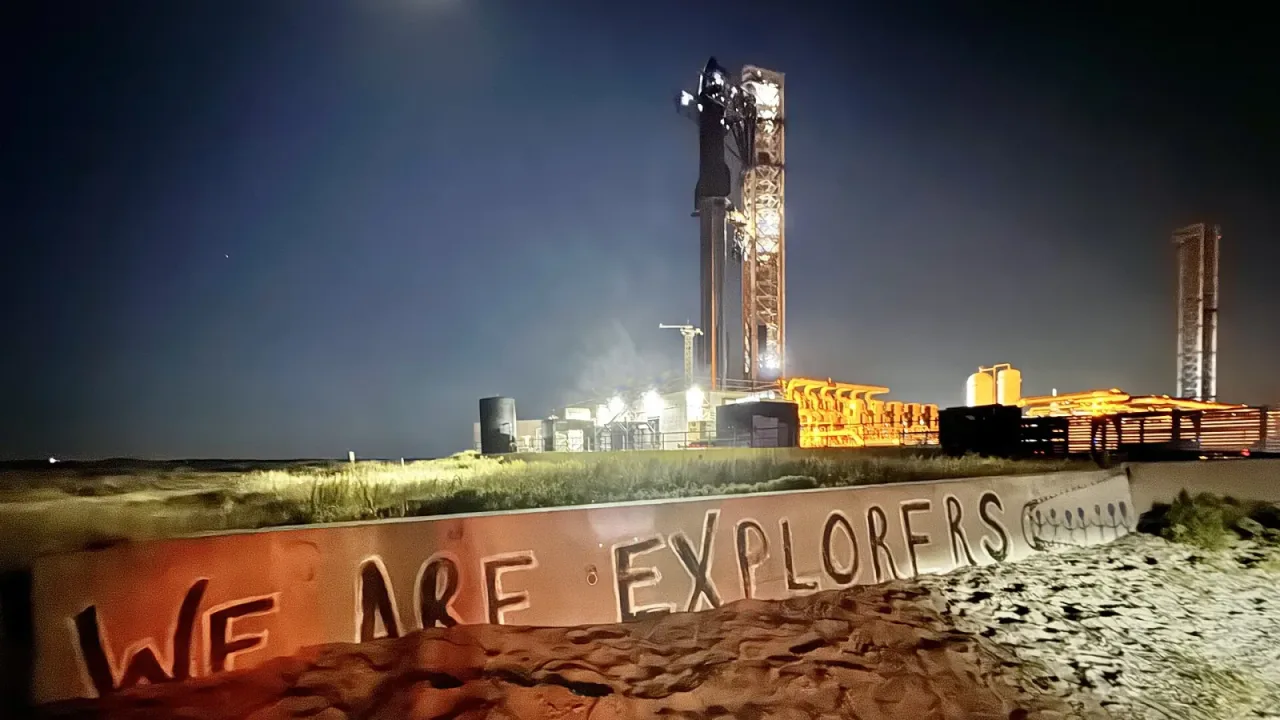
SpaceX launched its 15th Starship test mission from its Starbase facility in Cameron County, Texas, on Friday afternoon, embarking on a high-stakes attempt to achieve the first full recovery of an orbital rocket and spacecraft.
The 407-foot megarocket lifted off at 5:47 p.m. EST following late regulatory clearance from the Federal Aviation Administration. The test flight, known as Flight 15, was designed to demonstrate the recovery of both the lower first-stage Super Heavy booster and the upper-stage Starship vehicle using giant mechanical launch tower arms often called “chopsticks.”
Booster Diverts to Sea While Upper Stage Reaches Orbit
Shortly after launch, Super Heavy Booster 22 separated from the upper stage as planned. However, SpaceX confirmed during its livestream that the booster aborted its targeted return to the launch pad tower and instead splashed down in the Gulf of Mexico. The aerospace company did not immediately disclose what triggered the automated abort during the vehicle’s descent back toward the Texas coast.
SpaceX spokesperson Dan Huot said during live coverage that team members would analyze flight data to determine what caused the catch abort. Despite the booster diversion, the upper stage, designated Ship 42, powered by six Raptor engines, successfully completed its ascent and reached space.
Ship 42 carried a payload of 26 next-generation Starlink V3 internet satellites into orbit, with deployment scheduled during the early phase of the flight. The upper stage also bore the sci-fi slogan “Don’t Panic” on its side, while internet personality MrBeast personally installed one of the ceramic heat shield tiles on the hull before launch.
FAA Approval and Regulatory Backdrop
The mission proceeded despite a busy regulatory and operational afternoon. FAA clearance arrived only hours before the launch window opened. Shortly before liftoff, U.S. Secretary of Transportation Sean Duffy announced a rare nationwide FAA groundstop for aircraft due to a communication issue affecting Air Route Traffic Control Centers. SpaceX confirmed its countdown remained on track, loading nearly 12 million pounds of liquid oxygen and liquid methane propellant into the rocket before liftoff.
Challenging Schedule for Upper-Stage Return
According to flight profiles detailed by Space.com and ABC News, the Starship spacecraft is expected to orbit Earth roughly 14 times during a mission lasting about 22.5 hours. If systems remain healthy, SpaceX will attempt to land and capture Ship 42 at Starbase on Saturday afternoon around 4:15 p.m. EST.
SpaceX CEO Elon Musk has long emphasized that complete rocket reusability is essential to drastically lower the cost of reaching space. Casey Dreier, chief of space policy at The Planetary Society, told ABC News that demonstrating launch pad catches is a critical milestone for the company’s future operational goals.
Dreier noted that inspecting and maintaining the spacecraft’s thermal protection shield remains a major technical hurdle. Engineers must quickly examine and repair thousands of heat tiles to ensure the vehicle can fly again within days rather than undergoing months of refurbishment.
What Comes Next
If SpaceX successfully catches Ship 42 on Saturday, Flight 15 will represent the first time an orbital upper stage has been caught at the launch tower. Flight controllers continue to monitor the spacecraft in orbit, with options to execute an early ocean deorbit burn if any technical issues arise during its 22-hour flight.