Iranian naval forces reported Wednesday that two oil tankers caught fire and were abandoned by their crews after striking sea mines in the Strait of Hormuz, marking a fresh escalation in the strategic waterway, Ynetnews reported.
The naval branch of Iran’s Islamic Revolutionary Guard Corps said the ships had been traveling along what it characterized as an unapproved route. Iranian authorities released video footage of a damaged vessel at sea with flames and thick smoke billowing over the water, according to Ynetnews. Iranian commanders asserted that safe passage through the strait requires direct coordination with Tehran’s forces and strict compliance with local maritime regulations.
Nuclear Stance and Military Threats
The incident in the Strait of Hormuz unfolded alongside aggressive declarations from senior officials in Tehran regarding the country’s nuclear program and military readiness. Mohsen Rezaei, secretary of Iran’s Supreme National Security Council, ruled out transferring any enriched nuclear material abroad as part of potential diplomatic arrangements, Ynetnews reported.
“Not a single particle of enriched nuclear material will leave Iran,” Rezaei said in an interview with Lebanon’s Al Mayadeen television, adding that Iran intends to use the stockpile for nuclear-powered vessels. Rezaei, who recently met with Russian President Vladimir Putin at the Kremlin, said Tehran had communicated this decision directly to Russian officials. Western intelligence estimates cited by Ynetnews place Iran’s enriched uranium stockpile at approximately 450 kilograms.
Rezaei further warned that any future U.S. military action against Iran would trigger retaliatory strikes on American military bases across the region, including facilities located far from Iranian borders. Meanwhile, Iran’s military chief, Maj. Gen. Ali Abdollahi, characterized previous Iranian attacks as “only the beginning” and warned that any further miscalculations by opposing forces would draw even more destructive responses, according to Ynetnews.
Iranian President Masoud Pezeshkian also criticized Washington on social media, accusing the U.S. of using military coercion to dictate terms. Pezeshkian cited reports that the U.S. was weighing the potential deployment of the GBU-43/B Massive Ordnance Air Blast bomb, commonly known as the “Mother of All Bombs,” if major combat resumes, Ynetnews reported. Pezeshkian noted that the U.S. had previously deployed the PrSM missile in Lamerd for the first time during the conflict.
Mounting Ecological Damage
The ongoing confrontation in the waterway has also sparked growing environmental concern across the Persian Gulf. Pezeshkian stated he planned to raise the issue of war-related environmental destruction during his attendance at the COP31 climate summit in Turkey, according to Ynetnews.
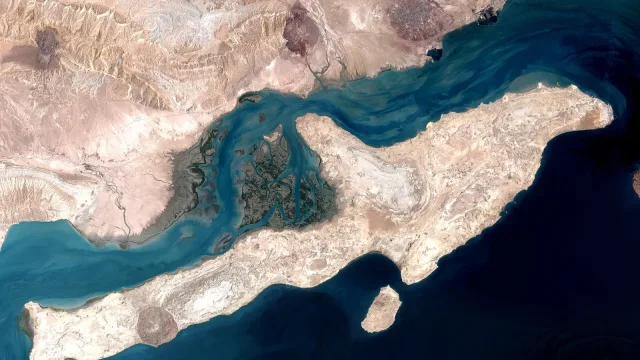
The Strait of Hormuz, which links the Persian Gulf to the Gulf of Oman and the Arabian Sea, serves as a vital corridor for global crude exports while supporting fragile marine ecosystems, including coral reefs, sea turtle nesting grounds and mangrove forests, The Guardian reported. Since hostilities broke out on Feb. 28, satellite monitoring by Greenpeace has identified more than 500 oil spills across the region, creating a cumulative footprint of roughly 20,000 square kilometers, according to the group’s environmental disaster experts.
Naval strikes have repeatedly spilled crude into sensitive habitats. More than 133 attacks on oil tankers have been recorded since the conflict began, with October marking the highest monthly total at more than 30 strikes in and around the strait, according to data cited by The Guardian from the Washington Institute for Near East Policy.
Marine biologists have expressed deep concern over long-term environmental degradation, noting that shallow Gulf waters and warm seasonal temperatures accelerate damage to marine life and coastal wetlands. Experts warned that oil trapped in shoreline sediments and mangrove roots could persist for decades, threatening regional fish populations and coastal communities long after active fighting subsides.