China’s economy expanded 4.5 percent in the third quarter compared with a year earlier, beating expectations as a global artificial intelligence frenzy fueled factory exports and countered a persistent downturn in the domestic housing market.
The quarterly pace reported Monday by the National Bureau of Statistics picked up from a three-year low of 4.3 percent in the second quarter, topping the 4.4 percent predicted by economists surveyed by Reuters. Across the first nine months of the year, gross domestic product expanded 4.6 percent, keeping the world’s second-largest economy on track to satisfy Beijing’s official full-year growth target of 4.5 percent to 5 percent.
Factories surge while domestic demand lags
The latest figures illustrate an entrenched divide that analysts often term a two-speed economy, where booming overseas shipments of high-tech hardware contrast sharply with hesitant spending among consumers and businesses at home.
Industrial output increased 5.5 percent from a year earlier in September, matched by forecasts reported by CNBC. Meanwhile, retail sales rose 1.1 percent during the month, improving from a 0.4 percent pace in August to reach the fastest expansion since March.
“The economy moved forward under pressure and developed in a newer and better direction, with an increase in positive changes in key indicators,” Mao Shengyong, vice minister of the National Bureau of Statistics, said at a press conference on Monday, according to CNN.
However, Mao acknowledged that persistent hurdles remain on the home front. “The problem of insufficient domestic demand remains relatively prominent, and the foundation for the steady and positive growth of the economy still needs to be consolidated,” he added.
Record trade surplus buffers economic headwinds
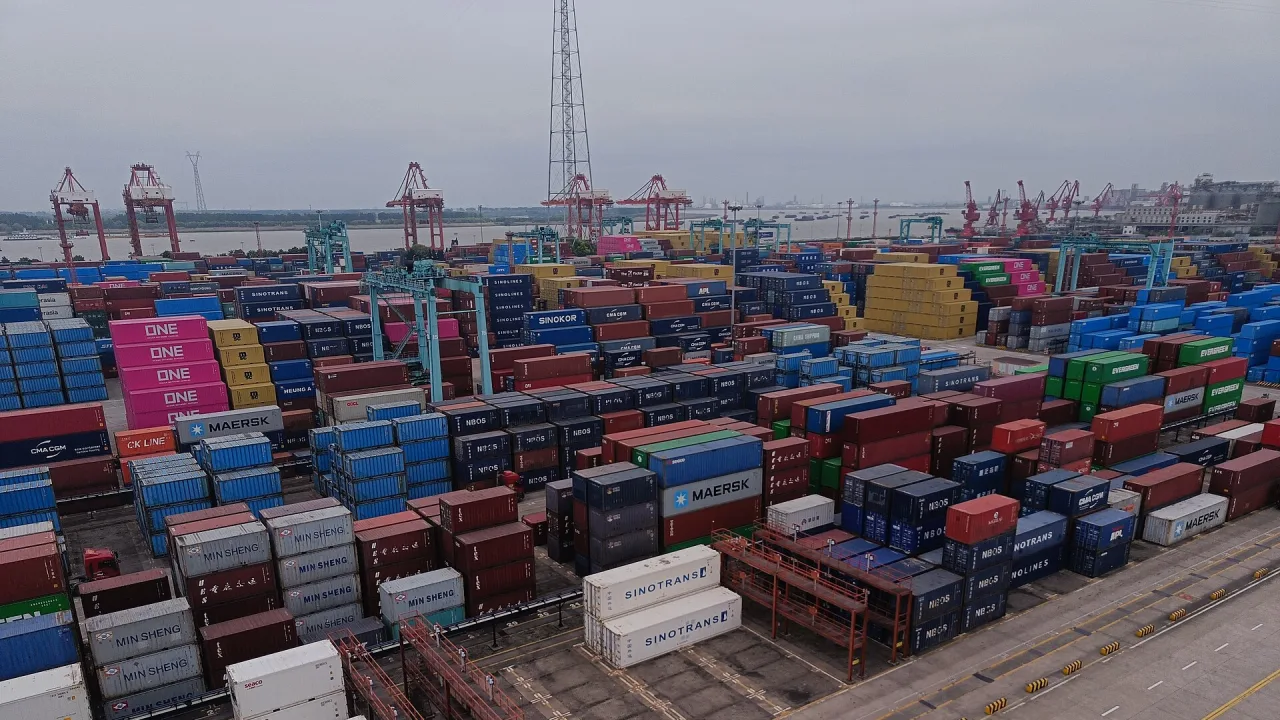
Overseas buyers provided the main catalyst for quarterly momentum. Chinese shipments abroad spiked 36.3 percent in September from the same period a year earlier, the fastest increase since early 2021, CNN reported. Exports to the United States rose 39.6 percent year over year, supported by an ongoing trade truce negotiated by Chinese leader Xi Jinping and U.S. President Donald Trump that reduced tariffs on $60 billion in merchandise and remains in effect until January.
Fueled by demand for semiconductors, electronics components and batteries, China posted a record monthly trade surplus of $133.5 billion in September, according to CNBC. For the first nine months of 2026, the cumulative surplus hit $938.1 billion, up from $875.1 billion over the same span in 2025.
Real estate downturn shows little relief
Despite the export surge, China’s property sector, now mired in a fifth year of contraction, continued to drain wealth from households that hold an estimated 70 percent of their assets in real estate. Fixed-asset investment across urban areas declined 7.2 percent through September from a year earlier.
Reports varied slightly on the magnitude of the contraction in real estate development: CNBC reported a 20.6 percent drop across the first nine months, while CNN cited a 20.2 percent decrease. Both figures reflect deeper drops than the roughly 20 percent decline recorded through August.
“The prolonged housing slump will continue to limit the spillover from stronger industrial activity to the wider economy,” said Sheana Yue, senior economist at Oxford Economics, according to CNBC. Yue added that home sales and construction starts show minimal indication that the sector is bottoming out.
Beijing has rolled out incremental stimulus, including mortgage subsidies for first-time buyers and targeted interest rate cuts, yet international watchdogs remain cautious. The International Monetary Fund trimmed its 2026 growth forecast for China to 4.5 percent from 4.6 percent last week, pointing to lingering domestic weakness.
Whether China can sustain this pace into the final quarter remains tied to trade stability and domestic policy. Trump and Xi are scheduled to confer again in November at the Asia-Pacific Economic Cooperation summit in Shenzhen, while European trade partners have recently moved to cap imports of Chinese hybrid vehicles.