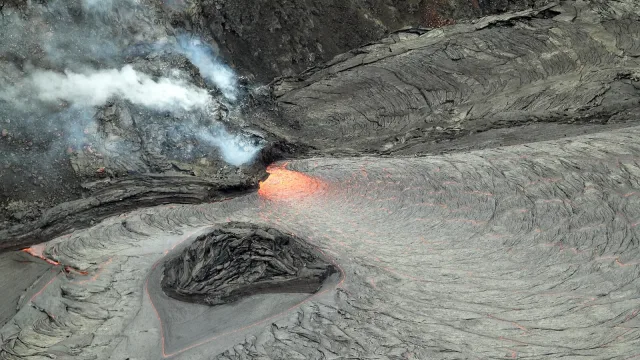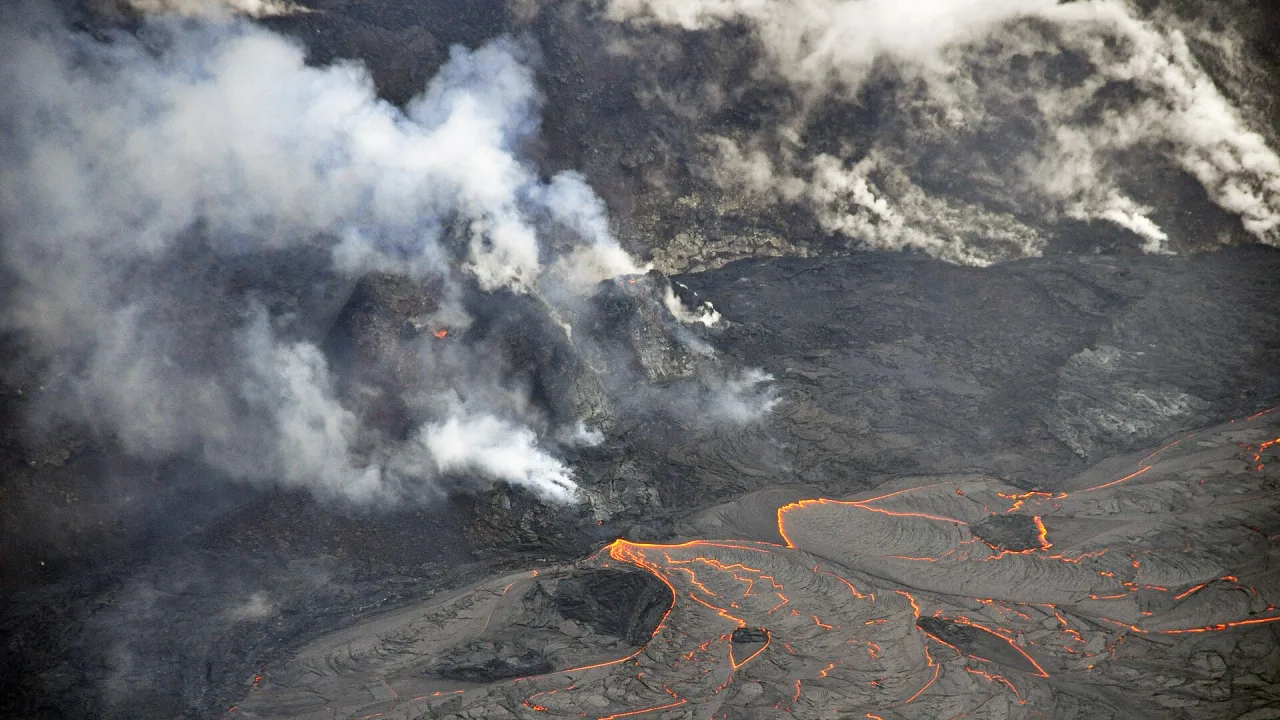
Lava fountains shot hundreds of feet into the Hawaiian sky early Saturday as Kilauea volcano launched its 55th eruptive episode since late 2024, ending an unusually prolonged two-month lull in summit activity.
Scientists with the U.S. Geological Survey Hawaiian Volcano Observatory reported that the brief but intense episode began at 3:19 a.m. local time inside Halemaʻumaʻu crater at Hawaiʻi Volcanoes National Park. Activity from the north vent rapidly escalated, propelling molten rock to a peak height of 720 feet around 5 a.m. before abruptly stopping at 9:03 a.m., according to observatory reports cited by the Honolulu Star-Advertiser.
Lava confined to summit crater
All lava flows and vents remained confined within the summit caldera, officials confirmed. At its height, the eruption hurled volcanic tephra into the surrounding area and produced an ash and gas plume that reached roughly 25,000 feet above sea level, Big Island Video News reported. Wind patterns from the north-northeast pushed volcanic gas and emissions toward the south-southwest.
USGS observers noted that heavier tephra fell largely within 3 miles of the active vents, staying inside closed zones of the park. However, lighter volcanic material, including delicate strands of volcanic glass known as Pele’s hair, can drift much farther downwind. Park authorities had already closed Halemaʻumaʻu Trail and sections of Byron Ledge Trail after seismic activity intensified earlier in the month.
The agency warned that volcanic gas emissions can pose significant respiratory hazards to vulnerable individuals living downwind. The USGS maintained its volcano alert level at Watch and the aviation color code at Orange throughout the event.
Disrupted patterns and magma shifts
Kilauea has been erupting episodically since Dec. 23, 2024. For months, the summit followed a fairly predictable rhythm: magma accumulated in a shallow reservoir beneath the crater, pressurized the system, and triggered fountaining episodes separated by pauses of two or more weeks. Episode 54 had concluded on Aug. 25, but the expected subsequent eruption was delayed when magma dynamics shifted beneath the surface.
According to an HVO analysis, instruments detected renewed pressurization in early September, yet fountaining did not immediately resume. Instead, six new fissure vents cracked open north of the main vent complex between Sept. 14 and Sept. 16, producing gentle lava flows rather than towering fountains. Geochemical testing revealed the magma matched the shallow reservoir rather than a fresh batch from deep underground.
Subsurface movements intensified again from Sept. 30 to Oct. 1, when an intrusion northeast of the vents generated roughly 100 earthquakes and opened fresh cracks in the caldera floor. Geologists said those structural changes disrupted previous cycles and made forecasting the timing of Episode 55 impossible, FOX Weather reported.
Scientists with the observatory stated that another fountaining episode is unlikely to occur for at least several weeks as the magma reservoir recharges, though they continue to monitor the summit closely for further shifts in ground deformation and seismic activity.