Florida has confirmed 252 dengue infections acquired inside the state so far this year, most of them in the Tampa area, a total that appears to be the highest for any U.S. state in a calendar year since at least the 1940s, The Associated Press reported, citing state health department data and medical journals.
Hillsborough County, home to Tampa, accounted for 223 of those cases in the Florida Department of Health’s latest weekly surveillance report, which covers Sept. 20-26, WUSF reported. Neighboring Pinellas County had 13 and Pasco County three. All of the state’s local cases this year have occurred since July, and health officials say the true count is likely higher. Florida’s previous high came in 2023, with just under 200 locally spread cases, according to the AP.
One death has been recorded: an elderly Tampa woman who died Sept. 4, the AP reported.
Emergency orders and spraying
Hillsborough, Pinellas and Pasco counties are all under local states of emergency. Hillsborough County Administrator Bonnie Wise extended the county’s order Oct. 1 as efforts to control the local mosquito population continued, The Hill and WUSF reported.
Mosquito control crews are spraying around the clock, using daytime treatments aimed at larvae and stronger nighttime treatments aimed at adult mosquitoes, according to WUSF. The Lee County Mosquito Control District sent helicopters to help with aerial spraying in Hillsborough. Workers are also checking properties for standing water where mosquitoes can breed; county officials say tires are the biggest culprit.
Hillsborough County is urging residents to drain stagnant water, wear protective clothing outdoors and use insect repellent, The Hill reported.
Why the Tampa area
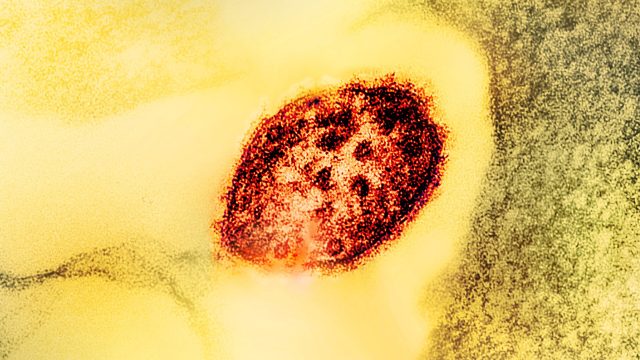
Dengue is caused by a virus that Aedes mosquitoes spread from person to person. Many infected people never get sick, but others develop fever and the intense aches behind its nickname, “breakbone fever.” Severe cases can lead to bleeding, shock and death, according to the AP.
The virus has four types. Antibodies from a first infection may not protect against a different type and can even help it replicate, a problem that has made an effective vaccine hard to develop, the AP reported. Few people in the Tampa area have immunity from an earlier infection, according to Dawn Wesson, a Tulane University expert on mosquito-borne diseases.
Wesson told the AP that Florida draws many travelers who have been to Puerto Rico and other places where dengue is common, and that travel patterns may help explain this year’s surge. Florida’s locally acquired cases now narrowly outnumber its travel-related ones, 252 to 245, according to the AP. Experts say the mosquitoes that carry dengue have been expanding their range because of climate change.
The largest recent outbreak in a U.S. state was in Hawaii, which counted 264 locally acquired cases over six months in 2015 and 2016, the AP reported, and the Tampa-area outbreak is close to passing that mark. Local spread had been rare in the continental U.S. for decades before Key West reported cases in 2009 and 2010, the first outside the Texas-Mexico border area since 1945.
Federal role
The Centers for Disease Control and Prevention can send disease investigators only when state officials invite them, and Florida has not asked, CDC spokesman Jason McDonald told the AP. McDonald said the CDC has given Florida’s health department $800,000 in assistance. Wesson said the CDC has been less visible during this outbreak than it would traditionally be.
What’s next
Florida releases its arbovirus surveillance data weekly, and the next reports will show whether the outbreak overtakes Hawaii’s 2015-16 total. Wesson said the region’s climate and its persistent mosquito populations are likely to make local outbreaks more common. “There’s a good chance that this is the new normal,” she told the AP.